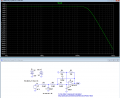
Question About Low-Pass

Thread Starter

royaaron

Joined Feb 19, 2024
108
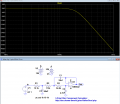
Because in a previous stage of the circuit I am trying to eliminate what is common to both the left and right channels of a stereo input - typically voice - I have to consider that I have dropped off some bass.
So I figured I would (optionally) include a low-pass filter in hopes of increasing the presence of the ~234Hz range.
Does this appear as though it'd work?
 

Attachments

Papabravo

Joined Feb 24, 2006
22,082
What you are trying to accomplish is just a bit obscure. Could you provide a more explicit description of what you think is happening and also what you want to happen. Your schematic is complex enough to inhibit easy analysis.
 
Last edited:

nsaspook

Joined Aug 27, 2009
16,321
Because in a previous stage of the circuit I am trying to eliminate what is common to both the left and right channels of a stereo input - typically voice - I have to consider that I have dropped off some bass.
So I figured I would (optionally) include a low-pass filter in hopes of increasing the presence of the ~234Hz range.
Does this appear as though it'd work?
Yes, it will filter. How much it helps depends on the source material. Have you actually built this yet?
 

schmitt trigger

Joined Jul 12, 2010
2,085
Low pass filter to increase “the presence of the ~234Hz range”?
If you meant increasing the level below that frequency, the answer is no. You would be further cutting the bass region.
You actually require a bass boost circuit.
The reason you have eliminated bass in the first place is that in music the bass region is common to both channels.
 

Thread Starter

royaaron

Joined Feb 19, 2024
108
What you are trying to accomplish is just a bit obscure. Could you provide a more explicit description of what you think is happening and also what you want to happen. Your schematic is complex enough to inhibit easy analysis.
  • Produce a center channel (mono) output
  • Produce an output consisting of what is unique to each of the channels of the stereo signal
    and
  • Produce an output consisting of what is common to each of the channels of the stereo signal
 

Thread Starter

royaaron

Joined Feb 19, 2024
108
Low pass filter to increase “the presence of the ~234Hz range”?
If you meant increasing the level below that frequency, the answer is no. You would be further cutting the bass region.
You actually require a bass boost circuit.
The reason you have eliminated bass in the first place is that in music the bass region is common to both channels.
Are you saying that 234Hz is too high? I understand that I'm not boosting the bottom as much as I am attenuating the range above 234.
 

nsaspook

Joined Aug 27, 2009
16,321
Are you saying that 234Hz is too high? I understand that I'm not boosting the bottom as much as I am attenuating the range above 234.
What size is the Differential & Center Channel speaker? Can it reproduce that channel down to 20Hz and up to the filter cutoff? It sounds more like a LFE channel than a center with that filter on.

My LFE and other speakers are set up like this with mainly full-range speakers and a LFE sub-system down to below 20Hz. YMMV
1744131558388.png
1744131621265.png
1744131658845.png
1744131682606.png
I normally use the center(s) for clean, clear dialog as the reference with a 200 Hz crossover to the subwoofer.
 

crutschow

Joined Mar 14, 2008
38,503
Are you saying that 234Hz is too high? I understand that I'm not boosting the bottom as much as I am attenuating the range above 234.
To avoid most of the voice frequencies, you want to keep the bass feedthrough below 200Hz with at least a 2-pole filter rolloff.

Below is an example single op amp, 3-pole Butterworth LP active filter to do that:

1744132464925.png
 

Papabravo

Joined Feb 24, 2006
22,082
  • Produce a center channel (mono) output
  • Produce an output consisting of what is unique to each of the channels of the stereo signal
    and
  • Produce an output consisting of what is common to each of the channels of the stereo signal
Filters won't do much of that work at all and I'm surprised to hear that you might be thinking they will. What they will do:
  1. Pass frequencies in the passband with minimal attenuation
  2. Attenuate frequencies in the transition band as a linear function of the logarithm of the frequency
  3. Effectively block frequencies in the stop band by attenuating them to inaudible levels for ordinary ears.
Golden ears are another problem altogether which is where we get properties like uniqueness and commonality which are essentially unquantifiable. Have fun experimenting with filters, but I fear the results will be unsatisfactory based on your stated goals.
 

nsaspook

Joined Aug 27, 2009
16,321
Filters won't do much of that work at all and I'm surprised to hear that you might be thinking they will. What they will do:
  1. Pass frequencies in the passband with minimal attenuation
  2. Attenuate frequencies in the transition band as a linear function of the logarithm of the frequency
  3. Effectively block frequencies in the stop band by attenuating them to inaudible levels for ordinary ears.
Golden ears are another problem altogether which is where we get properties like uniqueness and commonality which are essentially unquantifiable. Have fun experimenting with filters, but I fear the results will be unsatisfactory based on your stated goals.
The filter is after the channel processing circuits.
 

Thread Starter

royaaron

Joined Feb 19, 2024
108
To avoid most of the voice frequencies, you want to keep the bass feedthrough below 200Hz with at least a 2-pole filter rolloff.

Below is an example single op amp, 3-pole Butterworth LP active filter to do that:

View attachment 346431
I found the attached in a 2002 Nat. Semi Op-Amp Collection Ap Note. Do you think I could use the LF353P instead?
Where it reads "Values are for 10 kHz cutoff" can you suggest how to lower them for a cutoff of ~200 Hz.
 

Attachments

schmitt trigger

Joined Jul 12, 2010
2,085
Are you saying that 234Hz is too high? I understand that I'm not boosting the bottom as much as I am attenuating the range above 234.
I am saying that you plan on using a low pass filter, you will remove everything else above that frequency…. Vocals and most instruments.
Perhaps that is what you are looking for.
 

nsaspook

Joined Aug 27, 2009
16,321
I'm not looking to drop the voice; I only want to boost the bass.
To do that correctly you need parametric EQ to tailor the channel. A regular cheap Graphic EQ will likely work just as well for this application. Your simple filter will not be very effective.

https://empresseffects.com/blogs/em...c-eq-the-guitarist-s-guide-to-equalizer-types
Parametric EQ is widely used in recording and mixing to change the character of a sound or emphasize certain qualities. Instead of sliders, parametric EQ uses traditional rotary knobs and switches to control several parameters that shape the EQ band. As I mentioned above, the most common ones are:

  • Filter type (HPF, LPF, BPF, shelf, bell, notch)
  • Q (bandwidth or ‘quality factor’)
  • Frequency
  • Gain
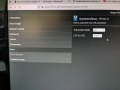
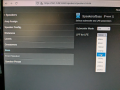
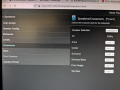
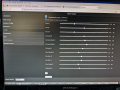
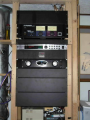
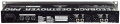
I use one of these old (obsolete) P EQs to tailor my bass response to the room. You could do the same for voice with a similar device.
https://forum.allaboutcircuits.com/threads/proper-audio-chain-sequence-and-why.139564/post-1173102
Behringer Feedback Destroyer DSP-1124P in manual mode parametric with adjustable Q

1744146600316.png
1744146663515.png
1744146688609.png
https://www.bhphotovideo.com/c/product/238139-REG/Behringer_DSP1124P_DSP1124P_Dual_Channel.html
 

Thread Starter

royaaron

Joined Feb 19, 2024
108
To do that correctly you need parametric EQ to tailor the channel. A regular cheap Graphic EQ will likely work just as well for this application. Your simple filter will not be very effective.

https://empresseffects.com/blogs/em...c-eq-the-guitarist-s-guide-to-equalizer-types


I use one of these old (obsolete) P EQs to tailor my bass response to the room. You could do the same for voice with a similar device.
https://forum.allaboutcircuits.com/threads/proper-audio-chain-sequence-and-why.139564/post-1173102
Behringer Feedback Destroyer DSP-1124P in manual mode parametric with adjustable Q

View attachment 346446
View attachment 346447
View attachment 346448
https://www.bhphotovideo.com/c/product/238139-REG/Behringer_DSP1124P_DSP1124P_Dual_Channel.html
Yikes! I have to include the boost in a 6 x 4 x 10 box.
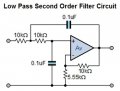
I've attached what I am now using to boost the bass as well as the project as it now stands.Low Pass Second Order Filter Circuit.jpg
 

Attachments

Top