Pump Power Consumption: Why Am I Only Seeing 36W Instead of 60W?

drjohsmith

Joined Dec 13, 2021
1,666
good question,
but dont extrapolate too much.

as you have seen many types of pumps ,
all have different characteristics..

you mention 10m head.
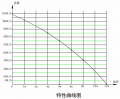
pumps tend to have a flow / head graph,
simple pumps , as you increase the head flow drops.
things like screw pumps, or piston pumps used to move say concrete up many hundred of meteres, have a constant flow rate , and the energy needed increase as the height increases.

my though is you have a simplele turbine / impela pump ,
these have variable flow as head changes,

im imagining the manufacturer sets a power on the safe side as a max over production variability.

wattage of a pump which has variable flow is just a limit.
the specification for these sort of pumps is the flow head graph.

BTW. the pdf you shared is for a pipe with holes in it , not for a pump.
 

Thread Starter

DJ_AA

Joined Aug 6, 2021
502
As per the previous post by @hrs if the oulet distance is increased by 10metres the current will drop.
The highest current is with zero distance at the outlet.
Well, with nothing connected to the outlet, I am still hitting about 35 W

If you don't have a head, your power requirements are lower. If you have a head, but no flow, your power requirements are lower. Max power will be at the rated flow over the max head. The efficiency of the pump will skew that somewhat.


Not if you exceed the pumps capacity and flow falls off.

You want to calculate your whp, flow against a head, then choose a pump that can deliver, then drive it with a motor of rated horsepower. If your pump head can only develop 35 watts of work, a bigger motor won't change that.
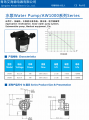
Based on the datasheet attached, the closer you get to 10M, the flow rate drops. Would that mean current would also drop, or would current increase to get that very minimum flow rate to about 10M?

As I think I attached the wrong document, please find it attached and also below:


1754817292389.png


1754817319751.png
 

Attachments

drjohsmith

Joined Dec 13, 2021
1,666
Well, with nothing connected to the outlet, I am still hitting about 35 W


Based on the datasheet attached, the closer you get to 10M, the flow rate drops. Would that mean current would also drop, or would current increase to get that very minimum flow rate to about 10M?

As I think I attached the wrong document, please find it attached and also below:


View attachment 353991


View attachment 353992
Current is proportional to power .
This is an impella pump
It has very little change in power consumed till it cavitates / stalls.
It takes an amount of power to lift a weight of water and amount of height.
Flow is litres per second. .a liter has a weight of about 1 Kg
So it takes an amount of power to lift 1 kg. The higher the more power needed.
As this is an impella , as you have seen till it stalls it relatively constant power.
So as u go higher , the flow rate decrease , such that approximately flow divided by height is approximately a constant .
So what's the problem your trying to fix ?
 

drjohsmith

Joined Dec 13, 2021
1,666
Well, with nothing connected to the outlet, I am still hitting about 35 W


Based on the datasheet attached, the closer you get to 10M, the flow rate drops. Would that mean current would also drop, or would current increase to get that very minimum flow rate to about 10M?

As I think I attached the wrong document, please find it attached and also below:


View attachment 353991


View attachment 353992
thats definitely an impeller pump,


to first approximation, constant wattage
flow drops off as head increases .

no surprises there ,

the power used is a max, the manufacturer is playing safe,
also it looks like a built down to cost pump , you take what it is

do you have any other questions ?
 

MaxHeadRoom

Joined Jul 18, 2013
30,876
Well, with nothing connected to the outlet, I am still hitting about 35 W
One of my last projects before I retired was to commission an automotive parts washer which had a 1 HP radial pump to clean parts , the outlet was very short, it was installed with the required O/L's , the plant electrician complained he had to reset the tripped O/L at least four times/day .
The pump manuf was contacted and they pointed out that the very short discharge at full bore was maximizing or exceeding the pump current capability.
Throttling the outlet slightly cured the problem. :cool:
 

Thread Starter

DJ_AA

Joined Aug 6, 2021
502
Current is proportional to power .
This is an impella pump
It has very little change in power consumed till it cavitates / stalls.
It takes an amount of power to lift a weight of water and amount of height.
Flow is litres per second. .a liter has a weight of about 1 Kg
So it takes an amount of power to lift 1 kg. The higher the more power needed.
As this is an impella , as you have seen till it stalls it relatively constant power.
So as u go higher , the flow rate decrease , such that approximately flow divided by height is approximately a constant .
So what's the problem your trying to fix ?
I am designing a power supply/Li-ion battery charger, so I planned for a 5A capacity with some additional headroom. However, during testing, it was only reaching 3A. This may be a trivial question: if more power is needed to push water to 10 metres, for example, why would the flow rate also reduce? Shouldn’t the additional power used to push the water up provide some compensation so that we still achieve a higher flow rate?
 

drjohsmith

Joined Dec 13, 2021
1,666
I am designing a power supply/Li-ion battery charger, so I planned for a 5A capacity with some additional headroom. However, during testing, it was only reaching 3A. This may be a trivial question: if more power is needed to push water to 10 metres, for example, why would the flow rate also reduce? Shouldn’t the additional power used to push the water up provide some compensation so that we still achieve a higher flow rate?
simple answer
these are impeller pumps, constant ish power, flow slows as head increases.

if you want constant flow with variable head,you need a different type of pump, screw or piston is typical, but much more expencive . these pumps are basically the same as a hair dryer with a impella spinning,
 

Thread Starter

DJ_AA

Joined Aug 6, 2021
502
I will design the battery to produce 5A plus some headroom.

Another question related to these pumps:

With these impeller pumps, if I were to add a manual valve to reduce the flow rate, would that damage the pump? I am thinking that the motor, powered with 12V, would still be trying to output the maximum amount of water, but it would be restricted. Ideally, the voltage should reduce—if I am correct—when reducing the flow rate to avoid damage.
 

drjohsmith

Joined Dec 13, 2021
1,666
I will design the battery to produce 5A plus some headroom.

Another question related to these pumps:

With these impeller pumps, if I were to add a manual valve to reduce the flow rate, would that damage the pump? I am thinking that the motor, powered with 12V, would still be trying to output the maximum amount of water, but it would be restricted. Ideally, the voltage should reduce—if I am correct—when reducing the flow rate to avoid damage.
damage , who knows ,
they are simple , if the flow is slowed, either by restriction or by elivation , the impeller cavitation more ,
at some point, the impela just spins , and can't "grip" onto the water... bad English but you get the point.
dont know that pump or how it will respond
that graph shows you could be out of spec if the flow is to little. try it, see how hot the pump gets.
 

GetDeviceInfo

Joined Jun 7, 2009
2,285
One of my last projects before I retired was to commission an automotive parts washer which had a 1 HP radial pump to clean parts , the outlet was very short, it was installed with the required O/L's , the plant electrician complained he had to reset the tripped O/L at least four times/day .
The pump manuf was contacted and they pointed out that the very short discharge at full bore was maximizing or exceeding the pump current capability.
Throttling the outlet slightly cured the problem. :cool:
And I’ve had similar cases.

That’s what I like about discussions with technical minded persons. You recount experiences, run off and do some research, and learn. An old fart like me with a career in industry still has so much to learn. I think back to when we’d break in top drives on a water dyno. Generating a load by manipulating flow rates was one thing, managing the resulting heat was another level.
 

Thread Starter

DJ_AA

Joined Aug 6, 2021
502
In the past, I have experienced that the shaft and impeller would snap, so I am thinking due to dripper on my pipe flow rate becomes very slow, and heat builds up
 

drjohsmith

Joined Dec 13, 2021
1,666
In the past, I have experienced that the shaft and impeller would snap, so I am thinking due to dripper on my pipe flow rate becomes very slow, and heat builds up
there are things like pressure switches that could switch off the system, or use a bypass , so,pump is always running but the water goes around,
or use pump to fill a header tank, tank has float in it, so pump only turns on when tank is almost empty,

as they say in the Martian, enginer the problem.
 

Thread Starter

DJ_AA

Joined Aug 6, 2021
502
I am pumping water into a drip pipe, which does not help. So, without some pressure, the drippers do not work, so I think the aim is to push the additional water the pump can push in some form of bypass. Or simply create more holes so the water rate increases
 

wayneh

Joined Sep 9, 2010
18,181
You might consider using a model like a home well pump system. That is, you have a pressurized reserve tank with an air bladder and cycle the pump depending on the pressure in that tank. When it falls to 35psi, pump it back up to 50psi. Or whatever pressures work for you. The line between the pump and the reservoir is wide open and can take the full pump capacity with minimal pressure drop.
 

drjohsmith

Joined Dec 13, 2021
1,666
I am pumping water into a drip pipe, which does not help. So, without some pressure, the drippers do not work, so I think the aim is to push the additional water the pump can push in some form of bypass. Or simply create more holes so the water rate increases
was thinking if you could put tank up say 4 m , then is that enough head ? if so, this pump could keep the tank filled,
what sort of head do you need?
 
Top