Protection in Controller

boostbuck

Joined Oct 5, 2017
1,043
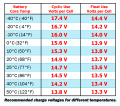
No, the voltages of the lead-acid chemical reaction (independent of size of battery) are temperature dependent at a rate of several mV per degree. Check the derating curves in the PDF. The important voltage is the gassing voltage (14.4 at 20C, lower at higher temperatures), which you should not exceed with a sealed battery. This is described on page 18 of the PDF. Without automatic temperature compensation in the charger, it is usual to take the maximum expected charge temperature (ambient PLUS self-heating) and set maximum charge voltage appropriately. At lower temperatures the battery will be slightly undercharged, but at least it won't be karked on a hot day.

LowQCarbs suggested circuit avoids this problem by setting a VERY low final charge voltage, and accordingly under-charging the battery. A safe and not unreasonable solution.
 

Thread Starter

jim0000

Joined Oct 28, 2020
130
No, the voltages of the lead-acid chemical reaction (independent of size of battery) are temperature dependent at a rate of several mV per degree. Check the derating curves in the PDF. The important voltage is the gassing voltage (14.4 at 20C, lower at higher temperatures), which you should not exceed with a sealed battery. This is described on page 18 of the PDF. Without automatic temperature compensation in the charger, it is usual to take the maximum expected charge temperature (ambient PLUS self-heating) and set maximum charge voltage appropriately. At lower temperatures the battery will be slightly undercharged, but at least it won't be karked on a hot day.

LowQCarbs suggested circuit avoids this problem by setting a VERY low final charge voltage, and accordingly under-charging the battery. A safe and not unreasonable solution.
Oh okay thank you so much!
 

LowQCab

Joined Nov 6, 2012
5,101
"" It recommends several charge regimes depending on battery usage, each of which has an end-stage constant voltage higher than the 13.7 final stage of your Battery-Maintainer, which in use will cause greater long-term sulphation of the battery as it fails to reach adequate full-charge voltage as (an issue described on page 16 of your document). ""

It sounds like your trying to win a debate.
I've been dealing with Lead-Acid Batteries under adverse conditions for almost 50-years,
I know what works and why.
I'll provide an example,
I single-handedly maintained a Fleet of 22 Stretch-Limousines for a little over 2 years,
when I got there, a Limo was coming in on a Wrecker literally every other day,
most of those break-downs were caused by a dead Battery, as the Limos idled continuously
for anywhere from 2 to 8-hours straight, every day, with 2 or 3 AC-Blowers on High, ( Miami Summers ).
After I had completed the changes to all of the cars, which took about 3 months,
there was never another Battery failure for the next 2 years that I maintained the fleet.
The factory Alternator-Voltage-Regulators were replaced with
aftermarket, remote mounted, adjustable Voltage-Regulators,
set to exactly 13.8-Volts.
This was around ~45 years ago.
I never saw any further Battery performance degradation from Sulfation.
And, of course, this was with a continuous ~160F under-hood temperature.

The 2-Amp Current-Limiting in my provided Circuit is to protect the Regulators, not the Battery.
There are absolutely no drawbacks to conservative Constant-Voltage-Charging for Lead-Acid-Batteries.
.
.
.
Temp Compensation .PNG
 

boostbuck

Joined Oct 5, 2017
1,043
I'm not arguing, just referencing the document you supplied.

set to exactly 13.8-Volts.
This was around ~45 years ago.
I never saw any further Battery performance degradation from Sulfation.
And, of course, this was with a continuous ~160F under-hood temperature.
Of course, because 13.8 volts will be be approximately the temperature adjusted full charge voltage for 160F. 160F is very high - at lower temperatures it would be too low to achieve full charge.
 

boostbuck

Joined Oct 5, 2017
1,043
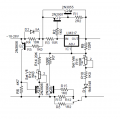
The circuit should offer three stage charging with switchable current limit for bulk, adjustable absorb voltage and float voltage plus ambient temperature compensation.

It's untested beyond a quick sim, so no promises. Something to experiment with.

The transistor on the switched resistors at the bottom select the bulk charge current - either 500mA or 5A.
The transistors on the left serve to switch from absorb stage to float stage when absorb reaches 60mA
The transistors on the top are the traditional current amplifier for an LM317.

Theory of operation:
The current bypass is controlled by the LM317 drawing current through the (oops missing value) 22 ohm resistor to its left and linearly switching on the bypass transistors at the top.
The voltage is set by the resistor string on the right, and the diode gives a -2mV/C temp comp.
Both the current limit and float circuits pull the LM317 adjust down to lower it's voltage appropriately.

I still say it'll be quicker and cheaper for you to go out and purchase a commercial solar charger, but of course not as much fun as trying to build one.

Here's a bloke who's designed and built one - might be a better place to start:
http://www.maxmcarter.com/annunciator/temp_comp_chgr.html

Good luck with it.
 

boostbuck

Joined Oct 5, 2017
1,043
I have no familiarity with the LM1084-ADJ but it looks to be a high-current low-dropout replacement for the LM317. Could try that and leave out the 2N2907 and 2N3055 bypass as it would handle the 5A by itself.
 

Thread Starter

jim0000

Joined Oct 28, 2020
130
I have no familiarity with the LM1084-ADJ but it looks to be a high-current low-dropout replacement for the LM317. Could try that and leave out the 2N2907 and 2N3055 bypass as it would handle the 5A by itself.
Okay thank you thats what I was thinking for it, it looks very similar to the lm317 as far as I can tell. I wonder if I should add a charge current of say 10A for a 100Ah battery?
 

LowQCab

Joined Nov 6, 2012
5,101
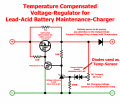
Here's an alternative Temperature-Compensated-Charger ..............
Not tested in the real-world, but should do a fine job according to the Math.
.
.
.
Temp Compensated Maintenance Charger .png
 

Thread Starter

jim0000

Joined Oct 28, 2020
130
Here's an alternative Temperature-Compensated-Charger ..............
Not tested in the real-world, but should do a fine job according to the Math.
.
.
.
View attachment 259712
I like that a lot. I have been looking into temperature sensing since its clear it messes with the charging voltages. Still trying to get a grasp on understanding it
 

LowQCab

Joined Nov 6, 2012
5,101
Temperature Compensation is only a significant factor for Batteries subject to the Weather.
Indoors, where the temperature is controlled year-round, doesn't really justify the extra complexity.

Figuring it out is really simple,
Lead-Acid-Batteries Store Power by way of a Chemical-Reaction,
all Chemical-Reactions are sped-up by an increase in Temperature, and vice-versa.
.
.
.
 

Thread Starter

jim0000

Joined Oct 28, 2020
130
Temperature Compensation is only a significant factor for Batteries subject to the Weather.
Indoors, where the temperature is controlled year-round, doesn't really justify the extra complexity.

Figuring it out is really simple,
Lead-Acid-Batteries Store Power by way of a Chemical-Reaction,
all Chemical-Reactions are sped-up by an increase in Temperature, and vice-versa.
.
.
.
I'm struggling more with how to sense that temperature change and compensate accordingly. I notice the regulator I am using says this (below) in the datasheet. I wonder if it can be adjusted to regulate with respect to temperature?
View attachment 260055
 

LowQCab

Joined Nov 6, 2012
5,101
First-off, the "description" at the beginning of a Spec-Sheet is usually
nothing but a bunch of promotional blather.

The actual Specifications You have to dig for.

However, the actual Temperature-Stability-Specifications are quite reasonable,
but that's pretty-much all you're going to get from the Spec-Sheet regarding Temperature,
and it has absolutely no relationship to "Battery-Temperature" "Charging-Voltage-Compensation",
which is a totally separate, and unrelated thing.
.
.
.
Regulator .PNG
 

boostbuck

Joined Oct 5, 2017
1,043
The LM1084 is designed to be stable in regulation with respect to temperature. Your need for temperature compensation is something you have to provide in your design. Temperature compensation can be really simple - because battery chemistry lowers the needed charge voltages at about the same rate a diode's forward voltage changes with temperature, including a diode in the voltage control loop is sufficient. This is what the LM317 charger uses. The simpler charger in post #51 uses two diodes in the voltage control loop, one for temp comp and one compensating for the positive change coefficient of the Output Diode, which is outside the control loop.

The closer you adhere to the charging specifications (per the pdf in post #35) the longer your batteries will last, but to simplify the requirements of your design, all you NEED to consider is:

1) for sealed lead acid batteries, exceeding the gassing voltage at any time during charge is a BAD THING - unfortunately that voltage decreases with temperature.

2) Exceeding the specified maximum charge current for your battery is a BAD THING as it may damage the internal structure.

The faster you charge a battery (closer to the maximum recommended) the more the battery itself will self heat - you can feel it warming up as charging proceeds. This is a more important consideration with larger batteries because of their smaller surface-volume ratio. This is why large banks (eg 500Ah or larger) use a temperature probe against a cell within the battery bank.

If your battery is not very big, is charged at a modest rate and is not exposed to extremes of temperature, then you can choose to ignore temperature compensation by using the temperature chart in the document to set the absorb voltage to about the value for the maximum temperature it will experience - ambient plus self-heating.

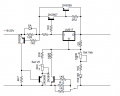
The simple charger in post #51 has two limitations. It has no current limiting, so it's bulk charge is only limited by the capability of its supply and can exceed the batteries maximum charge rate by any amount. It provides float maintenance by current through the 1k0 bypass resistor rather than the recommended voltage regulation, and the amount of charge current this provides will depend on the voltage of the supply, so is only going to be correct for a specific supply on a specific battery capacity. However if you are using that charge circuit on a specific battery, you could adjust the supply maximum current and bypass resistor to provide approximately correct charging. But the LM317 charger is more flexible and less dependent on externalities. However it has no external temperature probe so would be unsuitable for large battery banks - it can only compensate for ambient temperature, not self-heating of the batteries.
 

boostbuck

Joined Oct 5, 2017
1,043
Oops - I erred here and I knew it too - I finally realised the problem and got the maths to work - the temp comp is -2mV/C PER CELL and a car battery is six cells so the regulator will require six diodes in series in the compensation loop.

All I can say is I normally deal with single cell traction batteries :rolleyes:
 

Thread Starter

jim0000

Joined Oct 28, 2020
130
The LM1084 is designed to be stable in regulation with respect to temperature. Your need for temperature compensation is something you have to provide in your design. Temperature compensation can be really simple - because battery chemistry lowers the needed charge voltages at about the same rate a diode's forward voltage changes with temperature, including a diode in the voltage control loop is sufficient. This is what the LM317 charger uses. The simpler charger in post #51 uses two diodes in the voltage control loop, one for temp comp and one compensating for the positive change coefficient of the Output Diode, which is outside the control loop.

The closer you adhere to the charging specifications (per the pdf in post #35) the longer your batteries will last, but to simplify the requirements of your design, all you NEED to consider is:

1) for sealed lead acid batteries, exceeding the gassing voltage at any time during charge is a BAD THING - unfortunately that voltage decreases with temperature.

2) Exceeding the specified maximum charge current for your battery is a BAD THING as it may damage the internal structure.

The faster you charge a battery (closer to the maximum recommended) the more the battery itself will self heat - you can feel it warming up as charging proceeds. This is a more important consideration with larger batteries because of their smaller surface-volume ratio. This is why large banks (eg 500Ah or larger) use a temperature probe against a cell within the battery bank.

If your battery is not very big, is charged at a modest rate and is not exposed to extremes of temperature, then you can choose to ignore temperature compensation by using the temperature chart in the document to set the absorb voltage to about the value for the maximum temperature it will experience - ambient plus self-heating.

The simple charger in post #51 has two limitations. It has no current limiting, so it's bulk charge is only limited by the capability of its supply and can exceed the batteries maximum charge rate by any amount. It provides float maintenance by current through the 1k0 bypass resistor rather than the recommended voltage regulation, and the amount of charge current this provides will depend on the voltage of the supply, so is only going to be correct for a specific supply on a specific battery capacity. However if you are using that charge circuit on a specific battery, you could adjust the supply maximum current and bypass resistor to provide approximately correct charging. But the LM317 charger is more flexible and less dependent on externalities. However it has no external temperature probe so would be unsuitable for large battery banks - it can only compensate for ambient temperature, not self-heating of the batteries.
Okay thank you! I am stuck on one thing mainly with the regulator, it seems like a lot of the designs I see assume the panels will be giving an input greater than the charge voltage (greater than 14V). But when panels become shaded or light decreases this may not be the case. What should I do to protect the regulator? Or better yet, block voltages below a certain limit, or even increase the voltage within reason to allow for a larger charging range even if the input from the panels is below 14V.
 

LowQCab

Joined Nov 6, 2012
5,101
The Circuit that I provided has virtually Zero-Drop-Out-Voltage,
on the other hand, a 317 based Regulator is automatically
going to drop ~1.5 to 2+ Volts no matter what You do with it.

You don't need to "protect" any Regulator from Under-Voltage on the Input.
You already have a Diode which prevents Current-flow from
the Battery back into the Panel when the Panel-Voltage is low.
This Diode also has an automatic Voltage-Drop of approx. 0.7-Volts,
but, if you're going for that last bit of efficiency, that Diode could be replaced
by 2 back-to-back FETs and a Comparitor, instead of a simple single Diode arrangement.

Increasing the Voltage from the Panel(s) is fine if You absolutely have to keep
the Charging-Voltage up for as long as possible,
but this has a draw-back,
when the Panels are crankin'-out their maximum Output
you have to dissipate that extra Voltage (Power) in the form of Heat, ( meaning a larger Heat-Sink ).
This is where a Switching-Regulator comes in handy, because of it's higher efficiency,
but this adds extra complexity,
( and Electrical-Noise, but that's usually not an issue with a Battery-Charger ).
.
.
.
 
Top