Protection in Controller

Thread Starter

jim0000

Joined Oct 28, 2020
130
Hello, I am trying to build a controller with analog components, so no programmable chips. However, I am stuck on how to actually measure the battery voltage as the battery charges. Ideally, I would like to be able to sense the battery voltage as it charges and then feed that signal through a comparator which could disconnect the circuit from the battery by using a transistor at the comparators output. Any Ideas here? (Other pointers aside from sensing battery voltage as it charges is welcome!)
 
Last edited:

boostbuck

Joined Oct 5, 2017
1,043
It depends on the battery technology. For lead-acid batteries, the simplest solution I have found is to use a 7812 to provide charge. When the battery is empty, the 7812 will current-limit to it's maximum (an amp or so), then when the battery reaches charge, the 7812 will gradually taper the supplied current as the cell voltage rises. This is a reasonable approximation to the ideal three-stage charge profile (bulk, absorb, float).

Of course a 7812 is only 12 volts, which I correct by four diodes in series in the ground leg to raise the regulated voltage to 14.4.
 

Thread Starter

jim0000

Joined Oct 28, 2020
130
It depends on the battery technology. For lead-acid batteries, the simplest solution I have found is to use a 7812 to provide charge. When the battery is empty, the 7812 will current-limit to it's maximum (an amp or so), then when the battery reaches charge, the 7812 will gradually taper the supplied current as the cell voltage rises. This is a reasonable approximation to the ideal three-stage charge profile (bulk, absorb, float).

Of course a 7812 is only 12 volts, which I correct by four diodes in series in the ground leg to raise the regulated voltage to 14.4.
It is a lead acid actually, AGM sealed lead acid..so maybe you answered something I was curious about. After reading and doing physical testing I didn't see a reduction in current as the battery charged (using a purchased charge controller) and of course a regulator was not used. Does that mean there isn't a reduction in current unless a regulator is used (as the battery voltage increases)? I was going to just use a regulator as the reference input to my comparator (so not directly supplying the charge), but you're saying it would be best to feed the power from the solar panels into a regulator, and then into the battery?
 

boostbuck

Joined Oct 5, 2017
1,043
A simple charger will just be a limited-current supply at a voltage well above ideal battery voltage and will put charge in until the voltage rises on the full cells, at which point the cells start gassing and bubbling, so the charger is switched off by the user. With a simple wet-cell this is fine, the only down side is that the cells dry out so need topping up all the time.

For a sealed AGM, this is NOT going to be successful, so a regulated supply is needed that will NEVER cause the battery to gas. These days, a mcu is normally managing the three-stage charge process, although there are plenty of analog circuits around that will do the job.

My simple regulator circuit has been quite successful, although the purists argue that by limiting the charge to 14.4V the battery is not receiving a full absorb charge and so has a faster aging profile. True enough, but not big deal in my opinion.

For a solar charged, sealed lead-acid battery system, a regulator MUST be between the panels and the battery for effective charging. Non-regulation will damage the batteries.
 

Thread Starter

jim0000

Joined Oct 28, 2020
130
A simple charger will just be a limited-current supply at a voltage well above ideal battery voltage and will put charge in until the voltage rises on the full cells, at which point the cells start gassing and bubbling, so the charger is switched off by the user. With a simple wet-cell this is fine, the only down side is that the cells dry out so need topping up all the time.

For a sealed AGM, this is NOT going to be successful, so a regulated supply is needed that will NEVER cause the battery to gas. These days, a mcu is normally managing the three-stage charge process, although there are plenty of analog circuits around that will do the job.

My simple regulator circuit has been quite successful, although the purists argue that by limiting the charge to 14.4V the battery is not receiving a full absorb charge and so has a faster aging profile. True enough, but not big deal in my opinion.

For a solar charged, sealed lead-acid battery system, a regulator MUST be between the panels and the battery for effective charging. Non-regulation will damage the batteries.
Yeah I am staying away from mcu if I can, want to try and make a pure analog device. Could a different regulator be used that can go higher in voltage and current? The lm317 can go up to 37 volts for Vout. Can only handle 1.5A on the output tho. Would it have the same effect? I didnt realize a regulator would cause a trickle in the current so I think it would help my circuit a lot
 

boostbuck

Joined Oct 5, 2017
1,043
A 317 set to 14 volts would serve the same purpose and behave the same I think. If you need higher current than an amp or so you will need to augment the 317 with a bypass to increase current. I have assumed you are charging a 12V battery, so why do you want 37V? Perhaps you can show a circuit or block diagram of your intended design.
 

Thread Starter

jim0000

Joined Oct 28, 2020
130
A 317 set to 14 volts would serve the same purpose and behave the same I think. If you need higher current than an amp or so you will need to augment the 317 with a bypass to increase current. I have assumed you are charging a 12V battery, so why do you want 37V? Perhaps you can show a circuit or block diagram of your intended design.
I was moreso thinking of getting it closer to the recommended charging voltage with a 317 for a faster charge, and yeah its a 12V battery I went ahead and updated my post to include a sketch if you wanna take a look at it? Any pointers are welcome! Speaking of charging current, is there an easy way to increase it since the regulators are limited? I see some batteries have fairly high charging currents
 

boostbuck

Joined Oct 5, 2017
1,043
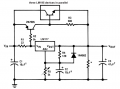
From the datasheets for the LM317, here is the traditional circuit to increase the current supply:

1643785794831.png

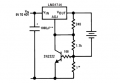
And, also from the datasheet, here is a suggested current limiter for a battery charger:

1643785888935.png

Combining these two circuits should give you a simple current-limited regulator for charging your batteries, and you can leave out the current sense, comparator and mosfet switch in your diagram.

Finer details of the design will depend on the amount of current you propose to supply to the battery.
 

LowQCab

Joined Nov 6, 2012
5,101
Solar Panels have a lot of internal Resistance,
and therefore have limited Current-Output.

How much Current can your Panel deliver while supplying ~14.5-Volts ?

You need to actually measure this with a Dummy-Load-Resistor and 2-Multi-Meters.
.
.
.
 

LowQCab

Joined Nov 6, 2012
5,101
The problem is, the manufacturers tend to be quite optimistic in their ratings.
You don't know until it's actually measured under real-world conditions.
.
.
.
 

Thread Starter

jim0000

Joined Oct 28, 2020
130
From the datasheets for the LM317, here is the traditional circuit to increase the current supply:

View attachment 259404

And, also from the datasheet, here is a suggested current limiter for a battery charger:

View attachment 259405

Combining these two circuits should give you a simple current-limited regulator for charging your batteries, and you can leave out the current sense, comparator and mosfet switch in your diagram.

Finer details of the design will depend on the amount of current you propose to supply to the battery.
Okay thank you, so I dont really need to worry about automatically shutting off the controller when the battery is fully charged? That was the thought behind the shunt/comparator/mosfet addition. Would that portion even work the way it is currently set up anyway?
 

Thread Starter

jim0000

Joined Oct 28, 2020
130
Solar Panels have a lot of internal Resistance,
and therefore have limited Current-Output.

How much Current can your Panel deliver while supplying ~14.5-Volts ?

You need to actually measure this with a Dummy-Load-Resistor and 2-Multi-Meters.
.
.
.
The specs of one panel connected is below. But I agree I really should measure it. How would you even size the load resistor? Why two multimeters?

Specifications:

Maximum Power: 100W

Maximum System Voltage: 600V DC (UL)

Open-Circuit Voltage (Voc): 24.3V

Optimum Operating Voltage (Vmp): 20.4V

Optimum Operating Current (Imp): 4.91A

Short-Circuit Current (Isc): 5.21A

Maximum Series Fuse Rating: 15A

Operating Temperature: -40°F to 176°F

Product Dimensions: 41.8 x 20.9 x 1.38 in

Product Weight: 14.1 lbs / 6.4 kg

Output Cables: 14 AWG (2ft long)
 

LowQCab

Joined Nov 6, 2012
5,101
One Meter for Voltage, and one Meter for Current.

If the "Medium-Load" Voltage will remain above ~13.8-Volts,
then placing as many Panels as You want, in Parallel,
will create more Charging-Current.

If the Voltage sags below ~13.8-Volts, You may need to have 4-Panels, ( 2-pairs of 2-in series ),
this will give You way more Voltage than You really need, plus twice the Current-Capacity.

You don't need much Current to Charge the Battery at exactly 13.8-Volts,
( unless it's heavily discharged ), maybe only 2 or 3-Amps.

Are You trying to Power a Load and Charge the Battery at the same time ?
What is the Load the Battery is supplying ?
.
.
.
 

boostbuck

Joined Oct 5, 2017
1,043
You have not told us the amp-hour of your battery or battery bank, nor really explained the purpose of the system. So the size of componentry is undefined (number of panels, capacity of regulator, etc) as is the type and pattern of use of the batteries.

There are three steps to charging a lead-acid battery - bulk, absorb, float. Float voltage is the voltage a battery can be held at to keep it inert at maximum charge. A simple charger using a LM317 will bulk charge to 14.4V (the end of bulk stage ) and reduce the current through the absorb stage, but it is not going to then drop to float voltage (the maintenance voltage for leaving a battery stored on charge - about 13.2 volts). Leaving a battery on 14.4V for long storage is not good, which is why the lower 'float' voltage is switched in at the end. But if you are using this system so that it is mostly charging and spends only a little time charged, then you could just make the absorb voltage a bit lower to compensate for not having a float stage. If your system is used such that the battery will spend a lot of time idle at full charge, then a disconnect is not ideal as the self-discharge of lead-acid cells is surprisingly high and the battery will go flat by itself eventually - a float stage is needed.

You could consider a PWM charge control design, which is a common design for panel/battery charge regulation. By switching the panel to the battery at a high frequency with a mosfet (similar to your disconnection intention) problems with heat in the linear regulator are sidestepped, and the control is simply a voltage regulated PWM duty cycle.

Would that portion even work the way it is currently set up anyway?
No.
 
Top