Facebook
 Google
 GitHub
 Linkedin

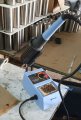
I've been doing soldering for ages. But this is the first time I've had to implement a "soldering production line" of sorts in which several people are tasked with soldering #24 ga wires into PCB's. The soldering equipment I'm using is of the "Cheap-o-matic" brand. That is, they're simple, primitive soldering pencils.
Well, after a rather clumsy start, I discovered that not all soldering tips are created equal, nor even close alike. The tips do not hold on to the solder at all because they're not pre-tinned, and melted balls are created that dance around the PCB until they find a hot spot and finally get attached and then flow into it. I know that the key to proper soldering lies all in the way that heat flows into the parts. But I have been unable to make things work the way I'd like them to.
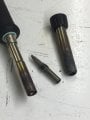
In example, after soldering a couple of hundred cables, the tip got badly corroded and quickly wore out ... what's the deal? ... am I using too much flux?
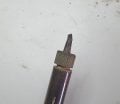
Well, after a rather clumsy start, I discovered that not all soldering tips are created equal, nor even close alike. The tips do not hold on to the solder at all because they're not pre-tinned, and melted balls are created that dance around the PCB until they find a hot spot and finally get attached and then flow into it. I know that the key to proper soldering lies all in the way that heat flows into the parts. But I have been unable to make things work the way I'd like them to.
In example, after soldering a couple of hundred cables, the tip got badly corroded and quickly wore out ... what's the deal? ... am I using too much flux?