Facebook
 Google
 GitHub
 Linkedin
Good day.
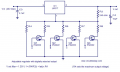
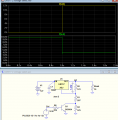
Here's what I'm trying to design: there will be a power in / power out and a trigger power. This will be used to automatically dim LEDs.
There will be constant power on the power in line (12-14V DC). When there is 0 volts on the trigger line the power out is either unaffected or regulated to 10V or more. When the switch is thrown and there is the same 12-14V DC applied to the trigger line, the power out is reduced to 3-5VDC.
How do I do it?
Here's what I'm trying to design: there will be a power in / power out and a trigger power. This will be used to automatically dim LEDs.
There will be constant power on the power in line (12-14V DC). When there is 0 volts on the trigger line the power out is either unaffected or regulated to 10V or more. When the switch is thrown and there is the same 12-14V DC applied to the trigger line, the power out is reduced to 3-5VDC.
How do I do it?