Power DEMUX

Thread Starter

MNLK

Joined Feb 11, 2025
8
Hello everybody,

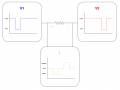
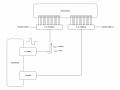
We are working on a project to stimulate an animal through a high-voltage square wave (+150V to -150V, 100mA, 5kHz). This voltage transferred through two 16-positions electrode array. Only one electrode in each array can be stimulated simultaneously. Our first approach was to use a digital DEMUX, however, the high power rates do not make this possible. We have also thought of using SPDT logic to address the issue.

What would be the most efficient and compact way to achieve this switching?Screenshot 2025-02-11 at 10.40.32.png
 

meth

Joined May 21, 2016
298
Last edited:

Thread Starter

MNLK

Joined Feb 11, 2025
8

MisterBill2

Joined Jan 23, 2018
27,187
Isthat 5KHz the stepping rate? Or is it the rate of repeating thru the 16 positions??Is there any intention of having the two switches synchronized??. Certainly it is possible to do it electronicly, with a fair amount of expense, since fast high voltage transistors are not cheap. Not horribly expensive, either, but not really "cheap". It could also be done mechanically , probably much cheaper.
 

Thread Starter

MNLK

Joined Feb 11, 2025
8
Isthat 5KHz the stepping rate? Or is it the rate of repeating thru the 16 positions??Is there any intention of having the two switches synchronized??. Certainly it is possible to do it electronicly, with a fair amount of expense, since fast high voltage transistors are not cheap. Not horribly expensive, either, but not really "cheap". It could also be done mechanically , probably much cheaper.
Hello,

5 kHz refers to the stepping rate. The desired position will be selected directly from the MCU. Regarding the synchronised switches, I forgot to mention that the channel select pin is the same for both DEMUX since it will be always required to have a closed path between the positive and negative current sources.

Which is your idea about the mechanical solution?
 

Ian0

Joined Aug 7, 2020
13,097
If 5kHz is the stepping rate, what does the signal look like? It is a square-wave? Is it always ±150V? What is the frequency? If that were the case, it will be rather easier.
 

MisterBill2

Joined Jan 23, 2018
27,187
A very simple rotary switch could have those sectors on two pieces of PCB material, and two switch arms rotated to contact themin sequenc, rotated by a servo motor with a variable speed drive. It would be a motor driven rotary selector switch. Really not a new or original concept, just a new application for an older concept.
 

Thread Starter

MNLK

Joined Feb 11, 2025
8
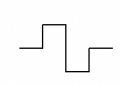
If 5kHz is the stepping rate, what does the signal look like? It is a square-wave? Is it always ±150V? What is the frequency? If that were the case, it will be rather easier.
I attach a schematic of how the signal looks like. It is not always +-150, however, this is the maximum voltages the current source can reach.Screenshot 2025-02-19 at 16.58.01.png
 

MisterBill2

Joined Jan 23, 2018
27,187
The benefit of using a mechanical switch for a high level signal is that whatever the signal waveform is does not matter at all. Certainly it is a 1950's technology scheme, but simple enough to be easily duplicated.
 

MisterBill2

Joined Jan 23, 2018
27,187
OK, evidently my previous comment timed out and was deleted by my browser.
It seems that with the selection of point pairs for 0.2 milliseconds , possibly in sequence, under processor control, a mecanical selector is not the option.
So I suggest fast relays , possibly from the PICKERING company, which has years of experience.
 
Last edited:

ronsimpson

Joined Oct 7, 2019
4,648
From post #1 we have this:
Post #5 calls out 5khz step rate.
1740069168604.png
By #8 we have this:
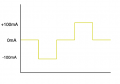
There is a 0 level, -100, 0, +100, 0. I do not know how this relates to 5khz. Is the entire waveform within the 5khz? Or is each piece a 5khz time? Does the +/100mA source make the 0, +100,0,-100,0 or do the "switches" make the wave form.
1740069274507.png
It might be that the -100mA is on for 50uS, the 0mA is 50uS, +100mA is 50uS and 0mA is 50uS? If his needs to be made by switches we need very fast switches.
Too many questions.
 

Thread Starter

MNLK

Joined Feb 11, 2025
8
OK, evidently my previous comment timed out and was deleted by my browser.
It seems that with the selection of point pairs for 0.2 milliseconds , possibly in sequence, under processor control, a mecanical selector is not the option.
So I suggest fast relays , possibly from the PICKERING company, which has hears of experience.
I'll take a look, thank you for your help!
 

Thread Starter

MNLK

Joined Feb 11, 2025
8
From post #1 we have this:
Post #5 calls out 5khz step rate.
View attachment 342851
By #8 we have this:
There is a 0 level, -100, 0, +100, 0. I do not know how this relates to 5khz. Is the entire waveform within the 5khz? Or is each piece a 5khz time? Does the +/100mA source make the 0, +100,0,-100,0 or do the "switches" make the wave form.
View attachment 342852
It might be that the -100mA is on for 50uS, the 0mA is 50uS, +100mA is 50uS and 0mA is 50uS? If his needs to be made by switches we need very fast switches.
Too many questions.
First of all sorry for not being clear in my explaination.
I'd like to clarify that in the current signal drawing I made (the yellow one, is showing one +- pulse) is a sequence that will be repeated. In this sequence each step time is 0.2ms, this applies for +100mA, -100mA and 0mA. The time between sequences is not really important.
The waveform is made by the current source itself. The switches finality is to let the current pass or not whenever a channel is selected or not, in other words, the switches will implement the DEMUX functionality.
With 5khz stepping rate I meant that in the current signal, each pulse minumum width will be 0.2 ms, this also would apply between the 0mA before
 

ronsimpson

Joined Oct 7, 2019
4,648
Thanks, that clears up many things.

Next: 150V at 100mA is 15 watts. Are you cooking this animal?
You need to be prepared for probes to short together. (sometimes they fall on the table and short)
How are you limiting the current? Bodies are not like a simple resistor. The resistance to current flow is complex. Some probes will allow more current than other probes depending on where the probe is applied and what type of animal.

I think you need a way of limiting the current and an adjustment for the max voltage.
 
Top