power analysis concepts etc.

Thread Starter

PG1995

Joined Apr 15, 2011
832
Hi

It was written that P=Po(V/Vo)^alpha and Q=Qo(V/Vo)^beta. Later, it was said that if alpha=beta=2 then you get a constant impedance, and also if alpha=beta=1 then you get a constant load. I believe that 'Q' stands for reactive power and 'P' for real power.

I couldn't make any sense that how the two formulas above were reached at and how and why alpha=beta=2 results into a constant impedance and so on. Could you please help? Thank you.
 

Thread Starter

PG1995

Joined Apr 15, 2011
832
Thank you.

That's the same thing I thought when someone was throwing these equations at me! So, I'm sorry because I myself don't know the context other than that it's from power analysis course.
 

WBahn

Joined Mar 31, 2012
32,823
So there's a book entitled Power Analysis and the first page has nothing on it but a page with a couple of equations on it? Then there's a few blank pages and another page with the statement that alpha=beta=2 means constant impedance and alpha=beta=1 means constant load?

Try to find a different book.
 

Thread Starter

PG1995

Joined Apr 15, 2011
832
Hi,

The impedance of a short is line 0.07+0.6j Ω and the phasor voltages on the both sides of short line are 2∠0° V and 2∠45° V. What is the total real power loss of the line? Could you please guide me as how to proceed? Thank you.
 

WBahn

Joined Mar 31, 2012
32,823
You need to show your best effort at solving the problem. That gives us a starting point to help you from. Having someone just tell you what to do is unlikely to help you really learn it. You've already been told and/or seen examples of how to work problems like this and something hasn't clicked. Having someone tell you again isn't too likely to change that. Instead, you need to struggle with it while we look over your shoulder to help you identify what it is that isn't clicking.
 

Thread Starter

PG1995

Joined Apr 15, 2011
832
Thanks.

I understand your point but I don't even know what to start with! I haven't seen any example of this type before. I can't even visualize the configuration properly.
 

Attachments

WBahn

Joined Mar 31, 2012
32,823
Let's see if we can't transform it into a simpler problem that you might be able to use as a starting point.

The resistance of a wire is 0.08 Ω and the voltages on both sides of the wire are 2 V and 2.4 V. What is the power loss of the wire?
 

Thread Starter

PG1995

Joined Apr 15, 2011
832
0.4V / 0.08Ω = 5 A. Power loss = I²R = 2 W. I hope that it's correct. Even in this case I can't visualize how the sources are connected. Thank you.
 

WBahn

Joined Mar 31, 2012
32,823
0.4V / 0.08Ω = 5 A. Power loss = I²R = 2 W. I hope that it's correct. Even in this case I can't visualize how the sources are connected. Thank you.
It doesn't matter how the sources are connected. There are many configurations that could result in the values stated, but you don't care because all you need is the voltage difference across the resistance and the current through it.
 

MrAl

Joined Jun 17, 2014
13,702
Hi,

The impedance of a short is line 0.07+0.6j Ω and the phasor voltages on the both sides of short line are 2∠0° V and 2∠45° V. What is the total real power loss of the line? Could you please guide me as how to proceed? Thank you.
Hi,

Voltage sources are independent of current, and current sources are independent of voltage.
This non dependency leads to simplifications because the values can not change. This also means the sums and differences can not change. So if you have a 5v source in one place and a 3v source in another place, the difference will always be either 5-3=2v or 3-5=-2v depending on what you choose for the reference.
This 'difference' represents a voltage drop. From there you can use either Ohm's Law or the complex form of Ohm's Law.
I have to say i am a little surprised you did not figure this out already. In the past over the years you have figured out much more complicated ideas on your own. This is actually very basic so maybe you are just over thinking it.
 

Thread Starter

PG1995

Joined Apr 15, 2011
832
Thank you, MrAl.

You're right that at one time I was able to figure out more complex problems in the past. I have been away from studies for a long time and have been thru harsh times and periods so just trying to get started again.

The impedance of a short line is 0.05+0.7j Ω and the phasor voltages on the both sides of short line are 1∠0° V and 1∠-45° V. What is the total real power loss of the line?

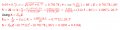
My attempt:


I don't think that I reached a correct answer.
 

Attachments

Last edited:

WBahn

Joined Mar 31, 2012
32,823
Why do you not think you've reached a correct answer?

According your answer, is the wire acting like a load or a source? Does this make sense?

S does NOT equal I²Z.

Review Complex Power.
 

Thread Starter

PG1995

Joined Apr 15, 2011
832
Thank you.

From my previous answer, it shows that the wire is acting like a source because of negative sign.

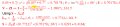
Thanks for pointing this out that S doesn't equal I²Z. I tried it again but the answer still doesn't match!


Attachments

JoeJester

Joined Apr 26, 2005
4,390
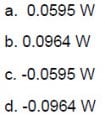
Why not post the entire question for all to see. After all, it is a multiple choice question.

What makes you so sure the voltage amplitudes were not given in the question.
 
Top