You're asking what "differentiating Id with respect to Vd" means, how it is performed.
You can see that Id is a function of several variables (not only Vd). For example if q or m or T changes, then Id will change in some way.
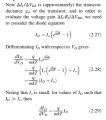
Differentiating the function 2.27 "with respect to Vd" means the process of deriving a new function, which relates how Idchanges as Vd changes while the other variables don't change.
There are well established rules for how to differentiate (transform) algebraic expressions of various forms, those involving e and exponents or sin and cos or square roots for example.
The explanation you posted assumes you are familiar with these rules, but if you aren't then it will look bewildering, I can't remember many of the myself! but if you do some research on differentiating different kinds of functions of e you will see that equation 2.27 is a particular kind of function and has a standard rule for differentiation.
so result is directly obtained in one pass (top of 2.28) but it is processed further by adding and subtracting Io. since adding and subtracting anything results in no change, that is still the same equation but ... it allows grouping (inner brackets) that allows substitution to Id. this leads to final form.
It gives an expression that tells you how much I_D changes for a change in V_D.
That's what a derivative is.
If you don't understand that, then you need to go back to your first semester calculus text and read about what derivatives and integrals are and how they relate changes in one quantity to changes in another.
It's quite possible that you were unfortunate enough to have taken these classes from someone that just had you memorize a bunch of formulas about how to manipulate equations without every presenting anything about what these equations mean. I've seen that several times and its a travesty. If so, it's now up to you to backfill that knowledge so that you can actually use these powerful tools going forward. Fortunately, in today's world, there is no shortage of good information out there online to draw upon.
It gives an expression that tells you how much I_D changes for a change in V_D.
That's what a derivative is.
If you don't understand that, then you need to go back to your first semester calculus text and read about what derivatives and integrals are and how they relate changes in one quantity to changes in another.
It's quite possible that you were unfortunate enough to have taken these classes from someone that just had you memorize a bunch of formulas about how to manipulate equations without every presenting anything about what these equations mean. I've seen that several times and its a travesty. If so, it's now up to you to backfill that knowledge so that you can actually use these powerful tools going forward. Fortunately, in today's world, there is no shortage of good information out there online to draw upon.
I taught myself calculus before I got to EE college, it was an effort but I had time and my home was peaceful. I did it systematically, using some excellent books and just doing the exercises week by week and gradually got a good understanding.
I still have the books (and I need to read them again!).
The reason I mention this is that I spend a lot of time online, and I just don't know if I was 17 today would I get the same solidity of understanding from an internet article or series, compared to good old fashioned book.
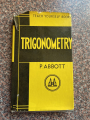
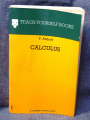
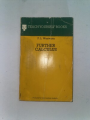
FYI these were the books and I highly recommend them to this day, I went through them in this order:
The reason I mention this is that I spend a lot of time online, and I just don't know if I was 17 today would I get the same solidity of understanding from an internet article or series, compared to good old fashioned book.
It's hard to say. Certainly there were good books and bad books back then, and there are good online resources and bad online resources today. Books tend to go deeper into the material, but online resources can offer more immersive experiences such as interactive animations. Back then you might be lucky to be able to examine a half dozen books to choose from (in my case it was basically one -- the one that the school provided with the course, though I suppose there were probably at least some options at the local library). Today it is easy to examine dozens of resources, including books, online to get a feel for which ones might be good for you. You also aren't locked into a choice of one or two, you can bounce around as needed searching for the most beneficial explanations of what you are presenting focused on.
So, on balance, I think that the two complement each other nicely. The big difference, to my mind, is that back then most people understood that learning something usually involved concentrated effort, not casual interaction. Textbooks and manual exercises go a long way toward forcing you to take that approach. That is harder to accomplish when you are watching a video or twiddling the controls on an animation. It's far from impossible, but the tendency is to foster a much more superficial interaction with the material and, when that makes up a significant portion of your "study", it tends to foster a more superficial approach to learning in general.

 Facebook
 Google
 GitHub
 Linkedin