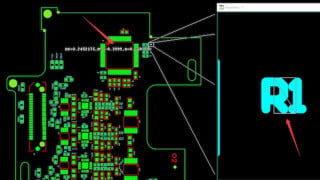
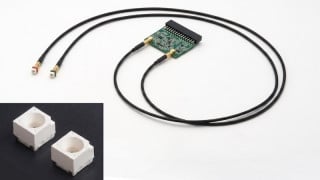
Please help me reverse engineer this PCB.

In the meantime, any thoughts on the use of either the MOC3010 or 3030? It seemed to me that that the only significant difference was that the 30s are a zero-crossing model, which I assume isn't necessary when switching a triac. True or not?
Not.

TRIACs automatically turn off at zero-crossings (note that I didn't say voltage or current). They can be turned on at any point in the cycle. It is more gentle on downstream equipment to go for the zero-crossing turn-on model, especially since inrush current is reason for the design.

ak
 

Thread Starter

Failer

Joined Jul 11, 2009
27
I am in agreement with you and that is why I am asking. I can post the two that I was looking at and if I knew how to interpret that data, I wouldn’t be here asking questions that to you must seem very basic. My knowledge is minimal, and the two datasheets for those that I found are in different formats and I can’t pick out the relevant information. That’s why I’m asking here. If you are so inclined, I would appreciate assistance on deciphering their relevant information.
 

Thread Starter

Failer

Joined Jul 11, 2009
27
These optos will be switching Q4025P triacs, because that's what the original design was and thus I have several laying around. They will just be switched by the incoming 120V through the OC, using the gate resistor value that you indicated previously.

Once again, to all.. I appreciate the assistance. My previous experience with things like Heathkit and that sort of thing, while still learning, is really more like model building. I can follow all the steps and put something together, that's not really what I would consider difficult. But I never really considered how I would proceed with something if it wasn't already engineered for me, and I'm realizing now how much of the fundamentals that I don't really know.
 

Attachments

Top