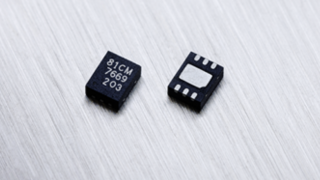
Please help me find SMD equivalents to BC548

Ian0

Joined Aug 7, 2020
13,165
Hey, just remembered something. In that article is saying:

"Equivalents: if no BC548 then use BC549, PN100, 2N3904 or 2SC1815 (i.e. pretty much any general purpose NPN transistor with a beta > 100)."

So it means that I should only consider that value? But what is this beta value anyway? Because I can't find anything like that in datasheets.
Beta is HFE
 

Papabravo

Joined Feb 24, 2006
22,084
Hey, just remembered something. In that article is saying:

"Equivalents: if no BC548 then use BC549, PN100, 2N3904 or 2SC1815 (i.e. pretty much any general purpose NPN transistor with a beta > 100)."

So it means that I should only consider that value? But what is this beta value anyway? Because I can't find anything like that in datasheets.
Beta is a common term for the current gain, or the ratio of collector current to base current. You should be aware that there are different ways to measure this parameter, and thus different values for this parameter are both possible and correct. In datasheets it is referred to as:

\( h_{fe}\text{ or } h_{FE} \)

depending on whether it refers to the small signal current gain or the large signal current gain. This parameter is not well controlled in the manufacturing process, so in any give batch of parts, you will find that it behaves like a normally distributed random variable with a mean and a standard deviation (square root of the variance). In the datasheet a "typical" value for this parameter would be an estimate of the "mean" in a normal distribution. The minimum, if specified would be -3σ, or 3 standard deviations below the "mean".

This being the case you would be foolish beyond belief to design a transistor circuit that depended on a particular value of this parameter. No competent designer would ever do such a thing.
 

Thread Starter

spikespiegelbebop

Joined Nov 30, 2021
163
You've done the hard part, now you tell us.
Nah, I'm not in position to teach anyone, maybe one day after I've learned way more. One that I thought about was the BC846AMTF: https://alltransistors.com/transistor.php?transistor=70670
But the Collector Capacitance (Cc) is much lower.
The one you've suggest seems perfectly fine, except for the power, which is 0.2 W (against 0.5 W from the B548), but since the author said that any general purpose transistor is better, maybe there's no problem using it.
 

Papabravo

Joined Feb 24, 2006
22,084
Nah, I'm not in position to teach anyone, maybe one day after I've learned way more. One that I thought about was the BC846AMTF: https://alltransistors.com/transistor.php?transistor=70670
But the Collector Capacitance (Cc) is much lower.
The one you've suggest seems perfectly fine, except for the power, which is 0.2 W (against 0.5 W from the B548), but since the author said that any general purpose transistor is better, maybe there's no problem using it.
I never asked you to teach anything. All I'm asking you to do is make a selection based on your own criteria about what is and is not an acceptable compromise. It seems like that is actually your job.
 

DickCappels

Joined Aug 21, 2008
10,661
If I can inject and idea - get one or more of the candidates and try them out in the circuit. By looking at the picture you will be able to figure out whether that particular transistor is adequate for the job.

If you like, send me a private message with your postal address and I will mail some candidates to you for testing. We are talking about a few pennies worth of transistors here.
 

Thread Starter

spikespiegelbebop

Joined Nov 30, 2021
163
I don't know. I don't have access to the datasheet you're looking at. It is a picture of a link to a datasheet.

ETA: I cannot find the number "215" anywhere in the Nexperia datasheet which is here:
https://assets.nexperia.com/documents/data-sheet/BC849C.pdf
Here you go:
https://www.lcsc.com/product-detail/Bipolar-Transistors-BJT_Nexperia-BC849C-215_C334244.html

If I can inject and idea - get one or more of the candidates and try them out in the circuit. By looking at the picture you will be able to figure out whether that particular transistor is adequate for the job.

If you like, send me a private message with your postal address and I will mail some candidates to you for testing. We are talking about a few pennies worth of transistors here.
I'll see it later.
 

Thread Starter

spikespiegelbebop

Joined Nov 30, 2021
163
You keep asking that question, but I don't think the TS is paying any attention. It is almost as if you don't exist. Frustrating — I know.
lol, sorry.

Why don't you use a video amplifier IC?
So sorry, I've seen your message before, but I've got distracted.
To be honest, I'm still learning how to work with transistors. :confused:
Can I just... REPLACE the transistors with an IC, by making the proper wiring?
 

Ian0

Joined Aug 7, 2020
13,165
If you pick a SOT23 NPN transitor at random - one at the bottom of your bits-box that has fallen out of its tape - the odds are that it will work. SOT23 transistors that won't work in this circuit (i.e. with Vceo<10V and Ic<20mA and ft<50MHz) are pretty rare.
 

Audioguru again

Joined Oct 21, 2019
6,826
TVs used RGB video amplifier ICs that work better and take up less space than the transistor circuit you need. I used one in a tele-conferencing project 31 years ago. I looked at Digikey and they stock 1400+ single video amplifier ICs but only one tripple amplifier for CRT red, green and blue. I guess nobody uses a CRT anymore.
 

Thread Starter

spikespiegelbebop

Joined Nov 30, 2021
163
TVs used RGB video amplifier ICs that work better and take up less space than the transistor circuit you need. I used one in a tele-conferencing project 31 years ago. I looked at Digikey and they stock 1400+ single video amplifier ICs but only one tripple amplifier for CRT red, green and blue. I guess nobody uses a CRT anymore.
Nobody uses CRTs anymore, that's correct, but have you seen how gorgeous their pictures are for retrogaming? :)
It's amazing. I've RGB modded some TVs before, it's simply fantastic the picture you can extract from these old consumer TVs with a console emulador and a RGB mod, like Neo Geo games such as The King of Fighters, but not all of them offer support for GB modding via IC, so in these cases our only option is to RGB mod the TV using the TV's neckboard, the thing is that for devices likes videogame consoles, raspberry and PC we need an amplifier, it's not the same as using Jamma (for example).
 
Last edited:

Thread Starter

spikespiegelbebop

Joined Nov 30, 2021
163
That is a real knee slapper, a datasheet from 2004 from a completely different company.

ETA: I can't find the number 215 in that datasheet either. I think lcsc.com just tacked it on for giggles.
For now I'll go with the one you've recommended, but if I get a reply from the Guru, I might use the IC. Thanks.

TVs used RGB video amplifier ICs that work better and take up less space than the transistor circuit you need. I used one in a tele-conferencing project 31 years ago. I looked at Digikey and they stock 1400+ single video amplifier ICs but only one tripple amplifier for CRT red, green and blue. I guess nobody uses a CRT anymore.
Which IC amplifier do you recommend in this specific case and should I just connect the traces to it the same way as I would with the transistors?
 
Top