Picking a transformer for a phone charger

Thread Starter

ArakelTheDragon

Joined Nov 18, 2016
1,366
Hello! I built a phone charger and the only part left is the transformer and the filter capacitor after it. Does anyone have an idea for a what kind and type of a transformer I should use. Because it needs to be working a long time (hours, days) without stopping and I do not want it to burst into flames.

I was thinkig of an impulse transformer with a secondary coil of 12V and secondary current of 1A minimum.
 

DickCappels

Joined Aug 21, 2008
10,661
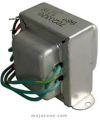
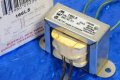
How about one of these, much simpler to use than a pulse transformer. For a little extra reliability just make sure the current rating is 2x or more of the expected load and make sure there is enough ventilation.

upload_2018-9-29_16-24-23.jpeg

upload_2018-9-29_16-26-44.png
Note: I am not recommending these exact transformers. The photograph is intended to be illustrative.
 

Attachments

Ramussons

Joined May 3, 2013
1,568
Hello! I built a phone charger and the only part left is the transformer and the filter capacitor after it. Does anyone have an idea for a what kind and type of a transformer I should use. Because it needs to be working a long time (hours, days) without stopping and I do not want it to burst into flames.

I was thinkig of an impulse transformer with a secondary coil of 12V and secondary current of 1A minimum.
You can get a valid answer only if you post the schematic of what you have built.
 

Thread Starter

ArakelTheDragon

Joined Nov 18, 2016
1,366
I do not think that the circuit is needed, plus I can not post it.

There are 2 batteries x 18650, I was hoping to use the transformer to limit the current, by supplying a max of 1A from it, like its done for car batteries normally.
 

Thread Starter

ArakelTheDragon

Joined Nov 18, 2016
1,366
Also what will happen if I have a source of 8.1VDC charging the batteries, will they get overcharged with time to 8.2VDC (thats how it is normally), will I detect 8.1VDC(source) or 8.2VDC(batteries) with a comparator if they are overcharged? I do not have the comparator at the moment to test, I think it is the only way to confirm this.
 

KeithWalker

Joined Jul 10, 2017
3,607
I do not think that the circuit is needed, plus I can not post it.

There are 2 batteries x 18650, I was hoping to use the transformer to limit the current, by supplying a max of 1A from it, like its done for car batteries normally.
Cheap car battery charger transformers are constructed specially for that purpose. The size of wire used in the secondary winding is chosen to limit the current to the required value. Lithium-ion batteries are very different from lead-acid. They can be easily damaged by incorrect charging.
I recommend that you do a little research on them before you consider designing your own charger. Otherwise your efforts will be wasted and you will turn your precious batteries into paper weights.
https://batteryuniversity.com/learn/article/charging_lithium_ion_batteries
 

Thread Starter

ArakelTheDragon

Joined Nov 18, 2016
1,366
I have researched them. They will be charged with 52kHz buck regulator up to 4.1V and discharged to 3.2V. The current is 1A. I wanted to avoid a current regulator and use only a voltage regulator, if not possible, I will add a current regulator also, but my question still stands.
 

KeithWalker

Joined Jul 10, 2017
3,607
I have researched them. They will be charged with 52kHz buck regulator up to 4.1V and discharged to 3.2V. The current is 1A. I wanted to avoid a current regulator and use only a voltage regulator, if not possible, I will add a current regulator also, but my question still stands.
If you use the resistance of a transformer winding to limit the current, the transformer will run hot. That is not what you want. Use a current regulator and a normal transformer with a 12 volt 2 amp secondary winding. The value of the smoothing capacitor will depend on the requirements of the buck regulator.
 

Thread Starter

ArakelTheDragon

Joined Nov 18, 2016
1,366
If you use the resistance of a transformer winding to limit the current, the transformer will run hot. That is not what you want. Use a current regulator and a normal transformer with a 12 volt 2 amp secondary winding. The value of the smoothing capacitor will depend on the requirements of the buck regulator.
Is there any transformer that will not grow hot, maybe an impulse one or some option?

Otherwise I will have to pick a different transformer and make another block for the current regulation.
 

Thread Starter

ArakelTheDragon

Joined Nov 18, 2016
1,366
I know this, like its mentioned in my first post
I guess there is no such transformer like for car batteries. Ok, thanks for the help.
 

ian field

Joined Oct 27, 2012
6,536
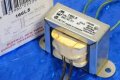
How about one of these, much simpler to use than a pulse transformer. For a little extra reliability just make sure the current rating is 2x or more of the expected load and make sure there is enough ventilation.

View attachment 160641

View attachment 160643
Note: I am not recommending these exact transformers. The photograph is intended to be illustrative.
Is that for one of those old Motorola jobs in a satchel?
 

Audioguru

Joined Dec 20, 2007
11,248
Are you building a 5V power supply for the charger circuit inside a phone?
Or are you designing a charger circuit for the Lithium battery inside a phone?
They are completely different.
 

Thread Starter

ArakelTheDragon

Joined Nov 18, 2016
1,366
Are you building a 5V power supply for the charger circuit inside a phone?
Or are you designing a charger circuit for the Lithium battery inside a phone?
They are completely different.
I am building a 5v power supply for a battery bank. The whole device can be used to power a phone, PIC16 development board or another 5VDC device.
 

Audioguru

Joined Dec 20, 2007
11,248
I am building a 5v power supply for a battery bank. The whole device can be used to power a phone, PIC16 development board or another 5VDC device.
But a battery bank is usually charged from USB, not from a 5V power supply.
You are simply making a 5V power supply with a USB connector on its output.
 

Audioguru

Joined Dec 20, 2007
11,248
You are making an explosion followed by a fire that is difficult to extinguish, unless you use a Lithium battery charger IC.
A battery bank has a 5V USB input feeding a lithium battery charger IC that safely limits the charging current to a single Lithium cell and limits the charging voltage to 4.20V. The charger IC detects when the charging current becomes low then it disconnects the charging. A 5V power supply can also feed the charger IC.
The 4.2V from the single battery cell in the battery bank drops to 3.2V as it is used then the voltage is too low to feed the charger circuit in a phone so it feeds a voltage boost IC that has the 5V output to feed the charger in the phone.

You talk about using a comparator to detect a full charge but when the charging voltage reaches 4.1V or 4.2V then the cell is about 70% charged.
You talk about using a voltage regulator without a current limiter instead of properly using a Lithium battery charger IC.
You talk about two batteries charged with 8.1V with nothing to limit the current and wrongly detecting 8.2V as being fully charged. Why 8.2V which will drop to 6.4V? A battery bank has a 5V output.
 

Thread Starter

ArakelTheDragon

Joined Nov 18, 2016
1,366
If you want a detailed explanation:

The batteries are charged to 4.059VDC, 2x4.059 = 8.118VDC. The voltage regulator will be set to 8.118VDC. if the charger is not disconnected it will keep charging to 8.2VDC. The comparator detects 8.2VDC and stops the charging process.
I said I will add the current limiting.
Its 90% not 70%, charge and gives a longer battery life, despite that the battery will get discharged faster. Also I account for the accuracy of the circuit which is 2% and I prefer to have a 90% charge then to risk overcharging. The maximum value of these batteries is 4.2VDC, not 4.059V DC. 0.141VDC is for the overcharging protection.

My question is simple, the batteries keep charging with a small current after they reach the voltage set (meaning 2x4.059VDC = 8.118VDC), will I detect the higher battery voltage of 8.2VDC with a comparator or will I detect the charger (buck regulator == 8.118VDC)?
 

Audioguru

Joined Dec 20, 2007
11,248
No, you are asking for an explosion, followed by a fire that is difficult to extinguish.
A normal Lithium Ion battery cell is 4.20V when fully charged and the charging current has dropped low.
Multi-cell Lithium batteries are charged with a balanced charger that adjusts the charging current on each cell separately so that the weakest cell does not become overcharged then explode.

The chargers I use for my RC airplanes are cheap but work perfectly. They charge to 4.19V per cell accurately, detect a low charging current then turn off lighting the "charge finished" LED.

Your plan of cutting off the charging when each cell is 4.1V results in 80% capacity according to BatteryUnivercity.com but without a balanced charger one cell might try to charge to 4.3V or more then blow up.

Lithium is an extremely powerful and dangerous metal. You should read all about it at the battery university and do what they say.
 
Top