Phototransistor minimum Vcc

crutschow

Joined Mar 14, 2008
38,423
Yes, the transistor output should work fine at 1.8V.
The main limit is the transistor saturation voltage when fully on of perhaps a couple hundred millivolts.
 

absf

Joined Dec 29, 2010
1,968
Yes, the transistor output should work fine at 1.8V.
The main limit is the transistor saturation voltage when fully on of perhaps a couple hundred millivolts.
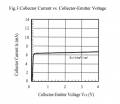
I download the datasheet of EAPST1608A0. And I found no minimum ratings for all the specs. But only this graph

tempa.PNG
Are you basing your answer using this graph? Thanks.

Allen
 

RichardO

Joined May 4, 2013
2,270
Yes, the transistor output should work fine at 1.8V.
The main limit is the transistor saturation voltage when fully on of perhaps a couple hundred millivolts.
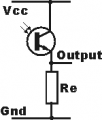
The circuit posted is an emitter follower configuration.

@crutschow what is the saturation voltage in this circuit? Is it the standard 1 diode below the positive power supply or can the photons drivethe emitter to collector/emitter saturation voltage?
 

GopherT

Joined Nov 23, 2012
8,009
The circuit posted is an emitter follower configuration.

@crutschow what is the saturation voltage in this circuit? Is it the standard 1 diode below the positive power supply or can the photons drivethe emitter to collector/emitter saturation voltage?
Base-Emitter voltage is one diode drop.

The emitter-collector voltage is NOT one diode drop. Usually much less for Emitter collector voltage in a saturated transistor. A 2N2222A is about 0.3V (max) [0.1 to 0.2 typical] at 150mA (even less at lower current). It can go up to 1V at higher current (500 mA) but much under a typical 0.6V diode drop at lower currents.
 

RichardO

Joined May 4, 2013
2,270
Base-Emitter voltage is one diode drop.

The emitter-collector voltage is NOT one diode drop. Usually much less for Emitter collector voltage in a saturated transistor. A 2N2222A is about 0.3V (max) [0.1 to 0.2 typical] at 150mA (even less at lower current). It can go up to 1V at higher current (500 mA) but much under a typical 0.6V diode drop at lower currents.
I think you may have misunderstood my question. I am asking about the circuit posted that has the load in the emitter of a phototransistor.

If the load were in the collector then the transistor can, obviously, saturate. In a normal emitter follower, the emitter can get no closer to the positive power supply than the base-emitter drop. But, is a phototransistor different? Can it saturate in an emitter follower configuration since the electrons from the photocurrent are not referenced to the collector voltage?
 

GopherT

Joined Nov 23, 2012
8,009
I think you may have misunderstood my question. I am asking about the circuit posted that has the load in the emitter of a phototransistor.

If the load were in the collector then the transistor can, obviously, saturate. In a normal emitter follower, the emitter can get no closer to the positive power supply than the base-emitter drop. But, is a phototransistor different? Can it saturate in an emitter follower configuration since the electrons from the photocurrent are not referenced to the collector voltage?
Yes, that is the great part of a phototransistor in this type of a circuit. (Even an optocoupler - which use photodiode or phototransistor). An NPN phototransistor can be a high-side switch because the light turns it on which is completely independent of the supply voltage.
 

RichardO

Joined May 4, 2013
2,270
Yes, that is the great part of a phototransistor in this type of a circuit. (Even an optocoupler - which use photodiode or phototransistor). An NPN phototransistor can be a high-side switch because the light turns it on which is completely independent of the supply voltage.
True. But my question is whether the phototransistor will _saturate_ with the load in the emitter. In other words will the emitter to collector drop be less than a diode drop?
 

GopherT

Joined Nov 23, 2012
8,009
True. But my question is whether the phototransistor will _saturate_ with the load in the emitter. In other words will the emitter to collector drop be less than a diode drop?
Yes, if it gets enough light (per the phototransistor datasheet).

It doesn't take much to saturate them if you have an IR emitter in close proximity with proper orientation.
 

RichardO

Joined May 4, 2013
2,270
0.4v max saturation voltage for this one (the last one I bought) - used it for a reflectance detector (wall sensor) on a micro mouse robot. Eventually changed out for smd reflectance module with emitter snd photodiode.

https://www.fairchildsemi.com/datasheets/QS/QSD123.pdf
Thanks for the data.

I have now looked at 4 data sheets and only one shows the circuit that the saturation voltage was measured in. :(

The one that did show the circuit showed the emitter follower configuration. The saturation voltage is a bit odd in that data sheet seems to give 2 slightly different values. I will look at that some more and get back to you.
 

crutschow

Joined Mar 14, 2008
38,423
what is the saturation voltage in this circuit? Is it the standard 1 diode below the positive power supply or can the photons drive the emitter to collector/emitter saturation voltage?
The photons drive it into saturation of a few tenths of a volt for either the emitter-follower or common-emitter configuration.
It somewhat acts as a boot-strapped driver.
It's not limited to the typical 0.7V for a standard emitter follower.
 

RichardO

Joined May 4, 2013
2,270
The photons drive it into saturation of a few tenths of a volt for either the emitter-follower or common-emitter configuration.
It somewhat acts as a boot-strapped driver.
It's not limited to the typical 0.7V for a standard emitter follower.
Thanks to both you and @GopherT I have had a lingering question answered.

:D:D
 
Top