Peavey Advice

Thread Starter

joeyd999

Joined Jun 6, 2011
6,404
My daughter is taking my 90s era Peavey XRD 680S Plus to college for sound for her band.
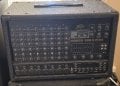
20250309_151110(1).jpg

It works great, especially after the repairs I did with your help last year.

I could send it with her as-is, but some of the pots, switches, and jacks are noisy (live on-stage sound adjustments will crackle through the speakers during a performance).

I'm tempted to try to clean them with contact cleaner. If I screw up, my daughter has no sound for her band.

I need advice and/or instruction.

She leaves in 2 weeks.

Thanks.
 

Attachments

Thread Starter

joeyd999

Joined Jun 6, 2011
6,404
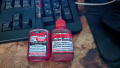
BTW, Grok recommends Deoxit (5 Oz. for $17 on Amazon).

This was Grok's full advice:

**Yes, cleaning them is usually possible and often fixes the noise**, especially on a 1990s solid-state unit like the Peavey XRD 680S Plus (a 600 W stereo powered mixer). Scratchy pots, noisy switches, and intermittent jacks are almost always caused by dirt, oxidation, or dried lubricant on the contacts.

### Recommended Cleaner
Use a proper **electronic contact cleaner** designed for this:
- **Caig DeoxIT D5** (or the F5 FaderLube version) is the most recommended by techs for pots and switches. It cleans oxidation and leaves a light protective film.
- Alternatives: CRC contact cleaner (electronics formula), or other non-residue / light-lube contact cleaners labeled safe for electronics and plastics.

**Avoid** regular WD-40 (it leaves a residue that attracts more dirt). The specialized “WD-40 Specialist Contact Cleaner” is acceptable but not as good as DeoxIT for long-term results on carbon-track pots.

### Safety First
- Unplug the mixer from the wall and leave it unplugged.
- Work in a well-ventilated area; the cleaner is flammable and the fumes are not great to breathe.
- Cover surrounding circuit boards and components with paper towels or cloth so overspray doesn’t go everywhere.
- You do **not** need to discharge high-voltage filter caps the same way you would on a tube amp, but still treat the inside carefully.

### Cleaning Procedure

**1. Pots (volume, EQ, etc.)**
Most pots have a small opening or gap near the terminals or where the shaft enters the body.
- Remove the knobs if needed for better access.
- Insert the spray tube and give a short burst (less is more — you don’t want to flood it).
- Immediately rotate the control fully back and forth 20–30 times.
- Let it dry/evaporate, then test. Repeat once if needed.

For the best results you’ll usually need to open the chassis so you can spray from the back of the pots.

**2. Switches**
Spray a small amount into the switch mechanism (or onto the contacts if accessible) and toggle the switch rapidly many times. Work it through its full travel.

**3. Jacks / sockets**
- Spray a little cleaner into the jack.
- Insert and remove a ¼″ plug 10–20 times while rotating it slightly.
- Alternatively, lightly spray the tip of a plug or use a cotton swab (or a bit of fine sandpaper wrapped around a thin tool for stubborn oxidation), then work it in the jack. Wipe away residue afterward.

### Extra Tips
- Do all the noisy controls in one session while you have the unit open.
- After cleaning, leave everything to dry thoroughly (30–60 minutes or more) before powering up.
- If a pot is still noisy after a couple of proper cleanings, the carbon track is probably worn and the pot will eventually need replacement.
- While you’re inside, check that jack nuts and any ground screws are snug — loose hardware can also cause intermittent noise.

This is routine maintenance on 30-year-old gear and succeeds most of the time. If you’re not comfortable opening the chassis, any decent amp/tech shop can do the whole job quickly and cheaply.
 

nsaspook

Joined Aug 27, 2009
16,411
BTW, Grok recommends Deoxit (5 Oz. for $17 on Amazon).

This was Grok's full advice:

**Yes, cleaning them is usually possible and often fixes the noise**, especially on a 1990s solid-state unit like the Peavey XRD 680S Plus (a 600 W stereo powered mixer). Scratchy pots, noisy switches, and intermittent jacks are almost always caused by dirt, oxidation, or dried lubricant on the contacts.

### Recommended Cleaner
Use a proper **electronic contact cleaner** designed for this:
- **Caig DeoxIT D5** (or the F5 FaderLube version) is the most recommended by techs for pots and switches. It cleans oxidation and leaves a light protective film.
- Alternatives: CRC contact cleaner (electronics formula), or other non-residue / light-lube contact cleaners labeled safe for electronics and plastics.

**Avoid** regular WD-40 (it leaves a residue that attracts more dirt). The specialized “WD-40 Specialist Contact Cleaner” is acceptable but not as good as DeoxIT for long-term results on carbon-track pots.

### Safety First
- Unplug the mixer from the wall and leave it unplugged.
- Work in a well-ventilated area; the cleaner is flammable and the fumes are not great to breathe.
- Cover surrounding circuit boards and components with paper towels or cloth so overspray doesn’t go everywhere.
- You do **not** need to discharge high-voltage filter caps the same way you would on a tube amp, but still treat the inside carefully.

### Cleaning Procedure

**1. Pots (volume, EQ, etc.)**
Most pots have a small opening or gap near the terminals or where the shaft enters the body.
- Remove the knobs if needed for better access.
- Insert the spray tube and give a short burst (less is more — you don’t want to flood it).
- Immediately rotate the control fully back and forth 20–30 times.
- Let it dry/evaporate, then test. Repeat once if needed.

For the best results you’ll usually need to open the chassis so you can spray from the back of the pots.

**2. Switches**
Spray a small amount into the switch mechanism (or onto the contacts if accessible) and toggle the switch rapidly many times. Work it through its full travel.

**3. Jacks / sockets**
- Spray a little cleaner into the jack.
- Insert and remove a ¼″ plug 10–20 times while rotating it slightly.
- Alternatively, lightly spray the tip of a plug or use a cotton swab (or a bit of fine sandpaper wrapped around a thin tool for stubborn oxidation), then work it in the jack. Wipe away residue afterward.

### Extra Tips
- Do all the noisy controls in one session while you have the unit open.
- After cleaning, leave everything to dry thoroughly (30–60 minutes or more) before powering up.
- If a pot is still noisy after a couple of proper cleanings, the carbon track is probably worn and the pot will eventually need replacement.
- While you’re inside, check that jack nuts and any ground screws are snug — loose hardware can also cause intermittent noise.

This is routine maintenance on 30-year-old gear and succeeds most of the time. If you’re not comfortable opening the chassis, any decent amp/tech shop can do the whole job quickly and cheaply.
You needed that non-AI tool to tell you that?
 

Thread Starter

joeyd999

Joined Jun 6, 2011
6,404
You needed that non-AI tool to tell you that?
No. I came here for the audio experts.

I've said before, I only trust AI that I can verify. As I've no maintenance experience on high-end audio, I won't do what Grok told me unless someone tells me it's correct or gives me a better way.

I only posted Grok to help start the conversation.

If you have something useful to add, please, do.

Edit: except regarding personal relationships, there's no such thing as TMI.
 

Thread Starter

joeyd999

Joined Jun 6, 2011
6,404
I also reached out locally to find a tech who works on vintage equipment like this. Believe it or not, they are few and far in between, regardless of how much money you're willing to spend, and they all have a queue stretching out for weeks.
 

Thread Starter

joeyd999

Joined Jun 6, 2011
6,404
On thing Grok didn't suggest is dusting with compressed air prior to using the contact cleaner. I think one'd want to clean 30+ years of dust prior to a liquid spray, no?
 

nsaspook

Joined Aug 27, 2009
16,411
Further, I'd like to know: is there a risk in trying to clean parts so old? I'd rather she have a crackly amp than no amp at all.
The short answer is maybe. Deoxit is a great product that I use to restore old gear but old pots (vs contacts on switches, and jacks ) don't always get better from the application.
1786221292677.png

Once you clean away the carbon dust and muck from the still functioning but noisy pot wear groove, it often causes the wiper to carbon surface gaps to get wider, that causes complete sound dropouts during rotation. This often requires replacement parts.
 
If you want to see some similar work being done, I'd reccomend you check out Mend It Mark on youtube. He repairs a lot of vintage audio stuff and cleaning up pots is something he does quite often.
 
I also reached out locally to find a tech who works on vintage equipment like this. Believe it or not, they are few and far in between, regardless of how much money you're willing to spend, and they all have a queue stretching out for weeks.
That is the right stuff, and is the cleaner most guitar techs use.
I use DeoxIT D5S-6 Spray for my Basses.
 
Further, I'd like to know: is there a risk in trying to clean parts so old? I'd rather she have a crackly amp than no amp at all.
There is always a risk. Some have sealed pots. I have a PA600 I refurbished, put new VU meters, cleaned/replaced pots, etc. Be prepared to replace pot if can't fix by cleaning. Peavy support is real good about stocking old replacement parts, even for something that old.

But really, no one wants to play out of a noisy PA anyway. So be prepared to replace pot/switches.
 

SamR

Joined Mar 19, 2019
5,517
I've used spray tube contact cleaner on pots and lots of end to end twisting. Sometimes it works but have to replace if not. Sometimes you will "drown" the pot shorting it out and need to let it dry back out to really test. If replacing, use a good quality pot! Amplified Parts carries Peavy (and many other brands) potentiometers and other guitar/amplifier parts.
 
Top