Facebook
 Google
 GitHub
 Linkedin

Greetings all, my first post here..and I hope it's in the correct category
I have a midi controller that has gone BSOD due to a little chip that has a pretty high failure rate for this device.
Fortunately there are known, relatively simple, fixes for this failure. They entail removing the offending chip
and simply soldering in a resistor and capacitor, works like a charm. However for the amateur, removing the
chip usually entails some damage to the board. I tried to do it with a heating gun and still tore off some contact material..
This is common enough that the repair tutorials also show some people using a silver trace pen to remedy
the situation, but not an actual demo of the process. So with that. I would like to ask where should I apply the trace?
Just over the patches that came off? Also when I look close up, I wonder if I tore out a pin along with the chip. The chip
was very small and I don't recall any stray pieces flying away with it. Don't know if that's fatal for the repair or what..?
I am new to soldering as well, and on my first attempt the solder seemed not to flow to the points I wanted.
This could just be lack of skill ( I hope ! ), but I suppose it also has something to do with the PCB damage ?
my attachment shows my board..and the link is a repair video from yt...
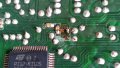
the red lines show where the resistor and capacitor should go
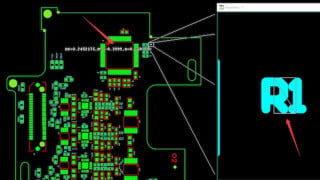
here is a successful repair, but still showing PCB damage
I copied it at time, but 1:57 shows it soldered in
thanks all in advance for any helpful input..
I have a midi controller that has gone BSOD due to a little chip that has a pretty high failure rate for this device.
Fortunately there are known, relatively simple, fixes for this failure. They entail removing the offending chip
and simply soldering in a resistor and capacitor, works like a charm. However for the amateur, removing the
chip usually entails some damage to the board. I tried to do it with a heating gun and still tore off some contact material..
This is common enough that the repair tutorials also show some people using a silver trace pen to remedy
the situation, but not an actual demo of the process. So with that. I would like to ask where should I apply the trace?
Just over the patches that came off? Also when I look close up, I wonder if I tore out a pin along with the chip. The chip
was very small and I don't recall any stray pieces flying away with it. Don't know if that's fatal for the repair or what..?
I am new to soldering as well, and on my first attempt the solder seemed not to flow to the points I wanted.
This could just be lack of skill ( I hope ! ), but I suppose it also has something to do with the PCB damage ?
my attachment shows my board..and the link is a repair video from yt...
the red lines show where the resistor and capacitor should go
here is a successful repair, but still showing PCB damage
I copied it at time, but 1:57 shows it soldered in
thanks all in advance for any helpful input..