If you use any method you want and you can use your answer to reproduce the original function then ipso facto it is a valid method. I'm not sure why you even had to ask that question.
If you use any method you want and you can use your answer to reproduce the original function then ipso facto it is a valid method. I'm not sure why you even had to ask that question.
what I want to ask here where is the wrong spot in my work when using the mentioned method? Do you understand? What is the wrong spot in my work when I use that mentioned method?
There is no "wrong spot" in your work, there never was and I never meant to imply that there was. I was unable to use your method and I had to refer to my old notes from university to solve the problem and do the confirmatory check. All I said at the time was that I was unable to solve the problem and could not confirm your answer. Eventually I was able to solve the problem and show you how the check was done. Are we through with this cursed problem that you have reposeted half a dozen times?
There is no "wrong spot" in your work, there never was and I never meant to imply that there was. I was unable to use your method and I had to refer to my old notes from university to solve the problem and do the confirmatory check. All I said at the time was that I was unable to solve the problem and could not confirm your answer. Eventually I was able to solve the problem and show you how the check was done. Are we through with this cursed problem that you have reposeted half a dozen times?
OK. Like all other people I make mistakes sometimes. When that happens, you have a choice to make:
Continue beating your head against a wall
Use an alternate but equally valid method that you are familiar with
As a first approach to the problem, I chose method #2. At that point my interest in method #1 evaporated.
In particular, I used method #1, got the same result, but could not verify that it was correct. That is why I tired the alternate method, got the same result, and then redid the verification, demonstrating that both methods produce the correct result. That is what went wrong.
OK. Like all other people I make mistakes sometimes. When that happens, you have a choice to make:
Continue beating your head against a wall
Use an alternate but equally valid method that you are familiar with
As a first approach to the problem, I chose method #2. At that point my interest in method #1 evaporated.
In particular, I used method #1, got the same result, but could not verify that it was correct. That is why I tired the alternate method, got the same result, and then redid the verification, demonstrating that both methods produce the correct result. That is what went wrong.
If it is just about the correct final result, I can do it myself not need to post here, What I need is the reason why I use the steps in that procedure but show the wrong result.
I tried it, you can see below, the comma is the dot, like -50,065 means -50.065. sorry for different character system. You click on view attachment. View attachment 340704
Yeah, that's not the new problem I gave you, but here is the complete solution to the new problem I gave you and you should apply this to your original problem. It does not help to keep posting the same result 3 times.
We start with eq1 which has the same form as your original problem...
eq1:
(767*s-50065)/(10-s)^2=k1/(10-s)+k2/(10-s)^2
Multiply by (10-s)^2 we get eq2:
eq2:
767*s-50065=-k1*s+k2+10*k1
with s=10 we get:
k2=-42395
Differentiate eq1 with respect to 's' we get:
k1=-767
insert k1 and k2 into eq1 we get:
(767*s-50065)/(10-s)^2=-767/(10-s)-42395/(10-s)^2
factor that we get:
(767*s-50065)/(s-10)^2=(767*s-50065)/(s-10)^2
So we proved that k1 and k2 are the right values.
Try that with your original problem and you should get a DIFFERENT result or else you did not do it right yet.
One of the values is a little over 26 not close to 33 or -33.
If you don't get it this time we'll have to go over it but this example should help.
If it is just about the correct final result, I can do it myself not need to post here, What I need is the reason why I use the steps in that procedure but show the wrong result.
I did not see that you got the wrong result. Maybe I missed something.
I rechecked the attachment in post #5 and it has the correct result. What on Earth are you talking about?
I did not see that you got the wrong result. Maybe I missed something.
I rechecked the attachment in post #5 and it has the correct result. What on Earth are you talking about?
Yeah, that's not the new problem I gave you, but here is the complete solution to the new problem I gave you and you should apply this to your original problem. It does not help to keep posting the same result 3 times.
We start with eq1 which has the same form as your original problem...
eq1:
(767*s-50065)/(10-s)^2=k1/(10-s)+k2/(10-s)^2
Multiply by (10-s)^2 we get eq2:
eq2:
767*s-50065=-k1*s+k2+10*k1
with s=10 we get:
k2=-42395
Differentiate eq1 with respect to 's' we get:
k1=-767
insert k1 and k2 into eq1 we get:
(767*s-50065)/(10-s)^2=-767/(10-s)-42395/(10-s)^2
factor that we get:
(767*s-50065)/(s-10)^2=(767*s-50065)/(s-10)^2
So we proved that k1 and k2 are the right values.
Try that with your original problem and you should get a DIFFERENT result or else you did not do it right yet.
One of the values is a little over 26 not close to 33 or -33.
If you don't get it this time we'll have to go over it but this example should help.
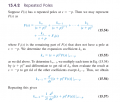
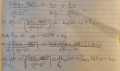
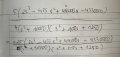
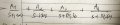
In the bold line, it should be differentiate after multiply eq1 with (10-s)^2, right?, below is my handwriting as per your guidance. Btw, The book I am using is'' Fundamentals of electric circuits'' , Chapter 15, Part 15.4
In the bold line, it should be differentiate after multiply eq1 with (10-s)^2, right?, below is my handwriting as per your guidance. Btw, The book I am using is'' Fundamentals of electric circuits'' , Chapter 15, Part 15.4 View attachment 340761 View attachment 340762
Yes that looks right. You could then go back and try to solve your original problem.
There is another interesting addition to this. That is, in the paper you provided it appears that they were going after a full-fledged formula for doing this but they never really completed it. That's the last line (15.57) of the original paper.
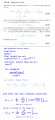
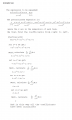
Since that only went up to the second derivative it is a good idea to take that further by generalizing to any number of coefficients. That's what the first attachment PartialFractions-02.png is showing. The second attachment PartialFractions-03.png is an example using variables for the coefficients.
Note that once we multiply by the denominator D(s) we only have to work with the numerator N(s). That sort of simplifies the procedure as shown.
You can rework your original problem using this method too and see that you get the right results.
In the example, first the completed expansion is shown, followed by the calculations for the coefficients. You can see that the calculated coefficients match the completed expansion exactly.
Yes that looks right. You could then go back and try to solve your original problem.
There is another interesting addition to this. That is, in the paper you provided it appears that they were going after a full-fledged formula for doing this but they never really completed it. That's the last line (15.57) of the original paper.
Since that only went up to the second derivative it is a good idea to take that further by generalizing to any number of coefficients. That's what the first attachment PartialFractions-02.png is showing. The second attachment PartialFractions-03.png is an example using variables for the coefficients.
Note that once we multiply by the denominator D(s) we only have to work with the numerator N(s). That sort of simplifies the procedure as shown.
You can rework your original problem using this method too and see that you get the right results.
In the example, first the completed expansion is shown, followed by the calculations for the coefficients. You can see that the calculated coefficients match the completed expansion exactly.
I got this hard problem, the denominator s^2+10000 got complex poles, and s^2+100s+1250 got 2 simple poles, can I write it like this View attachment 341439 View attachment 341440
That looks like you have the right first step, however, you may have to factor the last two into a more exact expression. See how it goes though first like it is. This one involves 4 variables so it could be harder to solve then the ones you did in the past.
Your handwriting is very hard to read. Please try to write more neatly in the future.
I got this hard problem, the denominator s^2+10000 got complex poles, and s^2+100s+1250 got 2 simple poles, can I write it like this View attachment 341439 View attachment 341440
I took another look at this one and found it may be easier to solve if you first split it up into two parts in the form of:
(A1*s+A2)/D1+(A3*s+A4)/D2 [This we can call FORM-1]
where D1 and D2 are:
D1=(s^2+10000)
D2=(s^2+100*s+1250)
then solve first for A1, A2, A3, and A4.
Once you do that, then you can break down each term.
This might be easier, but be aware I did not actually solve this entire problem yet. I did however solve for the form I show above and that looks, so far, that it may make this entire problem easier to solve. Whatever is easier for you though.
It may even be possible to simply solve for that FORM-1 above and leave it at that.
That looks like you have the right first step, however, you may have to factor the last two into a more exact expression. See how it goes though first like it is. This one involves 4 variables so it could be harder to solve then the ones you did in the past.
Your handwriting is very hard to read. Please try to write more neatly in the future.
I took another look at this one and found it may be easier to solve if you first split it up into two parts in the form of:
(A1*s+A2)/D1+(A3*s+A4)/D2 [This we can call FORM-1]
where D1 and D2 are:
D1=(s^2+10000)
D2=(s^2+100*s+1250)
then solve first for A1, A2, A3, and A4.
Once you do that, then you can break down each term.
This might be easier, but be aware I did not actually solve this entire problem yet. I did however solve for the form I show above and that looks, so far, that it may make this entire problem easier to solve. Whatever is easier for you though.
It may even be possible to simply solve for that FORM-1 above and leave it at that.
Well you must be able to type on a keyboard right?
You can type like this:
y=x^2+2*x+1
or you can type into a software package like Maxima, which is a free download.
You can also use online resources just do a quick search for solving equations.
Yes I was not sure if you wanted to use simultaneous equations or not. That's the most general way I know of too.
Also there is the method where you multiply by the denominator and then set 's' equal to each root in turn, but I am not sure if that works in every case when the problem gets more complicated.
I was also able to find a solution by setting 's' equal to some arbitrary value then solving for one variable in terms of possibly two or more variables, then substitute that back into the equation, then solving for another variable, then substituting that back into the equation, etc., etc., until we get down to just one variable and then we have the numerical solution for that one variable. This is similar to simultaneous equations except we solve for one variable at a time (often in terms of the others until we get down to just one variable). Can't be sure this works in every case though either.
Well you must be able to type on a keyboard right?
You can type like this:
y=x^2+2*x+1
or you can type into a software package like Maxima, which is a free download.
You can also use online resources just do a quick search for solving equations.
Yeh. But with more complex Math symbols such as integral or differential equation, it is very time consuming. I tried to use Mathpix snipping tool to draw equations then transfer them to Ms Words very easily but that is limitted.
Yeh. But with more complex Math symbols such as integral or differential equation, it is very time consuming. I tried to use Mathpix snipping tool to draw equations then transfer them to Ms Words very easily but that is limitted.
Not really, you just have to substitute common text representations for these kinds of functions. You can even make up your own to make it simpler, as long as you show what you mean very clearly in a note hopefully before you type the functions.
You can also just learn to write more neatly and that will help when you have to hand something to someone else in the future.
For example, for integration we have:
y=integrate(f(x),x,0,1)
which would mean integrate the function f(x) for 'x' from 0 to 1, or even just:
y=integrate(f(x),x)
which is an indefinite integration.
You can see this is very simple, and if you have a function like f(t) you can write that out first:
f(t)=e^(-t/RC)
and then write out the integration:
y=integrate(f(t),t,0,Tp)
which means integrate f(t) for t over the period t=0 to t=Tp.
This is really simple to remember too, and the benefit is that someone reading your post can then copy and paste the expressions into a math software environment and check your results. It makes this much faster so you get help much faster that way too.
For differentiation just one time, you can type:
dy/dt=diff(y(t),t)
or simplify the notation:
dydt=diff(y(t),t)
it's up to you as long as you note that dydt is being used for dy/dt.
You can also use a simpler notation:
Dy=diff(y(t),t)
when it is clear that Dy is related to time 't'.
Of course it if does not make too much of a mess you also use:
y'=diff(y,t)
For differentiation twice, you can type:
Dy2=diff(y,t,2)
where the '2' indicated to take the second derivative.
Of course the third derivative would be:
Dy3=diff(y,t,3)
etc.
This makes things easier to type.
Longer expressions with numerator and denominator you can write as two functions like for:
y=(s^2+2*s+1)/(s^3+2*s^2+3*s+2)
you can write as:
N1=s^2+2*s+1
D1=s^3+2*s^2+3*s+2
then write:
y=N1/D1
This also makes things clearer when there are very long expressions on top and bottom, and of course if there is only one expression in the whole paper you can just use N/D.
This makes it unnecessary to type symbols and such which can take a LOT more time to type out.
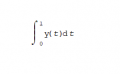
Interestingly, if you adopt this, you can also show your expressions using math software. You insert your expressions into the math software, then tell it to provide an image. The image will have all the symbols like for integration. You then paste the image into a paint program, then save the file, then upload it here.
The attachment shows an example of:
integrate(y(t),t,0,1)

 Facebook
 Google
 GitHub
 Linkedin