Part of PCB overheating

Thread Starter

paralelan

Joined May 21, 2015
7
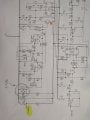
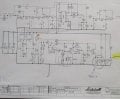
Hello everyone. I have a problem with my Marshall guitar amplifier. I noticed that in one place the PCB is getting hotter. The temperature rises quickly to 70 degrees Celsius. Only in the place where the parallel R C connection is. Is this normal? I marked it in the picture. Does anyone know why it is getting hot and what to do?
 

Attachments

AlbertHall

Joined Jun 4, 2014
12,619
Neither of those components should get even remotely warm.
Can you measure the voltage across R37 and R66 and report your measurements here.
 

LesJones

Joined Jan 8, 2017
4,511
My guess is that R66 and R37 form a potential divider to give half the supply voltage to biase the op amps. As the maximum voltage rating of these op amps is 36 volts. R37 and R66 should only be disipating about 32 mW so they should not get hot.
Measure the voltages between the ends of R37 and R66 and report the results. Even if there was an internal short on one of the op amps inputs and the positive supply rail R66 would disipate less than 130 mW.
Posting the schematic without it being rotated by 90 degrees would make it easier to read.
Les.
 
Last edited:

LesJones

Joined Jan 8, 2017
4,511
Albert asked for the voltage accross them not there measured value. As there is probably a low impedence pathe between the supply rail and ground the 5K reading is what you would expect as they are effectivly in parallel.
Les.
 

liaifat85

Joined Sep 12, 2023
200
Hello everyone. I have a problem with my Marshall guitar amplifier. I noticed that in one place the PCB is getting hotter. The temperature rises quickly to 70 degrees Celsius. Only in the place where the parallel R C connection is. Is this normal? I marked it in the picture. Does anyone know why it is getting hot and what to do?
This behavior is not normal if the temperature rises rapidly to 70°C. A properly functioning RC network should not generate significant heat. Check if the capacitors and resistors are faulty.
 

AlbertHall

Joined Jun 4, 2014
12,619
Does the amplifier work correctly?
Is there some other component nearby, or on the opposite side of the circuit board, that could be generating the heat?
 

Thread Starter

paralelan

Joined May 21, 2015
7
I just measured. They are 5k, instead of 10k.
Sorry.. When i measure on the board they are
My guess is that R66 and R37 form a potential divider to give half the supply voltage to biase the op amps. As the maximum voltage rating of these op amps is 36 volts. R37 and R66 should only be disipating about 32 mW so they should not get hot.
Measure the voltages between the ends of R37 and R66 and report the results. Even if there was an internal short on one of the op amps inputs and the positive supply rail R66 would disipate less than 130 mW.
Posting the schematic without it being rotated by 90 degrees would make it easier to read.
Les.
Voltages between the ends of R37 and R66 are 15V, C38 voltage 7,5V.
Everything seems ok, and the Chorus effect works when I try it with the guitar, but it gets hot in this spot, even when the effect is off, so I'm afraid something will burn out if the temperature continues to rise.
Sorry for the 90 degrees.
 

Attachments

MisterBill2

Joined Jan 23, 2018
27,186
OK, what is certain is that if the circuit is working as it should be, some other part nearby is producing the heat. I suggest carefully feeling the capacitors near that area because one of them may have a problem.
And since the TS has not shown us any portion of the power supply or the output section, we have no way of seeing where the power amplifier and power supply circuits are.
So use the licked finger tip test:Lick your finger and touch the parts. it is not any of those three.
 
Top