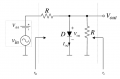
From my college days, one lecturer advised of a simple method to determine the output resistance of an amplifier stage (or similar), which was to measure the open circuit voltage, then load the output until the output voltage is half the open circuit value – the output resistance will then be equal to the load resistance.
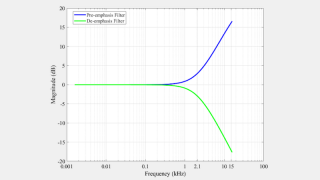
Bear in mind that the output impedance may change with signal frequency, and that the above technique will not work on amplifier power output stages (the required load is likely to destroy the amp).
An arbitrary resistor can be connecte or not and the effective output impedance by calculation, given that you know the value of one of the resistors, it can be treated as a voltage divider.
DC has made a very good point: The EFFECTIVE output impedance can be calculated using the voltage drop caused by drawing some output current. That approach works quite well for evaluating power supplies. It is not the same as knowing the actual circuit's port impedance, though.