Oscillator question

Thread Starter

metermannd

Joined Oct 25, 2020
472
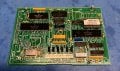
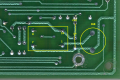
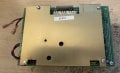
In the front left corner, note the unpopulated silkscreen for C68. That goes to pin 1 on the oscillator can next to it.

Do I assume correctly that it would have been for a trimmer cap? I don't believe I've ever come across a canned oscillator that had provision for an external trimmer.
 

Attachments

Thread Starter

metermannd

Joined Oct 25, 2020
472
The cap goes to ground, though, and I see if that pin goes low, the oscillator stops. So I had to wonder if a different oscillator was originally specified; two other boards of similar vintage actually used a TCXO with a pot or trimmer cap accessible after removing a screw.

And it was interesting to see M-Tron was in Yankton, South Dakota. That's well within a day's drive from here.
 

MrChips

Joined Oct 2, 2009
34,628
In the front left corner, note the unpopulated silkscreen for C68. That goes to pin 1 on the oscillator can next to it.

Do I assume correctly that it would have been for a trimmer cap? I don't believe I've ever come across a canned oscillator that had provision for an external trimmer.
I don't think so. There would have been no need to trim a 1 MHz oscillator module for an MC6800 board.
 

MisterBill2

Joined Jan 23, 2018
27,164
That post is obviously one of four posts, intended to support a second board that mates with "J4", installed above, and connected to that long row of solder pads nearby. I have come across a few of those over the years.
 

Thread Starter

metermannd

Joined Oct 25, 2020
472
MrChips: It seems there were some rolling changes in this product line as better approaches were developed / better parts became available, and it now seems that the oscillator used turned out to be a better solution than whatever had originally been specified. I was just curious as to whether anyone knew what part it might have been. Most of the later boards went to a 4MHz crystal and the newer MPUs' internal divider to derive the 1MHz clock (the one board that was later switched to a 6809 did retain a trimmer for some reason, however).

MrBill2: Correct. This is one of four boards in a transponder I recently took apart to reverse engineer. J1 goes to the timer / signal receiver board, J4 goes to the power supply board, and the transmitter board also connects to the power supply.
 

Thread Starter

metermannd

Joined Oct 25, 2020
472
MrChips: That board with the 6809 did include an RTC (just looked it up - DP8573A; it has its own 32kHz crystal, in addition to the system clock).
 

MisterBill2

Joined Jan 23, 2018
27,164
LIKE I STATED in post #5, that thing in the corner is a mounting post for another board, now described as a power supply board. What might be guessed to be text around the base of the post is actually the reflections from a star washer beneath the post. Evidently Isee better in the morning now.
 

Thread Starter

metermannd

Joined Oct 25, 2020
472
At this point I'm just chalking it up as part of a rapidly evolving design that they never went back to clean up.
As it is, this 4-panel board set gave way to a pair of boards within a few years, only to be replaced by a single-board module a few years after that.
 

MrChips

Joined Oct 2, 2009
34,628
At this point I'm just chalking it up as part of a rapidly evolving design that they never went back to clean up.
As it is, this 4-panel board set gave way to a pair of boards within a few years, only to be replaced by a single-board module a few years after that.
Which is now replaced today with a single chip!
 

Thread Starter

metermannd

Joined Oct 25, 2020
472
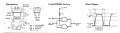
Would the pin then have an internal pull-up, especially if taking that pin low disables the oscillator? I did pop the part off the board to make sure I hadn't overlooked documenting a trace on the top (none).
 

Thread Starter

metermannd

Joined Oct 25, 2020
472
Doh. I thought it was a circuit for evaluating that feature, not a partial schematic showing how it was implemented. As it is, I did not get a useful value measuring from pin 1 to 14.

That makes me wonder if the designer hoped to implement an RC time delay using C68 and that internal resistor, realizing it didn't work that way, and also realizing the unit worked better without C68.

I guess that settles my question. Appreciate the input from those who responded. :)
 

MisterBill2

Joined Jan 23, 2018
27,164
I was NEVER talking about the actual C68 location marking. I HAVE BEEN referencing the FOUR hex posts with the threaded hole in the center. It is sort of near to the C68 graphic.
 
Top