optocoupler output current

crutschow

Joined Mar 14, 2008
38,532
The minimum current transfer ratio from the graphs is about 15% at the 12.5mA collector current to operate the relay.
This means you need an 83mA worst-case minimum of input current.
Since the maximum input rating is 50mA, you need to add a buffer transistor at the output to drive the relay, which will reduce the input current requirements by at least a factor of 10.
 

Thread Starter

alan70

Joined Oct 31, 2021
19
The minimum current transfer ratio from the graphs is about 15% at the 12.5mA collector current to operate the relay.
This means you need an 83mA worst-case minimum of input current.
Since the maximum input rating is 50mA, you need to add a buffer transistor at the output to drive the relay, which will reduce the input current requirements by at least a factor of 10.
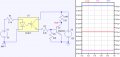
If designing a circuit based on using the minimum CTR it would mean there are not many relays (if any) that could be driven directly from the opto.

The thing is that the circuit does work. I know of one that drove a non-latching relay and another one driving a latching relay.
 

Thread Starter

alan70

Joined Oct 31, 2021
19
Thanks for the suggestions for alternative circuits but I do not need them.

I need to know what are the design considerations that allow this particular circuit to function.
 

crutschow

Joined Mar 14, 2008
38,532
The thing is that the circuit does work.
For a typical device it may.
For a worst-case device it won't.
So do you want a design that may typically work, or always work?
I need to know what are the design considerations that allow this particular circuit to function.
That has been already shown to you.
The main design variable is the opto-coupler I/O transfer ratio.
What don't you understand?
 
Last edited:

Thread Starter

alan70

Joined Oct 31, 2021
19
For a typical device it may.
For a worst-case device it won't.
So do you want a design that may typically work, or always work?
That has been already shown to you.
The main design variable is the opto-coupler I/O transfer ratio.
What don't you understand?
The circuit has forward input current limited to 20mA, this is recommended and designed to extend life of optocoupler.

The optocoupler is expected to support an output current of 12.5mA.

This means minimum acceptable CRT is 62.5%.

This figure would seem to render any designs based on device minimum CRT as unworkable as they would not get near this figure.

Other than the fact the KB814 datasheet says device is capable of providing CRT range of 20 – 300% there is nothing on datasheet to indicate that 62.5% is achievable at saturation.

When unsaturated 20mA should have CRT of about 90-100%. Fig 1 KB814 datasheet.

At saturation the CRT would be expected to be less, for same forward current, than that for unsaturated operation. 62.5% is less than 90-100%.

Other than staying within Absolute Maximum Ratings and limiting forward current the only design consideration seems to be hoping that CTR at saturation will fall somewhere in the middle of the 20 – 300% range. Is this your typical device?
 

Papabravo

Joined Feb 24, 2006
22,084
The circuit has forward input current limited to 20mA, this is recommended and designed to extend life of optocoupler.

The optocoupler is expected to support an output current of 12.5mA.

This means minimum acceptable CRT is 62.5%.

This figure would seem to render any designs based on device minimum CRT as unworkable as they would not get near this figure.

Other than the fact the KB814 datasheet says device is capable of providing CRT range of 20 – 300% there is nothing on datasheet to indicate that 62.5% is achievable at saturation.

When unsaturated 20mA should have CRT of about 90-100%. Fig 1 KB814 datasheet.

At saturation the CRT would be expected to be less, for same forward current, than that for unsaturated operation. 62.5% is less than 90-100%.

Other than staying within Absolute Maximum Ratings and limiting forward current the only design consideration seems to be hoping that CTR at saturation will fall somewhere in the middle of the 20 – 300% range. Is this your typical device?
Yes. Having a range like that is quite common. In order to deal with this problem a TL431 shunt regulator can be used to raise or lower the diode voltage to compensate for a declining CTR (Current Transfer Ratio). This circuit is often found in SMPS (Switch Mode Power Supplies) using the Flyback configuration with the TL431/Opto combination for the feedback to provide isolation.
 
Top