Optical fiber networking

Thread Starter

Futurist

Joined Apr 8, 2025
731
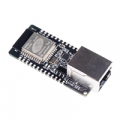
I've often wondered why don't we see optical fiber more, as opposed to clunky network cables and connectors, look how cumbersome they are on otherwise small boards. Bandwidth and noise are far superior with fiber too and PC network cards that support fiber are cheap. Optical seems prevalent in the audio world, odd we don't see more of it in homes.
1763118352476.png
 
Last edited:

Ya’akov

Joined Jan 27, 2019
10,226
Fiber termination requires much more skill and more expensive tools. The fiber cables are less flexible and more prone to damage.

Fiber is more common than it once was but copper is simpler in many ways that ensure it will be more common for the foreseeable future.
 

crutschow

Joined Mar 14, 2008
38,407
I've often wondered why don't we see optical fiber more, as opposed to clunky network cables and connectors,
Fiber is used, of course, to bring Internet into a residence, but usually it then goes directly to a WiFi modem.

My house was wired with Ethernet cables but I switched to all WiFi probably 20 years ago.
Certainly with WiFi now able to easily deliver several simultaneous high definition TV signals, and Mesh systems to carry the signal over a large area, there seems little reason to use a wired connection in most homes or businesses.

I assume most commercial buildings already are wired with Ethernet cables and there's no compelling reason to rewire with fiber.
Perhaps an option for new buildings though.

Where do you see the use of fiber optic in a building?
 
Last edited:

Thread Starter

Futurist

Joined Apr 8, 2025
731
Fiber is used, of course, to bring Internet into a residence, but usually it then goes directly to a WiFi modem.

My house was wired with Ethernet cables but I switched to all WiFi probably 20 years ago.
Certainly with WiFi now able to easily deliver several simultaneous high definition TV signals, and Mesh systems to carry the signal over a large area, there seems little reason to use a wired connection in most homes or businesses.

I assume most commercial buildings already are wired with Ethernet cables and there's no compelling reason to rewire with fiber.
Perhaps an option for new buildings though.

Where do you see the use of fiber optic in a building?
My question was mainly about the clunky connector sizes on the little MCU boards, the RJ45 sockets are relatively large when the board is small, being able connect it via fiber could make the device more petite.
 

crutschow

Joined Mar 14, 2008
38,407
My question was mainly about the clunky connector sizes on the little MCU boards, the RJ45 sockets are relatively large when the board is small, being able connect it via fiber could make the device more petite.
So you still use Ethernet instead of WiFi?
 

crutschow

Joined Mar 14, 2008
38,407
No, but the MCU boards I'm talking about (see OP) often come without wifi, just an RJ45 and TCP layer, they could make those much smaller if they had an optical connector.
So what are those RJ45 inputs connected to when the MCU boards are being used?
I would think it's not a hard-wired building Ethernet cable(?).
 
Last edited:

Ya’akov

Joined Jan 27, 2019
10,226
Fiber optic dangerous to eyes. Don't give dangerous toys to hobbyists.
If you stick a fiber in your eye, possibly.

Gigabit LAN optics (SFP, SFP+, GBIC) are almost universally certified as Class 1 laser products under IEC 60825-1.
Class 1 means safe under all conditions of normal use, including direct viewing into the port from typical distances.

No one making the devboards in question is going to play gatekeeper for "hobbyists" and there is no regulation that prevents them selling fiber optic transceivers. Consider that very unsafe lasers are marketed to hobbyists for a few dollars.
 

Ya’akov

Joined Jan 27, 2019
10,226
No, but the MCU boards I'm talking about (see OP) often come without wifi, just an RJ45 and TCP layer, they could make those much smaller if they had an optical connector.
Consider also that fiber switchgear is considerably less common and more costly than copper. In general, fiber is used for verticals and copper for horizontals. There are some applications, like certain AV setups and electrically noisy/sensitive locations, the use fiber horizontally.
 

eetech00

Joined Jun 8, 2013
4,704
If you stick a fiber in your eye, possibly.

Gigabit LAN optics (SFP, SFP+, GBIC) are almost universally certified as Class 1 laser products under IEC 60825-1.
Class 1 means safe under all conditions of normal use, including direct viewing into the port from typical distances.

No one making the devboards in question is going to play gatekeeper for "hobbyists" and there is no regulation that prevents them selling fiber optic transceivers. Consider that very unsafe lasers are marketed to hobbyists for a few dollars.
There is never any need to look down a fiber cable. so DON'T look down the fiber cable.
You can easily tell if its receiving signal by holding the end near a (darker) object.
 
Top