Operating Region of BJT in Temperature to Voltage Converter

Thread Starter

huntersmile

Joined Jun 10, 2017
34
Hello!

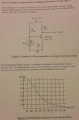
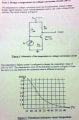
Please look at the picture attached.
Let's say the temperature range is T1 to T2 where T2>T1.
May I ask, for a simple Temperature to Voltage Converter with BJT as shown in this picture, does the BJT has to work in active region (with current gain) for all the temperature range from T1 to T2?

Or actually the correct implementation is that the BJT works in saturation for T1, then works in active region for T2 such that we have some transition of operating region that will help us identify the temperature change as well?

I am a little bit confused. Because logical thinking might suggest that BJT has to be in active (in amplifying stage) when it is operating for some function other than a switch, but all my calculations are showing me that my BJT is transitioning from saturation into active region as it goes from T1 to T2.

Hope someone can help me please.
Thank you very much!
 

Attachments

Jony130

Joined Feb 17, 2009
5,593
You need to solve the circuit for two condition to be able to check if BJT works in active region or in the saturation region.
For T1 = 20°C you have R3 = 2.4kΩ and for T2 = 45°C ----> R3 = 1.4kΩ
 

Thread Starter

huntersmile

Joined Jun 10, 2017
34
You need to solve the circuit for two condition to be able to check if BJT works in active region or in the saturation region.
For T1 = 20°C you have R3 = 2.4kΩ and for T2 = 45°C ----> R3 = 1.4kΩ

Yes of course I did this my friend.
I get saturation region for 20degrees and active region for 45degrees. But is this supposedly like that?

My question is what is the correct operating regions when BJT is used as this function.

because 2nd part of the question asked me to change beta to 100 (assuming all other are the same), and check the suitability of changing to a transistor with such beta (100), originally beta is 50 as shown in the picture.
 

Jony130

Joined Feb 17, 2009
5,593
Ask yourself a question, if the BJT enters the saturation region can the output voltage still change with respect to R3 change (change in temperatura)?
In wich direction, Vo will change if we rise the tepmerature?
 

Thread Starter

huntersmile

Joined Jun 10, 2017
34
Ask yourself a question, if the BJT enters the saturation region can the output voltage still change with respect to R3 change (change in temperatura)?
In wich direction, Vo will change if we rise the tepmerature?

It can still change right, since whatever moves from the DC load line from the top left all the way to the bottom right.
Even if saturation, no current gain, VC output can still change w.r.t temperature. So saturation is okay.

If I am wrong would you please comment on it, and kindly explain why?
 

Jony130

Joined Feb 17, 2009
5,593
VC output can still change w.r.t temperature. So saturation is okay.
Are you sure about this ??
In saturation ( as temperature drops) the BJT is full ON and the colector voltage is held fairly constant at the value around 5.1V*270Ω/(950Ω+270Ω) ≈ 1.12V. But if say the saturation is OK, that's fine with me.
 

Thread Starter

huntersmile

Joined Jun 10, 2017
34
Are you sure about this ??
In saturation ( as temperature drops) the BJT is full ON and the colector voltage is held fairly constant at the value around 5.1V*270Ω/(950Ω+270Ω) ≈ 1.12V. But if say the saturation is OK, that's fine with me.
OOPS... you are right... when VCE is low in saturation, my Vc output will be around 1.2V and does not change much.
HMM....
The question is asking me to verify whether beta=100 is suitable to be used or not,
but I calculated with beta=100 (other parameters doesn't change), I still get saturation operation for Temperature 20degrees.
then how to solve this problem?
 

Thread Starter

huntersmile

Joined Jun 10, 2017
34
For which beta value the BJT will leave the saturation early at "low" temperature (R3 around 2.4k)
I am so sorry but I don't get you T.T
Please bear with me.

I don't know at what beta, but for beta=100 it is still saturation, so what do I need to do?
This question is wrong?
 

Thread Starter

huntersmile

Joined Jun 10, 2017
34
For what valuer of R3 resistor the BJT will leave the saturation region ?
How to calculate this back?
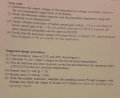
First of all do I set VCE= 0.3V or something? But it is a long way back of calculation, because R3 affects everything, from VB, RB, IB and hence IC and IE and VCE, this will take a long page of algebra derivation. Not that I am lazy and I don't want to do it, but it doesn't really matter for this level of question (2nd page of the question is shown in attachment).
They give values of R3, I calculated and found it is working in saturation.
They asked what if I changed beta to 100, and also found it is still saturation.

I am sorry, hope you don't mind to also say that hence the question is wrong?
Please...........
 

Attachments

WBahn

Joined Mar 31, 2012
32,706
but all my calculations are showing me that my BJT is transitioning from saturation into active region as it goes from T1 to T2.
We can't tell you where you might have gone wrong in your calculations unless you show your calculations.

What is your basis for saying that the transistor is in saturation at T1?
 

Thread Starter

huntersmile

Joined Jun 10, 2017
34
We can't tell you where you might have gone wrong in your calculations unless you show your calculations.

What is your basis for saying that the transistor is in saturation at T1?
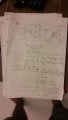
Here are my calculations.
Actually I don't think I have any calculation mistake,
I am just asking whether my BJT has to be in active region for all temperature range.
If yes, confirmed that the question is wrong................ (cause I don't think I have calculation mistake)
 

Attachments

WBahn

Joined Mar 31, 2012
32,706
Here are my calculations.
Actually I don't think I have any calculation mistake,
I am just asking whether my BJT has to be in active region for all temperature range.
If yes, confirmed that the question is wrong................ (cause I don't think I have calculation mistake)
You calculations for 20°C are good. Looking at the data sheet for the 2N2222, a Vcesat of about 0.2 V is pretty reasonable, but looking at the actual saturation curves, the transistor is nominally not really into saturation yet, but the hfe is certainly dropping. It's quite possible that you could get down to that Vce -- but I don't think it would be desirable to count on it.

Ideally, yes, you want the BJT to be in the active region for all temperatures of interest. The circuit is pretty insensitive to variations in hfe, so it still works even as hfe falls as it approaches saturation. But I think this circuit pushes it too far.
 

Thread Starter

huntersmile

Joined Jun 10, 2017
34
You calculations for 20°C are good. Looking at the data sheet for the 2N2222, a Vcesat of about 0.2 V is pretty reasonable, but looking at the actual saturation curves, the transistor is nominally not really into saturation yet, but the hfe is certainly dropping. It's quite possible that you could get down to that Vce -- but I don't think it would be desirable to count on it.

Ideally, yes, you want the BJT to be in the active region for all temperatures of interest. The circuit is pretty insensitive to variations in hfe, so it still works even as hfe falls as it approaches saturation. But I think this circuit pushes it too far.
Thanks a lot for your kind reply!
I think now I know that my calculations is not wrong and the question is indeed like that.
What is HFE by the way?

Btw for the calculation on 20degrees, when I get the VCE=0.11V, then I check BC junction is forward (which means BJT is in saturation), do I need to redo my calculation by putting VCE=0.2V, then use KCL KVL WITHOUT using Ic=beta*Ib, and finally find a new Qpoint? Or since my VCE is not negative (not deep saturation), I do not need to do that?

Thank you for your advice.
 

WBahn

Joined Mar 31, 2012
32,706
Thanks a lot for your kind reply!
I think now I know that my calculations is not wrong and the question is indeed like that.
What is HFE by the way?
hfe is the two-port term for the parameter we typically call beta.

Btw for the calculation on 20degrees, when I get the VCE=0.11V, then I check BC junction is forward (which means BJT is in saturation).
What constitutes "forward biased"? Going from active to saturation is not a single event, but rather a smooth transition over a range of operating points. The beta starts dropping at some point, very typically when the Vce is about 200 mV to 300 mV, but it depends on both the transistor and the collector current. As Vce drops further, the beta continues to drop. For historical reasons the usual convention for non-power transistors is usually that it is "saturated" when the beta has dropped to a value of 10 -- but what this usually means is just that the various saturation parameters in the data sheet were measured under conditions that were adjusted until the beta was 10. You can always push it even further into saturation and get a lower beta and a lower Vce.

, do I need to redo my calculation by putting VCE=0.2V, then use KCL KVL WITHOUT using Ic=beta*Ib, and finally find a new Qpoint? Or since my VCE is not negative (not deep saturation), I do not need to do that?
Vce will never be negative (unless you are running the transistor in the reverse mode with the collector and emitter swapped).

You would normally assume a Vcesat that was reasonable for your transistor and approximate collector current. Then, yes, solve the circuit without assuming a particular beta. Once you have the solution, you would then calculate beta and see if it was reasonable for the assumption that the transistor is in saturation -- so anything up to about a value of 10 (roughly).
 
Top