Facebook
 Google
 GitHub
 Linkedin
My project is building a NiCd battery charger based on a circuit from : Texas Instruments application report SNOA327B http://www.ti.com/general/docs/litabsmultiplefilelist.tsp?literatureNumber=snoa327b
This is their schematic:
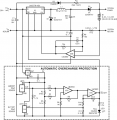
Some modifications were necessary as this was designed around charging a 6.2V battery at a constant 3A current. My requirements were to charge a 14.4V battery at 2 amps. A 24V regulated supply was used to as a power source and R7 was changed from 75KΩ to 100KΩ to control the current to around 2A instead of 3A.
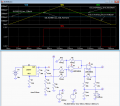
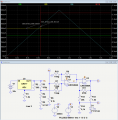
My electronics experience finished in the early 60’s so I am now struggling with some of the modern devices – Op amps in particular, but at this stage I had better show you a schematic of the circuit as I have modified it and do my best to explain what seems to be going wrong.
Some modifications were necessary as this was designed around charging a 6.2V battery at a constant 3A current. My requirements were to charge a 14.4V battery at 2 amps. A 24V regulated supply was used to as a power source and R7 was changed from 75KΩ to 100KΩ to control the current to around 2A instead of 3A.
My electronics experience finished in the early 60’s so I am now struggling with some of the modern devices – Op amps in particular, but at this stage I had better show you a schematic of the circuit as I have modified it and do my best to explain what seems to be going wrong.
NiCd charger schematic.pdf
The power supply board works fine and the LM2576 is ON when pin 5 is grounded and turned OFF when it is triggered by a high voltage from a source other than it’s own input.
It is essential that the power is turned off when, but not before, the battery is fully charged and this is achieved by detecting a 10degC rise in battery temperature. Temperature is measured both ambient and within the core of the battery by LM35 devices which output 10mV per DegC rise. The ambient LM35 output is raised by 100mV to represent a 10degC rise and when this matches the output from the LM35 in the battery core the ‘C’ channel of the quad LMC660 outputs high and turns off the power source.
Data sheets showed that the max. input voltage for the 78L05 was 5.5volts so I Changed this for an LM317Adj configured to provide 6V output. This then involved altering the Texas resistor chain R2/R3 so that 100mV was available at the junction of these two resistors. That’s when I started running into problems.
Ambient temperature was 23.4degC but rising fairly rapidly as the morning went on.
As I see it the ‘B’ channel of my op amp acts as a unity gain buffer but if I check the voltage at pin 5 with a 10MΩ input impedance multimeter I had expected to see 334mV (100mV + 234mV due to ambient temperature) only to find there was 162mV here and the action of probing with the meter caused ‘C’ channel output to go high, turn on the LED and switch off the power.
‘C’ channel remains latched on and does not reset after all power is switched off and then switched on again, even after 10 minutes or so. Only if you take time for a long cup of coffee and then come back to things later has the ‘C’ channel finally latched low.
Output of Channel ‘C’ went high when the battery sensor reached about 40degC and pin10 was at 583mV although pin9 was at 414mV I don’t understand what is happening here; surely ‘C’ would only change state when pins 9 and 10 were at the same voltage and why am I seeing 583mV at pin 10 when it should only be 400mV if the battery sensor was at 40degC
My other problem is the length of time it takes for ‘C’ to reset. Has this possibly something to do with C4 and C5?
This is their schematic:
Some modifications were necessary as this was designed around charging a 6.2V battery at a constant 3A current. My requirements were to charge a 14.4V battery at 2 amps. A 24V regulated supply was used to as a power source and R7 was changed from 75KΩ to 100KΩ to control the current to around 2A instead of 3A.
My electronics experience finished in the early 60’s so I am now struggling with some of the modern devices – Op amps in particular, but at this stage I had better show you a schematic of the circuit as I have modified it and do my best to explain what seems to be going wrong.
Some modifications were necessary as this was designed around charging a 6.2V battery at a constant 3A current. My requirements were to charge a 14.4V battery at 2 amps. A 24V regulated supply was used to as a power source and R7 was changed from 75KΩ to 100KΩ to control the current to around 2A instead of 3A.
My electronics experience finished in the early 60’s so I am now struggling with some of the modern devices – Op amps in particular, but at this stage I had better show you a schematic of the circuit as I have modified it and do my best to explain what seems to be going wrong.
NiCd charger schematic.pdf
The power supply board works fine and the LM2576 is ON when pin 5 is grounded and turned OFF when it is triggered by a high voltage from a source other than it’s own input.
It is essential that the power is turned off when, but not before, the battery is fully charged and this is achieved by detecting a 10degC rise in battery temperature. Temperature is measured both ambient and within the core of the battery by LM35 devices which output 10mV per DegC rise. The ambient LM35 output is raised by 100mV to represent a 10degC rise and when this matches the output from the LM35 in the battery core the ‘C’ channel of the quad LMC660 outputs high and turns off the power source.
Data sheets showed that the max. input voltage for the 78L05 was 5.5volts so I Changed this for an LM317Adj configured to provide 6V output. This then involved altering the Texas resistor chain R2/R3 so that 100mV was available at the junction of these two resistors. That’s when I started running into problems.
Ambient temperature was 23.4degC but rising fairly rapidly as the morning went on.
As I see it the ‘B’ channel of my op amp acts as a unity gain buffer but if I check the voltage at pin 5 with a 10MΩ input impedance multimeter I had expected to see 334mV (100mV + 234mV due to ambient temperature) only to find there was 162mV here and the action of probing with the meter caused ‘C’ channel output to go high, turn on the LED and switch off the power.
‘C’ channel remains latched on and does not reset after all power is switched off and then switched on again, even after 10 minutes or so. Only if you take time for a long cup of coffee and then come back to things later has the ‘C’ channel finally latched low.
Output of Channel ‘C’ went high when the battery sensor reached about 40degC and pin10 was at 583mV although pin9 was at 414mV I don’t understand what is happening here; surely ‘C’ would only change state when pins 9 and 10 were at the same voltage and why am I seeing 583mV at pin 10 when it should only be 400mV if the battery sensor was at 40degC
My other problem is the length of time it takes for ‘C’ to reset. Has this possibly something to do with C4 and C5?
Attachments
-
140.2 KB Views: 5
-
140.2 KB Views: 0
-
140.2 KB Views: 1