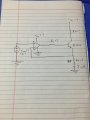
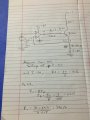
If the emitter has 30 V on it, what would the voltage at the base be?
If the opamp is putting out 35 V (which is Vcc), that means (1) that you are using an opamp that can truly operate rail-to-rail, and (2) your opamp is saturated. Is that how you want it to operate?
What is the purpose of R1? Even an opamp with a rail-to-rail output couldn't get to it's positive supply; assuming you could find one that would operate at 35V.
A voltage drop of 30V across the current sense resistor doesn't leave much voltage for the load.
Real quick i see a mistake, although we dont yet know what the heck R2 is. Is that the load?
The mistake is when you subtracted 35-29.3 which looks like you first subtracted 0.7 from 30 which is not correct you have to add that to 30, thus you get 35-30.7 which is then less voltage across R1 which is then less current into the base which is then less output current if you design this right up to the sheer edge of reason (beta being perfectly 200 always).
In practice you would not be able to assume 0.7v base emitter drop with such a high current, but let's forget about that for now.
In practice you also would not design right up to the exact beta (200) you would design this to work lower (like beta=100) so the forced beta is lower than the expected beta. That way you know it will work for different transistors of the same part number but slightly different betas as well as other variations that can occur. But let's forget about that for now too.
You're still left with calculating the base current correctly. Try that again and see what R1 you can come up with this time.

 Facebook
 Google
 GitHub
 Linkedin