Wurth. but that's not going to help as that's not the type of transformer you need.
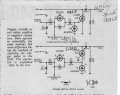
Not sure which circuit you're referring to. The one with TIP41 transistors works because the inverter is self oscillating. When the output is shorted it simply stops oscillating. As an inverter it's pretty inefficient but that's of little consequence here. The other, with the TIP122, again is pretty inefficient and produces only a few milliWatts output. When shorted it produces virtually nothing.
Your HV module on the other hand produces 70W of output. Without blanking it's simply too powerful. Even with blanking the energy stored in the 10uF output cap is substantial and may still need adapting.
I typically order parts from Amazon.com or any place really.
I need the correct components to make a SC CDI so I’ll order them from wherever. Do you have any recommendations?
I really feel like I’ve hit a wall here and my path forward is not clear. I welcome some of your wisdom and guidance. To extend a metaphor - I’m looking for a spark in the darkness.
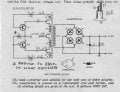
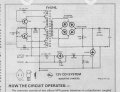
The CDI circuit has a diode across the SCR, which is normally reverse-biased. When the SCR fires, forward current flows through the SCR but the storage cap plus ignition coil primary oscillate and cause reverse current flow through that diode, allowing the SCR to switch off if its gate is no longer being driven.
If it were me (and I realise it's not!) I'd start by using a 555 to make a simple slow-running conventional multivibrator, to check the suitability of your existing HV module for this project by testing how to blank it reliably and see how long the HV takes to come up to 350V when unblanked. This would be with the 10uF(?) output cap removed and replaced by the one you intend using for discharge into the ignition coil. I'm guessing the module needs at least some minimum capacitance on its output in order for the voltage regulation to work correctly.
If the jumper on the module is intended to be replaced by an HV-enable/disable transistor switch, it would be helpful to know which circuit nodes it presently shorts.
Would you feel confident in soldering a wire to the 'comp' pin trace of the UC3843 if needed?
If the jumper on the module is intended to be replaced by an HV-enable/disable transistor switch, it would be helpful to know which circuit nodes it presently shorts.
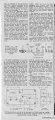
If you look at the diagram below, no soldering is required, just pull off the jumper, connect to 555 output with dupont cable. High/open = blanked, low = Run.
The 10uF output cap has a 1M bleed on it so will take a second or so to discharge. The cap stores a significant charge as its a 70W supply. There'll be a minimum value it'll need, but 1uF might be a good starting point...
If you look at the diagram below, no soldering is required, just pull off the jumper, connect to 555 output with dupont cable. High/open = blanked, low = Run.
im very comfortable with soldering except for very tiny surface mounted stuff. That aside, I did the experiment you are again suggesting shortly after I successfully created the 555 square-wave generator last week. The drain time was well over 15 seconds and I thought we all decided to toss out using this HV supply (as wonderful as it is) for a conventional transformer (12-300) and use the 555 to drive the SCR (BT151) part of the circuit.
However, to be fair, I have led the drive on multiple side bars and have answered questions out of order; so we probably all lost track of that.
At this point I have a bunch of components except a transformer. I don’t know where to go from here circuit-wise. I plan on mounting my magnets on an old phonograph table and mount the pickup trigger coil above so as to make a steady, real world trigger signal. Other than that I don’t know what I’m supposed to be breadboarding on this fine gray and rainy Sunday morning.
On a weird aside, you would not believe how many cardboard cutouts of the late Queen have started popping up in my town. They are meant to be posted to the passenger side car window to make it appear the Queen is waving from a seated position in your car. In a weird way it’s endearing. Typically you see world leader images being dragged behind cars or run over - so this is a respectable step up. Personally I’m going to miss her. She was a very classy leader with almost 100 years of perspective and experience. You will never find another like her.
I really feel like I’ve hit a wall here and my path forward is not clear. I welcome some of your wisdom and guidance. To extend a metaphor - I’m looking for a spark in the darkness.
"You have much to learn, grasshopper"....
Excuse the obscure 1970's TV show reference... just showing my age!
Seriously though, the TIP transistor versions are simpler to get going, though finding the right transformer might be tricky;theres nothing suitable on Amazon so far. The HV solution can be made to work but needs the blanking circuit and almost certainly needs a smaller output capacitor. Its more complex.
The CDI circuit has a diode across the SCR, which is normally reverse-biased. When the SCR fires, forward current flows through the SCR but the storage cap plus ignition coil primary oscillate and cause reverse current flow through that diode, allowing the SCR to switch off if its gate is no longer being driven.
Not in Mark's original circuit... and I thought (from memory) that an SCR is turned off by reverse current so the diode shouldn't be necessary. But I'm just thinking the simulation didn't demonstrate that... I'll have to check it...
But the reason I think the TIP transistor versions work is because their output drive is fairly limited. In the case of the self-oscillating one with the TIP42 transistors shorting it out probably kills the oscillator, whilst the other just hasn't got much guts.
"You have much to learn, grasshopper"....
Excuse the obscure 1970's TV show reference... just showing my age!
Seriously though, the TIP transistor versions are simpler to get going, though finding the right transformer might be tricky;theres nothing suitable on Amazon so far. The HV solution can be made to work but needs the blanking circuit and almost certainly needs a smaller output capacitor. Its more complex.
Not in Mark's original circuit... and I thought (from memory) that an SCR is turned off by reverse current so the diode shouldn't be necessary. But I'm just thinking the simulation didn't demonstrate that... I'll have to check it...
But the reason I think the TIP transistor versions work is because their output drive is fairly limited. In the case of the self-oscillating one with the TIP42 transistors shorting it out probably kills the oscillator, whilst the other just hasn't got much guts.
Master Chen Ming Kan, I too show my age by expressing my love of that show. Right now I feel I have Rice all over my feet and a hot pot burning my arms. I’m as blind as Master Po. I’m trying to choose wisely, but I need a circuit to build.
At this point I need something to work and I can improve it later.
Its points operated, you need to read the articles as they give description on how they work. Not a lot has changed in the current basic units in 52 years. & il be 74 soon.
I can’t wait to get a full understanding of this. It amazes me that you all know to use this diode vs that diode or this resistor vs that one. There is an intuitive feel for the circuit that I long for. Math and theory can only take you so far.
I can’t wait to get a full understanding of this. It amazes me that you all know to use this diode vs that diode or this resistor vs that one. There is an intuitive feel for the circuit that I long for. Math and theory can only take you so far.
Once you understand the basic fundamentals of passive & active components and learn some basic building blocks you can begin to look at a schematic and get a high-level view of overall function. Similarly you get a feel of how specific parts impact, or are impacted by, their position and purpose. It then that you can apply the formulae/math to assess size & properties of parts.

 Facebook
 Google
 GitHub
 Linkedin