Number of dies in a power module

Thread Starter

vcolo

Joined Feb 8, 2020
4
Hi,

It is clear that a discrete power component contains one single die. However it is not clear to me if the power modules are always built up from multiple dies or if there are cases in which they are built with just one die that contains the different components printend on it. From my perspective, doing so will simplify the manufacturing process since you can cut down wafer work. If it exists, any example you know of the later type?
 

Papabravo

Joined Feb 24, 2006
22,082
I don't think it is possible to draw a conclusion on this subject unless you consider other factors. Primarily it would be actual power levels and the thermal conductivity of the materials and packaging. I can see arguments for either approach and I'm not convinced that one is clearly superior to ALL of the others without more information. Early power devices were done with bipolar transistors that probably favored large area single dice. Today's power devices are MOSFETS which can be adapted to regular parallel structures.
 

dl324

Joined Mar 30, 2015
18,326
From my perspective, doing so will simplify the manufacturing process since you can cut down wafer work.
What do you mean by "wafer work"?

Manufacturers like to minimize the amount of assembly work they need to do. Using multiple die in a single package (MCM - Multi Chip Module) is expensive. Integrating on the wafer used to be the least expensive option. Now they're stacking die with through silicon vias, possibly using interposers.
 

Thread Starter

vcolo

Joined Feb 8, 2020
4
What do you mean by "wafer work"?

Manufacturers like to minimize the amount of assembly work they need to do. Using multiple die in a single package (MCM - Multi Chip Module) is expensive. Integrating on the wafer used to be the least expensive option. Now they're stacking die with through silicon vias, possibly using interposers.
"Wafer work" → If the approach is multiple die in a package, they have to produce more wafers, cut the dies, test them etc. than if the approach is integrating the components on the wafer.

So in essence we are in agreement, economics work better with one die power modules. However, I took a first quick look into what different manufacturers are doing and only found the multi die approach (for example OnSemi inverters).

So if anybody knows of commercial examples with single die power module approach, it would be great to take a look.
 

dl324

Joined Mar 30, 2015
18,326
If the approach is multiple die in a package, they have to produce more wafers, cut the dies, test them etc. than if the approach is integrating the components on the wafer.
The manufacturing process is mostly automated these days. The robots work 24x7 without complaint. Microprocessor and other high volume parts are made on 12" wafers. Power transistors and the like are probably still using 8" or 6" equipment so it doesn't sit idle, which is a drag on profits.
So if anybody knows of commercial examples with single die power module approach, it would be great to take a look.
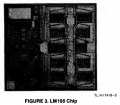
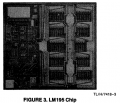
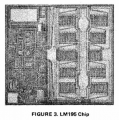
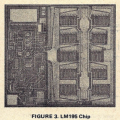
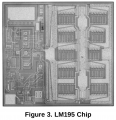
Haven't seen die photos of any power MOSFETs, but did see one for LM395 somewhere. That's an integrated power transistor that has circuitry to make it almost indestructable. I'll see if I can find it.

EDIT: It was in a National Semiconductor Linear Applications handbook.
1581263293870.png
The picture in the PDF I downloaded isn't very clear. I'll see if I have hardcopy for a version that has the die photo.

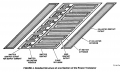
Here's the layout of one of the power transistor sections:
1581263366220.png

The only time I drew bipolar transistors, we used concentric circles. Don't know why because it was costly to fracture them and mask shops charged for each rectangle exposed. This was about 45 years ago...

EDIT 2: found a slightly better copy:
1581271914703.png
 
Last edited:

mikebecker

Joined Feb 26, 2020
1
Power switches are mostly use Trench-MOS technology. Trench technology is a vertical structure, current flows vertically from the top-side to the bottom side of the wafer. It's possible to implement multiple source & gate connections on the top-side of a mosfet's wafer, but it's not possible to isolate the drain connections on the bottom side of the wafer


Hi,

It is clear that a discrete power component contains one single die. However it is not clear to me if the power modules are always built up from multiple dies or if there are cases in which they are built with just one die that contains the different components printend on it. From my perspective, doing so will simplify the manufacturing process since you can cut down wafer work. If it exists, any example you know of the later type?
 

mtripoli3

Joined Mar 1, 2016
35
I believe the OP originally asked if there were multiple die in a "power module". Of course, this may mean different things to different people. For instance, I worked at Powerex where I designed the layouts for the "power modules" In this case, there were in fact multiple die, much larger than anything you've most likely seen; some of the thyristors could be the size of an American quarter. The modules had values such as 1200V@50, 100+ amps. It was my job to layout the various devices, transistors, diodes, etc. on a "PCB", in this case ceramic, then married to each successive layer with as close to matching TCE along the way. These are then heavy metal wire bonded to each other. It is quite the process...
 

MMonroe

Joined Jun 24, 2016
1
Around 30 to 35 years ago we manufactured an AC power module using die with tinned metalization pads. We would stack a 2mm diac on top of the gate triac pad with applied flux and/or solder paste alloy. Using nickel plated heat sinks and buss bars, ceramic substrate and copper preform interconnects, the final assembly was a robust 120VAC, 25A speed control power module. The stacking of the die and proper buss bar/heat sink designs gave excellent heat distribution and dissipation with high reliability. We designed an in-house robotic assembly line to stack all of the components and send through the soldering operation. We never tried this on the DC modules using MOSFET's due to lack of tinned pads available for the die.
 
Top