Night Light

MrAl

Joined Jun 17, 2014
13,667
HI
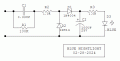
Have of a couple of night lights around the house, one stopped working the incandescent bulb had blown, question how can I make this circuit to run a led bulb.

cheers
Spike
Hi,

LED night lights are much simpler than that. You can build one from scratch which would be simpler than trying to upgrade an old bulb type night light. You can use the case that the old night light used though.

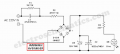
An LED night light can consist of only a handful of parts:
Capacitors (2), resistors (2), zener diode (1), silicon diode (1) or bridge rectifier (1), small LED like the 5mm size (1).

Would you like to see a schematic?
I found this one in two seconds with a search, but we can go over this design first too:
LED Night Lamp Circuit (electroschematics.com)
 

Attachments

Tonyr1084

Joined Sep 24, 2015
9,744
I had Christmas lights that came with incandescent bulbs. The problem with those were that just about 5 times a week I had to change at least one bulb inside the colored globe. I searched around and found the same style lamp but in an LED version. Mine were rated for 120VAC and all I had to do was screw them in. I'm guessing you can probably find LED lamps that are rated to operate at 240VAC.

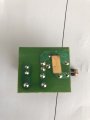
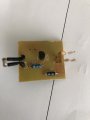
Your pictures are not the clearest and I can't tell how the halogen bulb was connected.
 

ElectricSpidey

Joined Dec 2, 2017
3,312
Yea, your transistor is connected wrong...because there is no transistor in that circuit.

Personally, I wouldn't try to do what you want staring with that circuit.

Either replace the lamp or throw the thing away.

@MrAl your circuit is missing any day-night control.
 

Thread Starter

spike1947

Joined Feb 4, 2016
537
I had Christmas lights that came with incandescent bulbs. The problem with those were that just about 5 times a week I had to change at least one bulb inside the colored globe. I searched around and found the same style lamp but in an LED version. Mine were rated for 120VAC and all I had to do was screw them in. I'm guessing you can probably find LED lamps that are rated to operate at 240VAC.

Your pictures are not the clearest and I can't tell how the halogen bulb was connected.
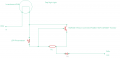
Have posted a schematic, have you not seen it ?.
 

Thread Starter

spike1947

Joined Feb 4, 2016
537
I had Christmas lights that came with incandescent bulbs. The problem with those were that just about 5 times a week I had to change at least one bulb inside the colored globe. I searched around and found the same style lamp but in an LED version. Mine were rated for 120VAC and all I had to do was screw them in. I'm guessing you can probably find LED lamps that are rated to operate at 240VAC.

Your pictures are not the clearest and I can't tell how the halogen bulb was connected.
Have posted schematic, have you not seen it ?
 

Thread Starter

spike1947

Joined Feb 4, 2016
537
I had Christmas lights that came with incandescent bulbs. The problem with those were that just about 5 times a week I had to change at least one bulb inside the colored globe. I searched around and found the same style lamp but in an LED version. Mine were rated for 120VAC and all I had to do was screw them in. I'm guessing you can probably find LED lamps that are rated to operate at 240VAC.

Your pictures are not the clearest and I can't tell how the halogen bulb was connected.
 

MisterBill2

Joined Jan 23, 2018
27,187
The simpler fix is to use a neon bulb and a resistor. possibly a 62K 1/4 watt resistor And every 30 years of constant operation you may need to reduce the resistor value a bit.
 

Thread Starter

spike1947

Joined Feb 4, 2016
537
Yea, your transistor is connected wrong...because there is no transistor in that circuit.

Personally, I wouldn't try to do what you want staring with that circuit.

Either replace the lamp or throw the thing away.

@MrAl your circuit is missing any day-night control.
OK, its a " MCR100-8 Silicon Controlled Rectifier SCR 0.8A 600V Thyristor " !
I dont like thowing anything out has you put it, its a hobby and I like a challenge, I will find a way to run a led from it with whatever mod is required !.
Will post results .
 

AnalogKid

Joined Aug 1, 2013
12,049
So I take it, that there is nothing I can do to this circuit, to be able to run a led bulb !
Of course this can be done.

It will not be as bright, it will not be as efficient, and it will not be as cheap, but with parts around it, a white LED can be made to work in that circuit. The problem is that a nite light bulb is a 240 V device, while a white LED is a 4 V device.

The most simple approach has one diode and one resistor. A problem here is that the resistor will dissipate almost 5 W, so you will need one rated for 10 W. Even with that overrating, it will be large and burn-your-fingers hot. And you probably will be able to see the LED flicker.

Next up is to replace the single diode with a bridge. Same heating problem, but the LED flicker will be much less noticeable. An electrolytic capacitor across the LED will reduce the flicker even more, but it is another large component.

From here, things get more complicated. Here is a nitelight circuit from something I opened up and reverse-engineered. This was designed for 120 Vac, so R2 should be doubled.

ak

UPDATE - R2 must be more than doubled. See post #26.

NightLight-Blue-1-c.gif
 
Last edited:

MrAl

Joined Jun 17, 2014
13,667
Yea, your transistor is connected wrong...because there is no transistor in that circuit.

Personally, I wouldn't try to do what you want staring with that circuit.

Either replace the lamp or throw the thing away.

@MrAl your circuit is missing any day-night control.
Hi,

Thanks, but (1) that's not my circuit (ha ha) I saw it on the web, and (2) the power dissipation is so low you don't really need a day/night detection mechanism. That's not a bad idea though, but it would take a bit more circuitry to add that feature, like a photocell and transistor or two and some resistors and maybe a capacitor.
 

Thread Starter

spike1947

Joined Feb 4, 2016
537
Thinking, if I take the photo cell part out of the circuit, would that make any difference has to runing a led bulb ?
 

MrAl

Joined Jun 17, 2014
13,667
Of course this can be done.

It will not be as bright, it will not be as efficient, and it will not be as cheap, but with parts around it, a white LED can be made to work in that circuit. The problem is that a nite light bulb is a 240 V device, while a white LED is a 4 V device.

The most simple approach has one diode and one resistor. A problem here is that the resistor will dissipate almost 5 W, so you will need one rated for 10 W. Even with that overrating, it will be large and burn-your-fingers hot. And you probably will be able to see the LED flicker.

Next up is to replace the single diode with a bridge. Same heating problem, but the LED flicker will be much less noticeable. An electrolytic capacitor across the LED will reduce the flicker even more, but it is another large component.

From here, things get more complicated. Here is a nitelight circuit from something I opened up and reverse-engineered. This was designed for 120 Vac, so R2 should be doubled.

ak

View attachment 328995
You might be able to reduce power dissipation by adding a resistor of the right value in series with D2.
Of course a bridge rectifier is always better.
 

MrAl

Joined Jun 17, 2014
13,667
Thinking, if I take the photo cell part out of the circuit, would that make any difference has to runing a led bulb ?
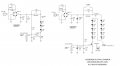
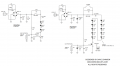
The photocell could be used to turn the LED off during the day, but it makes the circuit considerably more complicated. The photocell cannot be used alone it requires a transistor and some other small parts. If you really want to do this though we can find a schematic with that in it also.

Found this but did not test these circuits.
 

Attachments

Thread Starter

spike1947

Joined Feb 4, 2016
537
The photocell could be used to turn the LED off during the day, but it makes the circuit considerably more complicated. The photocell cannot be used alone it requires a transistor and some other small parts. If you really want to do this though we can find a schematic with that in it also.

Found this but did not test these circuits.
Tks
 

ElectricSpidey

Joined Dec 2, 2017
3,312
Thinking, if I take the photo cell part out of the circuit, would that make any difference has to runing a led bulb ?
If you remove the photocell from the circuit, then you might as well remove all of the rest of the components and just install a 240-volt LED bulb, as the entire circuit becomes superfluous.
 
Top