Need to boost microphone input to my audio tape recorder

Thread Starter

rameshdk12

Joined Aug 20, 2024
11
Hi all,
This is my first post here. I am a software engineer tinkering with electronics. I have faced a problem recently while trying to record vocals on my 2 in 1 tape recorder audio using my mike(old philips make). The tape recorder has a mike input. The voice recording on my recorder is coming out very low.SO I have tried making a small preamplifier with two 741 opamps from which there was a noticeable boost with the preamplifier. The recording did not improve much and also added noise.
Following questions raised in my head: since the mike and input on the tape recorder is allready impedance matched. What the input and output impedances of my preamplifier should be.
I am not a professional(graduated 30 years in electronics back but spent my entire career in computer software) so I don't understand what kind of solution there is. Is there anything that I can buy that is affordable for this . or what kind of simple circuit it is possible to build to solve this problem.

Your help and suggestions are greatly appreciated.
Regards,
Ramesh D.
 

MisterBill2

Joined Jan 23, 2018
27,159
A number of IC manufacturers produce IC amplifiers intended for that application,(low noise audio amplification). The great news is that many of them offer application notes describing the best way to use their products. Those app-notes are on the manufacturer's websites, not on the cartoon channel or other sources of misinformation.

The amplifier that you built, that uses the 741 op-amps, will sound much better if you replace those with more modern devices, because the 741 is a very old design and not optimized for low noise.
I suggest searching the "Analog Devices" website for their application notes and recommendations for low noise applications.
You can also check the "Schematics for Free" website, in the AUDIO section for circuits in both "products" and "circuits" for microphone amplifier examples.

As for impedance matching microphones, they are mostly divided into either low-impedance dynamic ones, and high impedance "crystal" mics, as well as the electret devices that require a DC bias source.
 

BobTPH

Joined Jun 5, 2013
11,463
Most likely, you are using the wrong kind of mic with your tape recorder.

What are the maker and model numbers if the recorder and the mic? Then maybe we can address your problem.
 

Thread Starter

rameshdk12

Joined Aug 20, 2024
11
Thanks very much for both replies.
I am using a mic that is made by philips(quite old) and is of moving coil i.e dynamic type.
The casette recorder is made by FISHER (made in china)
How much input and output impedance should my preamplifier have to match the mic input on the tape recorder,
and how can I design for that. will Changing the opamp improve my gain also. I tried adding another opamp stage but it degraded the output
I checked on my headphones.
 

MrChips

Joined Oct 2, 2009
34,621
I can suggest two options.
(1) Replace the microphone with a electret mic. You may need to add a battery since it requires power to operate.
(2) Use the existing microphone or another microphone and we can suggest a pre-amplifier circuit to use with either microphone.

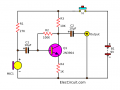
Here is a sample circuit off the internet (not tested).

1724166458687.png
 

Thread Starter

rameshdk12

Joined Aug 20, 2024
11
Thanks, The model no of the casette recorder is PH-W 1000.I am also trying out the circuit posted by you.A circuit for dynamic microphone also would be helpful.
 

KeithWalker

Joined Jul 10, 2017
3,603
As you are aware, by now, dynamic microphones have very low impedance and have low output levels, but most have very good acoustic properties. To get the best out of yours, I recommend that you choose a pre-amp circuit that includes some equalization to normalize the frequency response. Here is a page that explains a bit about microphones and shows quite a few alternate circuits. I am sure you will find one that will fit your needs and your budget:
Dynamic Microphone Preamplifier Schematic (caretxdigital.com)
 

sghioto

Joined Dec 31, 2017
8,633
From what I can tell from the mic jack the unit most likely uses a dynamic microphone.
Dynamic mics come in low and high impedance. The high impedance type have a higher output by design.
Possibly it requires a high impedance mic or simply your old mic is defective.
 

LowQCab

Joined Nov 6, 2012
5,101
Probably the biggest problem is the fact that the equipment that
You are attempting to use is at least ~40-years-old,
and has a finite life expectancy,
and no replacement parts are readily available.

Have You checked to see that the Recording/Playback-Head is
perfectly-mirror-clean, and does not have excessive wear ?
( It doesn't matter "how-excellent" the recorder was purported to be ~40-years ago )

Are You using brand-new, Premium-Recording-Tape ?, ( which is probably no longer available ),
or,
are You trying to use an erased, commercial-garbage-quality-Cassette,
that had a artist on it that You no longer care to listen to ?

Compact-Cassettes are no longer a viable recording medium.

100% Digital-Voice-Recorders are readily available,
and they are reasonably inexpensive,
and have very good fidelity,
and virtually never degrade in performance,
and are rechargeable, rather than constantly eating though expensive Alkaline-Batteries.

If You want premium-quality Voice-Recordings,
You need a used-LapTop and a "Pod-Caster" Microphone, and
a software Microphone-Processing-Program such as "Breakaway-Audio-Processor".
If this is the direction that You are going in, just ask for more info.
.
.
.
 

Thread Starter

rameshdk12

Joined Aug 20, 2024
11
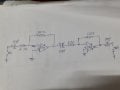
I am using a sony high fidelity tape . My preamp schematic is attached. Forgot to mention power supply of +/- 9v in the circuit.
I am not inclined to purchasing a digital voice recorder or alternative digital options which are not in my budget. preamp.jpg
 

Thread Starter

rameshdk12

Joined Aug 20, 2024
11
What would the input impedance on mic input of my recorder be? not matching with it could be causing the low recording signal. Circuit suggested by MrChips gave only a small audio out.I am also trying out circuit suggested by Danko. Thanks for the response.
 

MrChips

Joined Oct 2, 2009
34,621
I did not suggest for you to use that circuit. It was simply to show that there are numerous circuits available. That circuit is for an electret mic and provides a gain of 10.

What you want is a circuit for a dynamic mic. I don’t know how much gain you need.
I will post a working circuit later today.
 

MisterBill2

Joined Jan 23, 2018
27,159
Probably the biggest problem is the fact that the equipment that
You are attempting to use is at least ~40-years-old,
and has a finite life expectancy,
and no replacement parts are readily available.

Have You checked to see that the Recording/Playback-Head is
perfectly-mirror-clean, and does not have excessive wear ?
( It doesn't matter "how-excellent" the recorder was purported to be ~40-years ago )

Are You using brand-new, Premium-Recording-Tape ?, ( which is probably no longer available ),
or,
are You trying to use an erased, commercial-garbage-quality-Cassette,
that had a artist on it that You no longer care to listen to ?

Compact-Cassettes are no longer a viable recording medium.

100% Digital-Voice-Recorders are readily available,
and they are reasonably inexpensive,
and have very good fidelity,
and virtually never degrade in performance,
and are rechargeable, rather than constantly eating though expensive Alkaline-Batteries.

If You want premium-quality Voice-Recordings,
You need a used-LapTop and a "Pod-Caster" Microphone, and
a software Microphone-Processing-Program such as "Breakaway-Audio-Processor".
If this is the direction that You are going in, just ask for more info.
.
.
.
I totally disagree that old electronics is worn out. Sometimes some components may fail, such as aluminum electrolytic capacitors, but aging in a safe environment does not mean the equipment is failed, but only that it is not current.
And the great advantage of storing audio files digitally is the speed at which they can be erased permanently. So one little glitch in your digital music player and many dollars worth of music is gone forever, in just a millisecond.
Music on tapes of any type (reel to reel, 8-track, or cassette) is much less volatile, although possibly less exact.
Of course, the distribution costs and media cost, favor electronic distribution and storage, but the instant volatility, as I see it, far outweighs any benefits of digital storage to any except the sellers.


As for the dynamic microphone "being worn out", that only happens with abuse, such as dropping or overheating or application of power. I have 60 year old EV664 microphones that are still meeting their original specifications, and other less known brands still working as good as ever. It is likely that a better pre-amplifier is required because the TS recorder may be intended for either an electret mic or a high output CRYSTAL microphone.
 

LowQCab

Joined Nov 6, 2012
5,101
Tape-Heads, especially Cassette-Tape-Heads, wear-out very fast.
Worn Tape-Heads will not only cause loss of high-frequency-response,
but will also have reduced Output, and Input, levels overall.

I've seen worn-out Cassette-Tape-Heads in premium, brand-name, Component-Tape-Decks
with a wear-notch in the Head that You can easily see, and feel with a Finger-Nail, with only one year of use.

Many people don't realize that Cassette-Tape-Heads should be cleaned every ~4 to ~5 hours of play time
when playing cheap, commercial, pre-recorded Tapes.
Premium, Specialty, Blank-Cassette-Tapes,
depending on the Tape's formulation,
generally don't require as much cleaning attention,
but certain "high-end" Tape-Formulations will wear a groove in the Head much faster than others.

With these facts being possible sources of the reported problems,
they at least deserve a mention so that they might get checked off the list.
.
.
.
 

LowQCab

Joined Nov 6, 2012
5,101
Recording-Tape has not been used for Professional-Music-Recordings since the late-1980's.
It's all on a Hard-Drive, or Memory-Chip.

Most people don't press the "wrong" Delete-Button more than twice,
and anything that's valuable gets backed-up automatically.
.
.
.
 

AnalogKid

Joined Aug 1, 2013
12,042
My preamp schematic is attached. Forgot to mention power supply of +/- 9v in the circuit.
1. Add two decoupling capacitors to each opamp. 0.1 uF ceramic, as close as possible to the power pins with the shortest possible leads.

2. 741 input noise was only average in its time, and is high by today's standards. There are many drop-in replacements that will decrease your circuit noise by 50-75%. Also, there is no reason not to go with a single-chip, dual opamp. For crazy mic preamp performance, look into the SSM- series parts now made by Analog Devices.

3. Keep the dual-inverting topology. It not only increases the signal chain bandwidth, it also reduces harmonic distortion caused by non-linear transconductance in the input stage transistors.

4. You do not have any high-frequency roll-off in either gain stage. Newer devices are much quieter, but also have much greater bandwidth. If you don't need full 20 kHz bandwidth (and for voice I doubt that you do), consider some intentional roll-off to further reduce output noise.

5. The input resistor to the first opamp (Reference Designators - !) sets the input impedance that the mic sees. Rather than exact impedance matching (as in the mic output impedance equaling the amp input impedance), more important is that the input impedance be the correct value for the mic characteristics you want. The mic is an inductive voltage generator, just as in a power station. Changing the load it sees changes both its output voltage and its frequency response. Professional mixing console mic inputs often have switch-selectable resistances to optimize the signal characteristics of different devices for a desired "sound".

Also, contrary to popular opinion, analog tape decks in recording studios are alive and well, and highly prized. So much so that if you cannot find (or afford) an Ampex 202, you can buy a signal processor, analog or digital, that mimics the frequency response and compression characteristics of an analog deck. Yes, that's a thing.


An alternative to this is a tape compression plug-in for your editing software.


ak
 
Last edited:
Top