Facebook
 Google
 GitHub
 Linkedin

Hi,
Currently I'm considering to design a Dynamic Brake Unit (DBU) for V.F.D.
DBU power range is around 15KW and VFD is 400V class. Recommended resistor value is 40 Ohm
2kW.
I know the basic of DBU and will manage the voltage selection and PWM things via Micro-Controller.
My major concern in this post is related to a safety issue relative to IGBT.
When DC Bus voltage of VFD rises above a certain limit, IGBT is triggered via Micro-Controller PWM signal which will further dissipate this excess power to a low value, high power resistor. (Attachment picture).
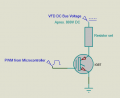
OK until is point.
Now problem comes in to my mind that if, for some reason, IGBT is burn and short, dc bus voltage will directly go through resistor which will damage the resister and VFD by overloading. Since DC bus connection is taken directly from capacitor bank, there is no built-in current sensors in this area. There may be a built-in fuse in this line but it will still leave the VFD for repairing. I didn't select any IGBT model at this time,
Any ideas and guideline to overcome this situation and also some useful advice for design is appreciated.
Thanks and regards.
Currently I'm considering to design a Dynamic Brake Unit (DBU) for V.F.D.
DBU power range is around 15KW and VFD is 400V class. Recommended resistor value is 40 Ohm
2kW.
I know the basic of DBU and will manage the voltage selection and PWM things via Micro-Controller.
My major concern in this post is related to a safety issue relative to IGBT.
When DC Bus voltage of VFD rises above a certain limit, IGBT is triggered via Micro-Controller PWM signal which will further dissipate this excess power to a low value, high power resistor. (Attachment picture).
OK until is point.
Now problem comes in to my mind that if, for some reason, IGBT is burn and short, dc bus voltage will directly go through resistor which will damage the resister and VFD by overloading. Since DC bus connection is taken directly from capacitor bank, there is no built-in current sensors in this area. There may be a built-in fuse in this line but it will still leave the VFD for repairing. I didn't select any IGBT model at this time,
Any ideas and guideline to overcome this situation and also some useful advice for design is appreciated.
Thanks and regards.
Last edited by a moderator: