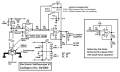
My electronic stethoscope project can feed a recorder then the recording can be played back on a speaker. If the circuit feeds an amplifier and speaker then there will be acoustical feedback howling if the mic can hear the speaker.
I used a switch to change the cutoff frequency of the Sallen-Key 2nd-order Butterworth lowpass filter from 103Hz to hear heartbeats with the noise reduced, or to 1030Hz to hear breathing sounds plus heartbeats.
A Bluetooth headset probably uses a MEMS microphone that is a tiny electret mic with a preamp built into it. They probably cut low frequencies for voice use, then it is useless to pickup heartbeats.
i think you got the price wrong its 169 indian rupees means 2.2 dollars though i am not quite sure about specs but its cheap so it might be worth a try? , thinklab one is 499 dollars which is why we are trying to make a affordable one.
and yes we are making this for a experienced doctor so thats not a problem.
i will look into the websites you mentioned.
one thing i dont quite understand is how i will get the output, i want it to be recorded on laptop if thats too much then just realtime audio on speaker works too, could you help me out with that?
thanks a lot
( i have little to zero knowledge about electronics as i am mechanical major so detailed explanation and links to site where i can learn is preferable )
OK, now I see that the price is not in USD and so that does matter.
If whatever microphone you create can connect to the microphone input of a laptop computer then saving the input is just a matter of software. Computers can store large amounts of audio, that is a matter for the software.
Either an electret microphone or a dynamic microphone will be compatible with most computer microphone inputs.
I did a little experimentation with a chest piece from a Littman stethoscope and a small electret designed for speech. I can tell you that @Audioguru again is almost certainly correct that bass roll off built in to such electrets make the unsuitable for the purpose.
Though I did manage to record a heartbeat it was many dB down from the rustling and other noise. Adjusting the gain to get more heart sounds lead to overmodulation of the undesired components and not that much more usable signal.
So it appears that your first task is to find a microphone that doesn’t have bass roll off baked in, and probably to add a low pass filter to eliminate the high frequency stuff that makes the signal very hard to hear.
I suggest a crystal microphone cartridge because they are more pressure sensitive than velocity sensitive, and also they often have a larger diaphram. An older condenser microphone could work, but the complexity makes it unsuitable for the application.
It seems that many of the much older vresions did use crystal cartridges. Those crystal mic cartridges are high impedance devices and so the input to the amp needs to match that.
My electronic stethoscope project can feed a recorder then the recording can be played back on a speaker. If the circuit feeds an amplifier and speaker then there will be acoustical feedback howling if the mic can hear the speaker.
I used a switch to change the cutoff frequency of the Sallen-Key 2nd-order Butterworth lowpass filter from 103Hz to hear heartbeats with the noise reduced, or to 1030Hz to hear breathing sounds plus heartbeats.
thanks for this , i got your project details from electronics lab site though i wanna ask like can i use your way to make the stethoscope ? and there are some changes i want to do could you help me out with that if you have some time.
thanks
Sure we can discuss improvements in this thread to my Electronic Stethoscope project. I made it 17 years ago as quick fixes to one that did not work in the other forum.
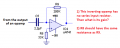
1) The first problem is that the 1st opamp is inverting with a very low input resistance that reduces the mic level a lot.
2) The second problem is that it uses an old dual audio opamp that needs a high voltage dual supply.
Sure we can discuss improvements in this thread to my Electronic Stethoscope project. I made it 17 years ago as quick fixes to one that did not work in the other forum.
1) The first problem is that the 1st opamp is inverting with a very low input resistance that reduces the mic level a lot.
2) The second problem is that it uses an old dual audio opamp that needs a high voltage dual supply.
actually i dont think i can disscuss improvements as i have no knowledge about circuits and things , i was asking for your help to mentor me . if you can help me out i can tell you the requirements and maybe you could suggest proper components for that , i will post problems here if that works? , its totally fine if you dont have time.
Your part of the world is very different to my part of the world.
You say that you have no knowledge about circuits and things but your doctor asked you to make an electronic stethoscope.
Here, electronic engineers design and produce them and a doctor simply buys a certified one.
Last week, my heart doctor injected radioactive stuff in me, strapped a sensor on my chest and had me walk very quickly on a treadmill that got steeper and harder while my doctor saw on a screen and recorded my heart movements. Then I wore a portable ECG recorder for 48 hours and made a diary of all exercise. My doctor did not ask me to make the sensor and ECG recorder for him. Hee, hee, an old fashioned stethoscope was not used.
Your part of the world is very different to my part of the world.
You say that you have no knowledge about circuits and things but your doctor asked you to make an electronic stethoscope.
Here, electronic engineers design and produce them and a doctor simply buys a certified one.
Last week, my heart doctor injected radioactive stuff in me, strapped a sensor on my chest and had me walk very quickly on a treadmill that got steeper and harder while my doctor saw on a screen and recorded my heart movements. Then I wore a portable ECG recorder for 48 hours and made a diary of all exercise. My doctor did not ask me to make the sensor and ECG recorder for him. Hee, hee, an old fashioned stethoscope was not used.
hahaha well its a long story and quite irrelevant to tell you how i got this project and i just said yes because it seemed interesting.
thanks for your help though i guess that radioactive stuff got into your head :|
Certainly off he topic, but that radioactive iodine tracer test almost killed am aunt of mine. They did not adequately check and she was violently allergic to the iodine.
¡Hola! Pase por este foro por casualidad y me llamó la atención el título, "Micrófono para registrar latidos del corazón".
Hace algunos años hice un tutorial para describir someramente los puntos a cubrir por un estetoscopio electrónico. Tal fue el revuelo que tuve que construir un dispositivo que fuera capaz de reproducir dichos sonidos mediante unos auriculares o un pequeño altavoz.
El artículo expuesto está en https://www.hispavila.com/category/e-analogica/estetoscopio-electronico/
Espero pueda servir el modelo que realicé.
Puedo decir que varios estudiantes de universidades americanas han obtenido la máxima nota en los trabajos de fin de carrera, almenos eso me han dicho en sus correos electrónicos.
Saludos y cuídense.
Traslator por google
Hello! I came across this forum by chance and was struck by the title, "Heartbeat Recording Microphone".
Some years ago I made a tutorial to briefly describe the points to be covered by an electronic stethoscope. Such was the commotion that I had to build a device capable of reproducing these sounds through headphones or a small speaker.
I can say that several students from American universities have obtained the highest marks in their final degree projects, at least that is what they have told me in their emails.
Welcome to AAC!
The circuit in that link uses the noisy 741 IC with a dual power supply. Not ideal. A more modern, low noise, single supply IC would be better.
¡Hola! Pase por este foro por casualidad y me llamó la atención el título, "Micrófono para registrar latidos del corazón".
Hace algunos años hice un tutorial para describir someramente los puntos a cubrir por un estetoscopio electrónico. Tal fue el revuelo que tuve que construir un dispositivo que fuera capaz de reproducir dichos sonidos mediante unos auriculares o un pequeño altavoz.
El artículo expuesto está en https://www.hispavila.com/category/e-analogica/estetoscopio-electronico/
Espero pueda servir el modelo que realicé.
Puedo decir que varios estudiantes de universidades americanas han obtenido la máxima nota en los trabajos de fin de carrera, almenos eso me han dicho en sus correos electrónicos.
Saludos y cuídense.
Traslator por google
Hello! I came across this forum by chance and was struck by the title, "Heartbeat Recording Microphone".
Some years ago I made a tutorial to briefly describe the points to be covered by an electronic stethoscope. Such was the commotion that I had to build a device capable of reproducing these sounds through headphones or a small speaker.
I can say that several students from American universities have obtained the highest marks in their final degree projects, at least that is what they have told me in their emails.
The MCP602 Cmos dual opamp has 5 times more current noise and 3.6 times more voltage noise than an audio opamp such as the OPA1234. Its datasheet does not mention distortion like all audio opamps do so maybe its distortion is high.

 Facebook
 Google
 GitHub
 Linkedin