Facebook
 Google
 GitHub
 Linkedin

@danadak (aka 'Dana') also wrote about the PSoC, described it in a high level. A good to know, useful and powerful possibility.If programming is the reason you want to avoid a micro, then a PSoC is just what you need, you can layout the needed logic on the IDE schematic and avoid any coding. (unlike the above example)
I want to avoid programming not because I'm afraid of it, but because I'm full of it (learned it in a school/university and worked as a programmer ... it's too easy and won't develop my electronics skills (will actually delay my progress - at least for my current level).
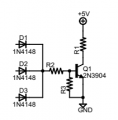
How else would I know of diode logic and pay attention to missing decoupling caps and MOSFETs

ElectricSpidey said:My only advice would be to choose a larger EEPROM with at least 15 addresses, as to accommodate the 11 lows and the additional 4 combos.
Although it saves board space and simplifies wiring, 'my heart hurts a bit' using EEPROM on this - it's like using a canon to hit a sparrow (I need only 1 output), so enhancing the address bits to 15 will probably mentally kill me or I won't be able to sleep knowing that I have a device on my desk with 15 addresses EEPROM while only 1 output bit is being used ... for buzzerBut, I still like the EEPROM solution, you can build a simple manual programmer if you don't have any other way to program.
(in case of an EEPROM as a chosen solution, I probably will 'join' it with a few gates)
the informal disadvantage of EEPROM - It takes at least a month to be delivered by AliExpress
Thanks for the inputs.