Facebook
 Google
 GitHub
 Linkedin

It is pretty hot out this summer. So I have decided to make a portable fan. I quickly found a spare DC motor and attached a propeller.
Here is the issue. I am using a CC power supply. It goes up to 20V. It only draws .1A at 20V when there is no load on it. With a limit of .5A, it drops down to 8-9V (with the propeller). It works fine. I can even step it up to 1 amp. But I am worried about one coil getting an average current of 1A, or even .5A. I am sure those coils would blow if that happened. This could happen if the motor is stopped.
So I am thinking of having a laser and photoresistor tachometer. Could this work? I have heard photoresistors are too slow here.
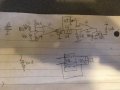
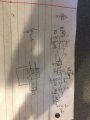
And is this is my idea for a circuit. Please let me know if it is good. So I would first have a comparator to see if the laser is shining on the photoresistor. Then there is a series capacitor with discharge resistor and series resistor. This is essentially a high pass filter for PWM. The voltage on the resistor gets measured, and must be above a certain value for a comparator to turn a MOSFET on, turning the motor on.
Additionally, I need someone to help me calculate the Rs and Cs to block less than a few Hz. Even though I can adjust the comparator, it must be within a reasonable range. And it would also need to deal with the fact that the comparator will be mostly high or mostly low, as the blade interruptions will not be 50% of the time.
Here is the issue. I am using a CC power supply. It goes up to 20V. It only draws .1A at 20V when there is no load on it. With a limit of .5A, it drops down to 8-9V (with the propeller). It works fine. I can even step it up to 1 amp. But I am worried about one coil getting an average current of 1A, or even .5A. I am sure those coils would blow if that happened. This could happen if the motor is stopped.
So I am thinking of having a laser and photoresistor tachometer. Could this work? I have heard photoresistors are too slow here.
And is this is my idea for a circuit. Please let me know if it is good. So I would first have a comparator to see if the laser is shining on the photoresistor. Then there is a series capacitor with discharge resistor and series resistor. This is essentially a high pass filter for PWM. The voltage on the resistor gets measured, and must be above a certain value for a comparator to turn a MOSFET on, turning the motor on.
Additionally, I need someone to help me calculate the Rs and Cs to block less than a few Hz. Even though I can adjust the comparator, it must be within a reasonable range. And it would also need to deal with the fact that the comparator will be mostly high or mostly low, as the blade interruptions will not be 50% of the time.