Facebook
 Google
 GitHub
 Linkedin

Slow down, please. I said:
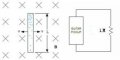
2. The rod on the left moves back and forth in a magnetic field and this forces electrons to accumulate first at one end of the rod (where the electrons meet with big resistance) and then at the other end of the rod (where they meet with equally big resistance). Yes? If not, why not?
And you replied:
But to answer your query, "How can I compare 'infinite' resistance with 1MOhm?" I reply, easily. Let's say I'm pressing down on a piece of hardwood with my thumb; my thumb squishes up a bit, and that's all that happens. Now let's say I press down, with equal force, on a piece of steel with my thumb; again, nothing happens except my thumb squishes up a bit. Did it matter that the resistance of the hardwood was significantly less than the resistance of the steel? No, because the force I'm able to muster makes both resistances effectively 'infinite' -- I'm unable to compress either one.
Next point of disagreement:
4. In both cases this varying accumulation/dispersal of electrons results in a varying potential difference across the ends of the resistances? Yes? If not, why not?
And you responded:
The magnetic force acting on a free electron in the rod will be directed upwards. As a result, electrons will start to accumulate at the top of the rod, but not in any significant way. The charge distribution of the rod will therefore change, but not in any significant way, and the top of the rod will have an insignificant excess of electrons (negative charge) while the bottom of the rod will have an insignificant deficit of electrons (positive charge). This will result in an insignificant potential difference between the ends of the rod.
See why I'm confused? I'm going to stop there because there's no point in going further until we settle this issue.
2. The rod on the left moves back and forth in a magnetic field and this forces electrons to accumulate first at one end of the rod (where the electrons meet with big resistance) and then at the other end of the rod (where they meet with equally big resistance). Yes? If not, why not?
And you replied:
Which makes no sense. Point 2, quoted just above, is only talking about the rod in the field (the circuit on the left), not the circuit with the 1M resistor on the right. The "equally big resistance" is the resistance of the air at the bottom of the rod which is equal to the resistance of the air at the top of the rod.No. Infinite resistance is not the same as 1 MOhm resistance. Why do you call 1M "equally big resistance"? It is not equally big. One is infinite and the other is 1 MOhm. How can you compare 1 with infinity? One is infinitely smaller than the other.
But to answer your query, "How can I compare 'infinite' resistance with 1MOhm?" I reply, easily. Let's say I'm pressing down on a piece of hardwood with my thumb; my thumb squishes up a bit, and that's all that happens. Now let's say I press down, with equal force, on a piece of steel with my thumb; again, nothing happens except my thumb squishes up a bit. Did it matter that the resistance of the hardwood was significantly less than the resistance of the steel? No, because the force I'm able to muster makes both resistances effectively 'infinite' -- I'm unable to compress either one.
Next point of disagreement:
4. In both cases this varying accumulation/dispersal of electrons results in a varying potential difference across the ends of the resistances? Yes? If not, why not?
And you responded:
We're going over this again because I don't see how you can call the accumulation of of electrons in the rod inconsequential. In the oft-quoted purple description of motional EMF the accumulation of electrons is the main point -- the one and only thing that accounts for the difference in potential between the ends of the rod. It's as if you want to re-word that paragraph to read (the additions you're implying in bold):I already answered yes to this, but I stressed that the charge is small and inconsequential for anything important. Why are we going over the same points over and over and over again?
The magnetic force acting on a free electron in the rod will be directed upwards. As a result, electrons will start to accumulate at the top of the rod, but not in any significant way. The charge distribution of the rod will therefore change, but not in any significant way, and the top of the rod will have an insignificant excess of electrons (negative charge) while the bottom of the rod will have an insignificant deficit of electrons (positive charge). This will result in an insignificant potential difference between the ends of the rod.
See why I'm confused? I'm going to stop there because there's no point in going further until we settle this issue.