method to remove hunchback from signal

Thread Starter

yef smith

Joined Aug 2, 2020
1,446
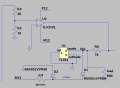
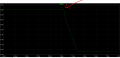
Hello , In the Vg1 part of the circuit i have a little undesired hunchback.
I dont any positive rise,.
When i added shotkey diode it lowered by half.
Is there a way to eliminate it completly so the signal will go from zero to -12 only?
LTspice files are attached
Thanks.
1728249510597.png
1728249652475.png
 

Attachments

panic mode

Joined Oct 10, 2011
4,864
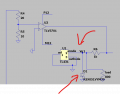
your U2 is working as comparator. it has CMOS push-pull output type so output voltage is either at P12 or M12 level.
when it is at P12 level, D1 clamps the output to Vf of D1. since this is a Schottky diode, you get about 150mV.
when the comparator is at M12 level, D1 is reverse biased and output is clamped by U1 to 2.5V.
so circuit does exactly what it is built to do.

one way to correct for Vf of D1 is to connect its Cathode to a potential that is 150mV below current one (GND is at 0V).

1728258457404.png
 

panic mode

Joined Oct 10, 2011
4,864
the other (better) option is to use suitable driver... add transistor for example.

btw. it is good that you are learning and trying things out but you should also do the match and read the datasheets

for example load is 800 Ohm and voltage is 0 or 2.5V.
so max load current is 2.5V/800 Ohm =3.125mA

this is within tolerances of U2 output. but... you are drawing much more from that puny output.
since Vf of D1 is 150mV, voltage across R6 is 12V-0.150V = 11.85V.
current through R6 is then 11.85V/1k = 11.85mA.

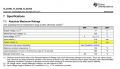
the datasheet also tells you that ABSOLUTE MAXIMUM output current for this device is +/-10mA.
you should NEVER get close to those limits. so consider changing values to something more reasonable. for example define own limit as 5-6mA. this means changing R6 to something like 1.8 - 2.2k

also input resistors are 10 and 20 Ohm... those are ridiculously low values for something that only drives an input. and in this case the input is on ultra low power device. those could (and should) be larger.... some 1000x or 10000x sounds about right.
 
Last edited:

sparky 1

Joined Nov 3, 2018
1,218
No, it is a nano comparator! No not mA, No not uA, a typical range is 400 to 750nA
The advise given earlier was ok but the original circuit has been changed entirely.
The scrap and hack method made the hard work and good advise look bad.
What do you call it when the forum is injured
 
Last edited:
Top