Look for better transistor by reading datasheet

Bordodynov

Joined May 20, 2015
3,431
Those values of hFE are when you are using the transistor as a linear amplifier, not as a switch.
When using it as a switch, an hFE value of 10-20 is typically used to insure the transistor is fully saturated.
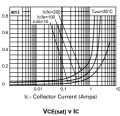
Notice that, for the saturation voltage measurement @4A, they use an hFE of 10.
View attachment 163528

I would use a value of about 20 for the maximum startup current, since that's well below 4A and its gain is significantly higher at lower currents.
That will insure good saturation at the running current.
Bordodynov, do you have an LTspice model for that transistor?
.MODEL FCX690B NPN IS=1.5p NF=1 BF=1000 IKF=3 VAF=60 ISE=4E-13 NE=1.37 NR=1 BR=123 IKR=1 VAR=14.5 ISC=4E-13 NC=1.34 RB=0.1 RE=0.045 RC=0.027 CJE=250p VJE=0.68 MJE=0.36 CJC=59p VJC=0.49 MJC=0.36 TF=0.77n TR=18n RCO=0.93 GAMMA=5n QUASIMOD=1 XTB=1.4 TRE1=0.002 TRB1=0.002 TRC1=0.002 Vceo=45 Icrating=2 mfg=Zetex

Edit: The ZTX690B that Bordodynov posted looks like a good option.
They use an hFE of 200 for the saturation tests.
Bordodynov, do you have an LTspice model for that transistor?
.MODEL ZTX690B NPN IS=1.5p NF=1 BF=1000 IKF=3 VAF=60 ISE=4E-13 NE=1.37 NR=1 BR=123 IKR=1 VAR=14.5 ISC=4E-13 NC=1.34 RB=0.1 RE=0.045 RC=0.027 CJE=250p VJE=0.68 MJE=0.36 CJC=59p VJC=0.49 MJC=0.36 TF=0.77n TR=18n RCO=0.93 GAMMA=5n QUASIMOD=1 XTB=1.4 TRE1=0.002 TRB1=0.002 TRC1=0.002 Vceo=45 Icrating=2 mfg=Zetex
My collection had a model of this transistor.I used AKO :.But apparently, all the models defined using AKO, disappeared after some kind of update.LTspiceXVII recently does freaks when updating with the standard.bjt file.LTspiceXVII replaces character encoding. It doesn't care, but for LTspiceIV this new file is no good.I use bak-file for recovery.
 

Bordodynov

Joined May 20, 2015
3,431
See
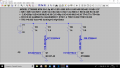
Vce_sat.png I still have a comment on the scheme of inclusion of the motor.The motor has an inductive nature of resistance and therefore it is reckless to turn on the motor without a shunt diode.Of course this is possible if you want to risk a transistor.;)
 

Audioguru

Joined Dec 20, 2007
11,248
Every transistor datasheet lists the saturation voltage with the base current at 1/10th the collector current, except European BC54x and BC55x transistors list the fairly poor saturation voltage with the base current 1/20th the collector current. Their graphs show a "typical" transistor with a much lower saturation voltage when the base current is 1/10th the collector current.
A saturated transistor is turned on hard so that its collector-base junction actually conducts a little.
 

crutschow

Joined Mar 14, 2008
38,530
I can't recall reading any datasheet that didn't give the ratio as 10.
The ZTX690B uses a value of 200 (below), which is unusual for a non-Darlington transistor (it's obviously not a Darlington given the low saturation voltages).
It must use a special process to get such high gain.

upload_2018-11-11_12-10-13.png

But, as AG noted, the saturation voltage is lower for lower Ic/Ib ratios.
upload_2018-11-11_12-19-57.png
 

dl324

Joined Mar 30, 2015
18,340
The ZTX690B uses a value of 200 (below), which is unusual for a non-Darlington transistor (it's obviously not a Darlington given the low saturation voltages).
It must use a special process to get such high gain.
Obviously darlingtons use higher betas for saturation, but I had never seen a more typical transistor use a beta higher than 10. As with all things, there are exceptions.
 

ebp

Joined Feb 8, 2018
2,332
The saturation voltage for "most" small signal transistors is specified at 25 °C with a base current of 1/10 the collector current. That no more means that you must operate it at that current ratio than it means that you must operate it at 25 °C. For many purposes, it is ridiculous to use so much base current. In some circumstances, the ratio of base to collector current must be even higher.

Higher performance transistors, like many in the Zetex (now Diodes Inc) "e line" series are specified at current ratios that are actually sensible for the performance of the device. It would be absurd to spend ten times as much money for a transistor and still treat it like an ordinary cheap part.

Once you get into power transistors, where current gains tend to be low to begin with, the saturation voltage is usually specified at a base to collector current ratio much lower than 1:10. For the 2N3055, the ON Semi datasheet specifies saturation voltage at 10 A collector current at 25 °C at a base:collector current ratio of 3. Saturation at 4 A is spec'd at 1:10. The reason for different values would be used becomes apparent when you look at the current gain curves at various currents.
 

crutschow

Joined Mar 14, 2008
38,530
It would be absurd to spend ten times as much money for a transistor and still treat it like an ordinary cheap part.
I don't know if it's ten times, but the ZTX690B can be purchased ( from Mouser for example) for $0.89 US in 1ea quantities.
 

ebp

Joined Feb 8, 2018
2,332
One thing that hasn't been mentioned with regard to saturation in bipolar transistors is that it very significantly increases the time it takes to turn the transistor off. Hard saturation "fills" the base region with a great excess of carriers, and until those carriers are gone, either by actively "pulling them out" of the base or allowing them to recombine, the transistor won't fully turn off. For something like on-off control of a motor, this is completely irrelevant and a small improvement in saturation voltage from driving the base really hard may be worthwhile. If you were trying to do pulse width modulation at some fairly high frequency, it might be intolerable.

A web search for "Baker clamp" should be instructive.
 

ebp

Joined Feb 8, 2018
2,332
I don't know if it's ten times, but the ZTX690B can be purchased ( from Mouser for example) for $0.89 US in 1ea quantities.
I think that's even worse than 10 times, though admittedly there isn't really a common device that has a comparable continuous collector current rating. In any case, it is rather dear for small transistor.

Many years ago I used to look at the specs for those Zetex transistors and marvel at them. Then I'd marvel at the price and find something else. Most of that line was introduced in the days when power MOSFETs were just starting their upswing. Some of them may date back to the Ferranti days.

Many Pro Electron (does that even exist anymore?) registered small transistors have much higher beta than otherwise comparable JEDEC parts. I've always been curious why. Some can be had in four or five different beta "bins" - but they still tend to spec Vsat for all the variants at the same B:C current ratio.

I'm also curious whether modern semi fab has reduced the variability from unit to unit and lot to lot for small BJTs. So many of the parts that are still popular date back several decades, but the datasheets are still much the same. I wonder if JEDEC rules don't permit changes in specs without a change in part number.
 

crutschow

Joined Mar 14, 2008
38,530
In any case, it is rather dear for small transistor.
That may be a factor in production quantities (40.5 cents in 1000 quantity) but 89 cents doesn't seem that significant for one-up hobby applications (as compared to about 25 cents for a PN2222 for example).
 
Dear dl324,

Sorry I don't understand the datasheet, do you mean 600mA is the maximum rating for PN2222A transistor, so the maximum current to the load is better less than 600mA but the transistor maximum allow current will be 1.2A but it will be very hot.

What will happen if the load is over 600mA or 1.2A to the PN2222A?

Best regards,

Kelvin.
First of all.
The parameters given in the datasheet is absolute maximum values.
There will be a voltage over this transistor wich makes the 600mA impossible to obtain, as 600mA and nearly a Volt hits the maximum power dissipation in the transistor.
To switch the power for this motor I would have chosen a MOSFET, as it is much easier to get it to give good enough function without the heating problem.
 

Thread Starter

Kelvin Lee

Joined Oct 22, 2018
111
First of all.
The parameters given in the datasheet is absolute maximum values.
There will be a voltage over this transistor wich makes the 600mA impossible to obtain, as 600mA and nearly a Volt hits the maximum power dissipation in the transistor.
To switch the power for this motor I would have chosen a MOSFET, as it is much easier to get it to give good enough function without the heating problem.
Dear TANDBERGEREN,

Do you mean if I don't have MOSFET but have a transistor with higher current or voltage like 2A, 80V, then the transistor is good enough for my use?
 

Audioguru

Joined Dec 20, 2007
11,248
Your circuit has a supply that is only 3V. Most Mosfets need a gate-source voltage that is 10V to fully turn on. A "logic level" Mosfet needs a gate-source voltage of 4.5V to fully turn on. Since your supply is too low for them then they will not fully turn on then they will get very hot and your motor will run slowly.

Your 2A/80V transistor will be physically huge and need a base current of 60mA for it to turn on the 600mA motor fairly well. Can your signal source provide 60mA?
 

dl324

Joined Mar 30, 2015
18,340
If you want to use a transistor, you can use a darlington configuration if base current is a limitation. If the high saturation voltage is an issue, you can use a split darlington.
 

Audioguru

Joined Dec 20, 2007
11,248
If you want to use a transistor, you can use a darlington configuration if base current is a limitation. If the high saturation voltage is an issue, you can use a split darlington.
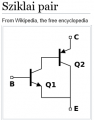
Google and I have never heard of a "split Darlington". Maybe you mean a Sziklai pair which is also know as a complementary feedback pair, compound transistor and pseudo Darlington? It also has a fairly high saturation voltage of 0.6V or 0.7V because the output PNP transistor is an emitter follower. 0.7V is almost a quarter of the 3V supply causing the motor to run slower.
 

Attachments

dl324

Joined Mar 30, 2015
18,340
Google and I have never heard of a "split Darlington". Maybe you mean a Sziklai pair which is also know as a complementary feedback pair, compound transistor and pseudo Darlington?
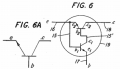
No, I mean split darlington:
upload_2019-1-11_12-44-23.png
By not connecting the collectors together, the saturation voltage isn't increased by a diode drop.

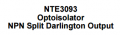
Found this reference in about 5 seconds:
upload_2019-1-11_12-46-56.png
upload_2019-1-11_12-47-20.png
 
Top