Live Sound PA System Project

Thread Starter

djschuschu

Joined Aug 13, 2015
3
Hello, My name is Noah.

Here's the scoop of what I have and what I am trying to do.
I currently have two passive JBL JRX115 PA Speakers that are being powered by a Behringer Inuke nu3000dsp amp.
Right now, when I run the amplifier in stereo mode, each channel (left and right) receive 440 watts of power at 8 ohms. This is fine, but I wanted to add on to my system.

What I would like to do is use a setting on the amplifier called "bi-amping." The nu3000dsp's owners manual states is that "Bi-amping splits a mono signal into upper and lower frequency bands, and then assigns each frequency band to separate speaker cabnits." However, what I want to do is use both of my JBL JRX115's in channel A (for the higher frequencies), by using a speakon y-adapter, and a subwoofer of my choice in channel B (for the lower frequencies). My concern is with the two JRX115's being plugged into channel A.

I know that there is a total resistance of 4 ohms and that at 4 ohms the amp puts out 820 watts of power.
My question for you all has to do with the power being delivered through channel A. Would the power get split in half when it's running thought the parallel circuit?

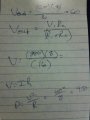
Attached are the owners manuals and the work that my friend and I have written out.
- 20150813_231735.jpg
- http://www.jblpro.com/ProductAttachments/JBL_JRX115.pdf
- http://www.behringer.com/assets/NU6000DSP_NU3000DSP_NU1000DSP_M_EN.pdf

Thank you for your time. If I haven't made something clear, please ask me so I can clarify what it is I'm asking.
- Noah.
 

#12

Joined Nov 30, 2010
18,224
Running your speakers in parallel will theoretically split the power equally, but you are running the power so high that it scares me. A little dirt in a connector will put all the power into one speaker and POOF...magic smoke escapes.

Make bloody sure your connections are clean and tight!

Other concerns include the idea that the upper frequencies comprise way less than half the sound power. If you drive the tweets at the same power as the subs, POOF again.

Then there is the idea that the JBLs are already designed to split the frequencies properly to match the drivers. Why you want to pee in such a beautiful design?

As usual, this is only my opinion.
 

Lestraveled

Joined May 19, 2014
1,946
This is actually a pretty common configuration. The JBL speakers are a good 150 Hz and above speaker, but very inefficient below 150Hz. You will get a nice robust sound if you unload the JBLs and route the lower bass to a few sub-woofers. As #12 said, the JBLs will share the power because they are identical. Yes, use big wire and good contacts. Again, this configuration is very common. Your amp will produce a lot more heat. Give it lots of air.
 

#12

Joined Nov 30, 2010
18,224
If you leave the JBL rigs "as is" and simply re-route the bottom octave or two, to a separate pair of woofies, my concern about smoking the tweeters disappears.
 

Thread Starter

djschuschu

Joined Aug 13, 2015
3
Running your speakers in parallel will theoretically split the power equally, but you are running the power so high that it scares me.
#12,
The reason the power is so high is due to running out of the amp at 4 ohms. Im not too sure, but my thought was that when the audio was split to both speakers the power would be cut in half due to having 8 ohms of resistance. Is this wrong to assume?


Yes, use big wire and good contacts. Again, this configuration is very common. Your amp will produce a lot more heat. Give it lots of air.
Lestraveled,
So what you're telling me is that my idea should work as long as I use identical audio cables between each one of the JRX115s and as give the amp easy access to a lot of are.

Thank you all so much for entertaining my project idea!
- Noah.
 

Lestraveled

Joined May 19, 2014
1,946
You don't need to use identical cables. They don't have to be the same length. Don't make your speaker cables any longer than they need to be. Use thick wire, at least 12 gauge or larger. The longer the distance the larger the wire should be.
 

Lestraveled

Joined May 19, 2014
1,946
The cable transfers the power from the amplifier to the speakers. You want the resistance of the cables to be insignificant compared to the load resistance. For instance, if you had an 8 ohm speaker and the total resistance of the cables going to it was .8 ohms then you are loosing about 10% of your power in the cable. (Loosing 10% is a lot.) Look up the resistance of different gauge wires and calculate the total resistance per foot. Then look at the impedance of your speakers. Evaluate how much power (in percent) you will loose per foot, per gauge.
 

#12

Joined Nov 30, 2010
18,224
#12,
The reason the power is so high is due to running out of the amp at 4 ohms. I'm not too sure, but my thought was that when the audio was split to both speakers the power would be cut in half due to having 8 ohms of resistance. Is this wrong to assume?
Two (8) ohm speakers in parallel makes 4 ohms. The power to each JBL set of speakers will be half the total power...if you are careful to have good, clean, connections. I think we are only having a confusion about how the words are interpreted, not the physics of the situation. I repeat, If you are merely cutting the bottom 2 octaves off the drive to the JBL speaker sets, the JBLs will work perfectly well with the frequency dividers which were provided by JBL inside the speaker cabinets. The bottom 2 octaves can be sent to speakers better suited to the lowest frequencies and no harm will come to the JBL speakers by merely relieving them of the lowest octaves of energy.

Did that come across clearly?
 

Lestraveled

Joined May 19, 2014
1,946
#12
When I was lugging PA cabinets, the connections were 1/4" jacks or binding posts. Now days the profession audio industry has gone to the "Speakon" connector system. The standard was set by a German firm called Neutrix. The standard Speakon connector is rated for 40 amps RMS. Most all of the big amps and pro audio speaker cabinets use them. It is a great connector system. Noah mentioned that he is using them so I don't think you need to worry the "good, clean connections" issue.
 

Thread Starter

djschuschu

Joined Aug 13, 2015
3
I emailed Behringer about this to see what they. I got. Response saying that I should be able to run the jrx115 in parallel on channel A and a sub through channel B and have no problems.
Thank you for your input, I greatly appreciate it!

- Noah.
 
Top