Line driver or buffer

Thread Starter

engr_david_ee

Joined Mar 10, 2023
358
We have 8 x GPIO from Microcontroller which need to be connected at a remote location which is around 8 to 10 meters. The load current is something around 25 mA per GPIO. Kindly suggest line buffer/GPIO buffer that can be used with the Microcontroller board which we need to design. It is important that there should be no I2C. Just a simple parallel in parallel out.
 

Papabravo

Joined Feb 24, 2006
22,058
Have you considered RS-485 transceivers. I know that may sound redundant, but you'll only have to stock one part for driver and receiver.
 

Thread Starter

engr_david_ee

Joined Mar 10, 2023
358
The application is that we need to control Relays which are located remotely on Relay board. The switching of Relay is slow. The Relay boards are located around 8 to 10 meters away from Microcontroller. Therefore, we are looking for single ended I/O buffer IC.

I will look at 74ACT244, 74LVC244 and also MC74ACT541.
 

Papabravo

Joined Feb 24, 2006
22,058
The application is that we need to control Relays which are located remotely on Relay board. The switching of Relay is slow. The Relay boards are located around 8 to 10 meters away from Microcontroller. Therefore, we are looking for single ended I/O buffer IC.

I will look at 74ACT244, 74LVC244 and also MC74ACT541.
Those are all meant for driving singnals on a board at high speed. They are not designed for the load of a long cable. Do you not understand the difference?
 

Thread Starter

engr_david_ee

Joined Mar 10, 2023
358
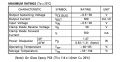
This is darlington configuration in which two transistors are in cascade to increase the current.

I am not sure why it state "sink driver".
 

Papabravo

Joined Feb 24, 2006
22,058
I am sorry. I am not getting.
I know you are not getting it. In simple terms a line driver and receiver are DESIGNED to overcome the signal integrity problems of sending and receiving data over long cables. They do this with differential signaling which overcomes problems with signal integrity and ground referencing inherent with single ended signaling. RS-485 devices ARE designed for reliable signaling over long cables. Can the RS-485 receiver drive the relay coil directly? I don't know but you can probably figure that out from the datasheet or run the experiment.
 

Papabravo

Joined Feb 24, 2006
22,058
Nothing prevents you from using RS-485 transceivers to move the data across the cable and THEN using the ULN2803 to drive the relay coils. In my mind that would be an elegant solution, solving each of two different problems with an appropriate part. Also note that the RS-485 transceivers may come in dual or quad packages further simplifying the design
 
Top