"Lightkeeper" how does it work? Christmas Light Repair Gun

Thread Starter

bigjoncoop

Joined Feb 1, 2019
204
How does a Christmas light repair gun work? "LightKeeper"

I'm assuming it sends a high burst of current that somehow fuses the broken filament together but I'm not sure.

I know I can buy one for Fairly cheap but was wondering if I could make a DIY one myself
 

wayneh

Joined Sep 9, 2010
18,096
How does a Christmas light repair gun work? "LightKeeper"

I'm assuming it sends a high burst of current that somehow fuses the broken filament together but I'm not sure.

I know I can buy one for Fairly cheap but was wondering if I could make a DIY one myself
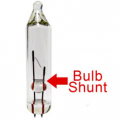
Yes, it’s a burst. It doesn’t fuse anything together but instead “activates“ the already-present bypass wire that is a small coil around the base of the filament holders. It’s supposed to activate on its own if the filament fails but frequently fails to do so. Hence the value of the gun. I suppose it arcs and melts thru the insulation. It’s probably a piezo element.

It‘s a must if you have incandescent light strings. It is far from a 100% cure but works often enough to be a godsend. Personally I’m moving towards LEDs and my old Lightkeeper is getting less use.
 

Beau Schwabe

Joined Nov 7, 2019
186
" Yes, it’s a burst. It doesn’t fuse anything together but instead “activates“ the already-present bypass wire that is a small coil around the base of the filament holders. " ..... No .... It uses basic physics by sending a high voltage low current pulse (or burst) ... since opposite charges attract, what's left of a burnt filament will attempt to reconnect and briefly fuse within the bulb. If the pulse voltage is high enough, the carbon from the burnt bulb will reconstruct a conductive path within the bulb. It is up to you afterwards to identify the unlit (temporarily fused) bulbs and replace them with good bulbs. .... The reason I know this? My Marx generator has the same effect on repairing Christmas lights. It's pure physics ...

500kV Marx Generator Video:
https://www.youtube.com/shorts/vOB4DTinJqs
 
Last edited:

wayneh

Joined Sep 9, 2010
18,096
... since opposite charges attract, what's left of a burnt filament will attempt to reconnect and briefly fuse within the bulb. If the pulse voltage is high enough, the carbon from the burnt bulb will reconstruct a conductive path within the bulb.
No. Lightbulbs haven't used carbon filaments since Edison.
And I don't know what voltage would be required to move the electrodes together but it's a heckuva lot more than the string could tolerate.
The "coil" I was describing is apparently called the bulb shunt.

1732888718116.png
 

MisterBill2

Joined Jan 23, 2018
27,311
Just like "W" says, the high voltage spike is intended to break down the insulation on the bypass "bulb shunt" that is wrapped around the two leads that support the filament. THAT is supposed to allow the current to flow so that the good bulbs will light, and so that the failed bulb can be replaced. But some of the "reviewers" are so dismally incompetent, either naturally or intentionally, that it does not work for them.. But since at least half of that stuff is faked, I avoid it all.
 
Top