LED Tester Peak Finder

Audioguru again

Joined Oct 21, 2019
6,826
Instead of measuring temperature, most of us buy name-brand LEDs, operate them below their absolute maximum allowed current and mount them on a name-brand heatsink that specs the amount of cooling needed.
 

BobTPH

Joined Jun 5, 2013
11,543
To mister @BobTPH - Its not ONLY about LEDs. Its about how to make this thing work. Im learning new things, new components, new methods of reading and experimenting. This LED tester project is a very basic way to lay down a practical idea on how to measure ANY component power stress under controlled current input. It is more than leds, it will be a bit more universal and in the end you will want to make one for yourself. I will be very glad if it will come out that good, haha.
No need for me to make one, my bench supply already does that, as any good one will.

Bob
 

LowQCab

Joined Nov 6, 2012
5,101
"" how to measure ANY component power stress under controlled current input. ""

The manufacturers have already done all this work for You, just read the Spec-Sheet.

If You can't get a Spec-Sheet, choose a more up-to-date component.
.
.
.
 

Thread Starter

q12x

Joined Sep 25, 2015
2,227
Thank you all for your answers, and I understand everything you say. But please indulge me. I know you know the best but I don't, so I have to experiment a little until I get it, and your comments are helping me.
After all this discussion and experimentation that I did, I realized I need a serious tool for reading temperature.
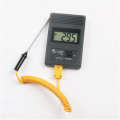
So I already buy from aliexpress one TM-902C that includes (hopefully) 2 temperature sensors:

-side note: I dont trust ebay anymore, I was using it for a very long time, but from 2021 with covid chinese hysteria, they push up all their prices, almost doubled everything from how they were. It was a very cheap and good market but they got very stupid very quickly. Eh well. What other cheap markets are you using, by the way, beside ebay and aliexpress? - end of side note.

Here is the "TM-902C + Thermocouple Probe detector"
1641355547234.png
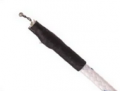
and it also includes a "K Type Thermometer Sensor" (that is looking similarly to my scrapped sensor)
1641355492227.png
all for 5$ and I think is a good deal.
- Please tell me what kind of temperature tool do you have and use? Im curious if you are using this cheap thing as well, im wondering how good it is. I bet it will do its job but a confirmation will ease my soul. It will pass 1 or 2 months until it will arrive... hmmm, another delay for my projects. But its an interesting development and advance for me. Very new things to try and use. I start to think it might be an esential tool in an electronist tool set that I ignored completely.
Thanks for this comment:
A thermistor and thermocouple are two completely different things. You cannot use them interchangeably.
I realized what I want and what to search for. It helped me immensely. Excellent comment ! Thank you !
 
Last edited:

Audioguru again

Joined Oct 21, 2019
6,826
Those temperature sensors cannot properly measure the temperature of any small electronic part.
We never measure temperatures, instead we calculate the temperature from specs of the part on its datasheet and on the datasheet for a heatsink if it is needed. The calculations are simple and are used for every part that heats.

A 1/4W resistor is very hot with 1/4W of heat so we use a 1/2W resistor. For a 1/4W resistor we calculate no more than 125mW of heat. The metal case of a power transistor has its thermal resistance from chip to case spec'd on its datasheet so a heatsink can be selected for its amount of heating.
 

BobTPH

Joined Jun 5, 2013
11,543
You could have just bought the probe and used it in your multimeter, but, at that price, I don’t think you would have saved much.

A guy in another forum calibrated what he called his “digital thermometer”. For a rough estimate of how hot a part is, you put your finger (that’s the digital part,” on the part and time how long you can leave it there. The time translated into a rough temperature estimate that is good enough fir a go/ no go decision.

Bob
 

Thread Starter

q12x

Joined Sep 25, 2015
2,227
Thank you mister @BobTPH
I started originally to search only for probes alone but after understanding what is what, I decided for the whole thing especially for 5$ which is a very affordable and low price. And as I mentioned, my bazaar DMM is weird and most probably damaged, since I didnt get any dgr C reading from it on any other probe holes - it has 4 holes for probes, and I try them all, and no result other than 600-700 range. In a single word: Untrusty (I don't trust it). So that was also a motivation to get a dedicated tool exactly for this task here. And it will be the ONLY serious component temperature tool I will have. The bazaar DMM is useless for this task.

Yes, I know the finger technique. Haha. I am using it all the time, and because of it I was dreaming for a long time, on a precise temp tool but never got the impulse to search and ask and get one like I just did. I have another personal technique, beside the finger temp test, by using my upper lip. I take very quickly the hot component and put it on my upper lip, it is VERY efficient way to get the slightest warming into a component. Your lip is very sensitive to warm and heat. Also, I am using 2 sides of the finger as well, the tip of the finger is having usually a thick skin because is a used side of the finger and yes for 100 to 400 dgr C is efficient enough but is a 'slow' reading because of too much insulation. The other side of the finger, is the middle of your finger between the joints. That side has thinner skin more sensitive to warm , and extremely sensitive to hot components. But the upper lip is even more sensitive. I 'kissed' like that a lot of components. Haha and never failed me.

I hate that I have to wait for these things to arrive in 1 month if im lucky - now with this covid 'blessing', nobody sends on mail that much as before and theoretically is more free now.
Thanks for the answer !
 

Audioguru again

Joined Oct 21, 2019
6,826
You are going to use a very cheap sensor to measure temperatures of small electronic parts?
Its mass will act like a heat sink and carry away much of the heat causing your temperature reading to be much lower than the actual temperature.
You will be measuring the temperature of a transistor's case plus the cooling of it caused by the mass of the temperature sensor without knowing the maximum allowed internal temperature of the chip inside that is rated on its datasheet. The datasheet also rates how much internal heat reaches the case for you to select a suitable heatsink.

I have been designing and making electronic circuits for 60 years without a temperature sensor and I have never had a part fail due to over-temperature because I design circuits using name-brand parts and I do not exceed the ratings on their datasheets.
 

Thread Starter

q12x

Joined Sep 25, 2015
2,227
I understand you and respect you mister @Audioguru again and most important I believe you.
I will take in consideration the heat sink problem of the sensor itself as well. It is a good point.
And about this temperature device, I never had one like this, and I am unsure how much I will actually use it, but for this experiment I will definitely use it. In fact I am annoyed it must pass 1month until it will arrive, and after that I can continue this project. It sucks but until china will use transcontinental mail air drones, we have to wait the trains to arrive.
 
Last edited:
Top