Leak detection circuit

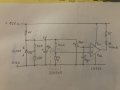
It’s a high power switching regulator, very noisy and with low precision.
For the sensor you need a precise low noise 5V reference.
You can make it from TL431 shunt regulator:
IMG_1337.jpeg
 

Thread Starter

PF Graham

Joined Sep 25, 2022
28
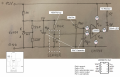
It’s a high power switching regulator, very noisy and with low precision.
For the sensor you need a precise low noise 5V reference.
You can make it from TL431 shunt regulator:

View attachment 338501
Oh very cool, took me a sec to read up on the TL431 and TL432 family and what they do.

Nifty.

Considering I need to test this, of the plethora of flavors of the TL43XX family, do you have a preference?

Also, I noticed you added another 1k resistor to the beginning of the 12v line, is that to further refine the output (C - Vka), or something else?
 

MisterBill2

Joined Jan 23, 2018
27,600
OK, aand it still has not been noticed by anybody that the tread starter is not a "master EE", and so needs a bit of help,such as providing the pi numbers on IC devices.

So to clarify what I meant: M.P.=Michal Podmanický
 

Thread Starter

PF Graham

Joined Sep 25, 2022
28
Revised version of Michal's block diagram:
1734720510744.png

I've got most of these parts around my shop but not the LM393 or TL431 - there's a wide variety of packages for each of these, can anyone make a recommendation to the exact version of those two so I can order them please.

Thanks!

- Patrick
 

MisterBill2

Joined Jan 23, 2018
27,600
In place of the sensor that will need to be replaced, you can use a piece of unetched copper PCB with a thin scribed line separating the two sections. and a piece of blotter paper, or similar, anchored across. Then verify that a bit of water causes the comparator to trip.
 

Thread Starter

PF Graham

Joined Sep 25, 2022
28
In place of the sensor that will need to be replaced, you can use a piece of unetched copper PCB with a thin scribed line separating the two sections. and a piece of blotter paper, or similar, anchored across. Then verify that a bit of water causes the comparator to trip.
I'm looking for exact part numbers for those two parts since they have so many different variations.
 

MisterBill2

Joined Jan 23, 2018
27,600
I am sure that I have seen commercial moisture sensors that do not need to be replaced every time.
I suggest asking "Automation Direct" because they have a large product line and good customer assistance.
 

Thread Starter

PF Graham

Joined Sep 25, 2022
28
I am sure that I have seen commercial moisture sensors that do not need to be replaced every time.
I suggest asking "Automation Direct" because they have a large product line and good customer assistance.
Nope, this sensor is fine.

If you read the entire thread, you'll see the logic of replacing the sensor every time a leak is detected AND you're forced to drop the box from the Jeep.

I get the logic of it.

I usually buy from TE or Mouser, I've never heard of Automation Direct, interesting site, thanks for turning me on that.
 
The 1k resistor I added supplies the regulator, it’s necessary, that is just the way how shunt regulators works, they clamp excessive voltage the 1k provides (12v).

Buy TL431 in TO92 package, all of them available in market are about the same in properties , you shouldn’t make a mistake.
https://www.mouser.sk/ProductDetail/STMicroelectronics/TL431ACZT?qs=oFjv9VeDysEUHODt00QxIg==

LM393 in DIP package, the same..
https://www.mouser.sk/ProductDetail/Texas-Instruments/LM393AP?qs=LfG3tU9ud8C8WR6rae7e8w==
 
Last edited:

Thread Starter

PF Graham

Joined Sep 25, 2022
28
The 1k resistor I added supplies the regulator, it’s necessary, that is just the way how shunt regulators works, they clamp excessive voltage the 1k provides (12v).

Buy TL431 in TO92 package, all of them available in market are about the same in properties , you shouldn’t make a mistake.
https://www.mouser.sk/ProductDetail/STMicroelectronics/TL431ACZT?qs=oFjv9VeDysEUHODt00QxIg==

LM393 in DIP package, the same..
https://www.mouser.sk/ProductDetail/Texas-Instruments/LM393AP?qs=LfG3tU9ud8C8WR6rae7e8w==
Done and ordered!

Thanks!
 
I use LTSpice now, and Circuitlab in the past.
LTSpice has more features and works faster when you simulate a huge circuitry, especially when circuit contain many time constants they are wide different.
Like switching converter with fast switches and slow output filter.
 

Thread Starter

PF Graham

Joined Sep 25, 2022
28
Here's the leak sensor installed, I had to fabricate the mount, came out fine. I'll finish wiring up the Back Battery Box now. The parts for the circuit will be here in a couple days. I'll breadboard it first and add it to the Jeep in some package then add an LED to the dash.

Image


Image


Image


Image


This is for the Back Battery Box that sits just a tad above the rear differential so extra care and detection of all ingress is required.

I also added a drain plug so that if moisture is detected, the owner can pull over and drain the box to see if there's a ton of water that got in or not. Assuming it's not bad and just the last creek forded, the Jeep can limp home for further inspection if warranted.

I've got it set for about 1/8" above the bottom of the inside of the box so that it will only signal with real info, hopefully.

I'll incorporate this into all these Battery Boxes going forward.

- Patrick
 

MisterBill2

Joined Jan 23, 2018
27,600
OK, and thanks for the pictures. This battery box does not appear to be nearly as tightly packed as they are for most current battery powered vehicles. It may actually be serviceable by the owner, instead of "replace as an assembly." It could even be pressurized a bit with dry nitrogen, and that pressure could then be sensed both as a leak detection method and possibly a battery heating sensor scheme. The added benefits would be slightly better cooling and a reduced tendency toward oxidation of anything. But I have not considered any possible effect on the battery cells or seals.
 

Thread Starter

PF Graham

Joined Sep 25, 2022
28
OK, and thanks for the pictures. This battery box does not appear to be nearly as tightly packed as they are for most current battery powered vehicles. It may actually be serviceable by the owner, instead of "replace as an assembly." It could even be pressurized a bit with dry nitrogen, and that pressure could then be sensed both as a leak detection method and possibly a battery heating sensor scheme. The added benefits would be slightly better cooling and a reduced tendency toward oxidation of anything. But I have not considered any possible effect on the battery cells or seals.
The full battery box looks like this (sans cables but you get the idea):
1735083471234.png

While not overly packed in there, it's tight as I could design for other fitment between the Jeep frame rails mostly. The cooling side of the box, R in this picture, has more room to allow for hooking up the internal cooling manifolds and such.

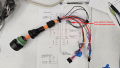
Cooling isn't really a problem with EVs, it's 100% necessary but not the end of the world. Some EV builders don't even do it (stupid!). I'm doing it because I believe it's it's essential. Also, the BMS cables that are inside the box have thermistors attached to each of the modules so I know exactly how hot each of the Packs is at all times. Here's a photo of that harness that I'm working on now - Note the Leak Detection connection:
1735086272399.png

This harness is a particularly difficult one because there's no real instructions on how to pass 33 20awg wires through a bulkhead while attempting to maintain IP66.

I'm going to squirt silicon adhesive into the orange heat shrink in the middle, use the heat shrink to form a tight bond and then pass it throught the round grommet that will be the pass through into the box.

Fingers crossed...

As for your point about 'serviceable' - absolutely has to be serviceable! Jeep people are tinkerers and true builders in their own right. Everything has to be Owner addressable if the want.

Onward we march....

- Patrick
 

MisterBill2

Joined Jan 23, 2018
27,600
If you saw how vacuum-tight feed thru assemblies are made you would be offended, as I was. They skin every wire to the conductors for a short distance, and impregnate it with something that is compatible with the epoxy they then use to seal the whole thing. So every shield and every insulation is compromised to some degree.
 

Thread Starter

PF Graham

Joined Sep 25, 2022
28
If you saw how vacuum-tight feed thru assemblies are made you would be offended, as I was. They skin every wire to the conductors for a short distance, and impregnate it with something that is compatible with the epoxy they then use to seal the whole thing. So every shield and every insulation is compromised to some degree.
I appreciate the sentiment and I know I can't make it 100% water tight but, I fret about stuff like this.

My entire business is based on a viable Jeep repower that is 100% as capable as a stock Jeep.

Admittedly, a pretty damn low bar, especially evolving any part of the power train (and when I say 'any', I mean ALL of the Power Train is rotten to the core and always has been an engineering nightwear.).

BUT, one thing you could do in a Jeep that I need to make sure you can do in my repowered Jeep is the ability to ford a stream with vengeance, over and over, and still drive back to the trail head.

Part of that is maintaining the power plant and part of the plant is at axle level, exactly where the gas tank was.

Like I said, I fret.

Working on installing that harness today, I'll take some pictures to post when I can.

Merry Merry Everyone!

- Patrick
 

MisterBill2

Joined Jan 23, 2018
27,600
Please do not misunderstand my description. Those feed thru methods are even vacuum tight. It is only the electrical portion that is compromised. So that scheme would work quite well for the battery box on a jeep. For the high power cables you can peel back some of the insulation and the saturate the stranded wire with a low-viscosity product, like possibly one of the Loctite-brand thread lockers. Then for the feed-thru, some sort of aluminum flanged fitting with a surface treated so the sealer would bond to it. I am guessing that there will not be a lot of pressure involved, just a few PSI.
 

Thread Starter

PF Graham

Joined Sep 25, 2022
28
Please do not misunderstand my description. Those feed thru methods are even vacuum tight. It is only the electrical portion that is compromised. So that scheme would work quite well for the battery box on a jeep. For the high power cables you can peel back some of the insulation and the saturate the stranded wire with a low-viscosity product, like possibly one of the Loctite-brand thread lockers. Then for the feed-thru, some sort of aluminum flanged fitting with a surface treated so the sealer would bond to it. I am guessing that there will not be a lot of pressure involved, just a few PSI.
HV has a plethora of housings that are IP66 or batter. I'm using the Amphenol HVSL1000 series, here's the box / receptacle side and the plug shots for reference:
1735236887516.png

1735236978637.png

It takes about an hour to build the plug and the entire rig costs around $250.

PT, or Pass Through connectors are a great way to go but not in the way you describe them. Plus, they are almost the universal domain of OEM since they require all parts and cable runs to be pre-made - meaning no adjustments, not easy or cheap on the DIY or semi-pro EV builders circuit.

Wire bundles are best handled as preassembled harnesses with bolt on plates, kinda' like what you were talking about in your reply. In my case, I couldn't figure out the engineering / design to make the into reality on this build. With the latest Jeep customer, I'll be adding a side attachment point sub panel box. That will allow for a connector to connector attachment. For those, I'm using the Deutsch DHP20 Series 33 pin connectors.

I'm working on my 4th Jeep at the moment and I can tell you, 90% of success in a project is reaching the end and delivering to the customer. You can design forever. At some point, the cliché of 'don't make perfect the enemy of the good' kicks in pretty hard.

For me, I over design AND, for some reason, I'm convinced that symmetry is important in the equation. Both are problems I'm aware of...
 
Top