Michal Podmanický
- Joined May 11, 2019
- 291
Oh very cool, took me a sec to read up on the TL431 and TL432 family and what they do.It’s a high power switching regulator, very noisy and with low precision.
For the sensor you need a precise low noise 5V reference.
You can make it from TL431 shunt regulator:
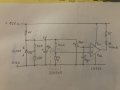
View attachment 338501
I'm looking for exact part numbers for those two parts since they have so many different variations.In place of the sensor that will need to be replaced, you can use a piece of unetched copper PCB with a thin scribed line separating the two sections. and a piece of blotter paper, or similar, anchored across. Then verify that a bit of water causes the comparator to trip.
Nope, this sensor is fine.I am sure that I have seen commercial moisture sensors that do not need to be replaced every time.
I suggest asking "Automation Direct" because they have a large product line and good customer assistance.
Done and ordered!The 1k resistor I added supplies the regulator, it’s necessary, that is just the way how shunt regulators works, they clamp excessive voltage the 1k provides (12v).
Buy TL431 in TO92 package, all of them available in market are about the same in properties , you shouldn’t make a mistake.
https://www.mouser.sk/ProductDetail/STMicroelectronics/TL431ACZT?qs=oFjv9VeDysEUHODt00QxIg==
LM393 in DIP package, the same..
https://www.mouser.sk/ProductDetail/Texas-Instruments/LM393AP?qs=LfG3tU9ud8C8WR6rae7e8w==
The full battery box looks like this (sans cables but you get the idea):OK, and thanks for the pictures. This battery box does not appear to be nearly as tightly packed as they are for most current battery powered vehicles. It may actually be serviceable by the owner, instead of "replace as an assembly." It could even be pressurized a bit with dry nitrogen, and that pressure could then be sensed both as a leak detection method and possibly a battery heating sensor scheme. The added benefits would be slightly better cooling and a reduced tendency toward oxidation of anything. But I have not considered any possible effect on the battery cells or seals.


I appreciate the sentiment and I know I can't make it 100% water tight but, I fret about stuff like this.If you saw how vacuum-tight feed thru assemblies are made you would be offended, as I was. They skin every wire to the conductors for a short distance, and impregnate it with something that is compatible with the epoxy they then use to seal the whole thing. So every shield and every insulation is compromised to some degree.
HV has a plethora of housings that are IP66 or batter. I'm using the Amphenol HVSL1000 series, here's the box / receptacle side and the plug shots for reference:Please do not misunderstand my description. Those feed thru methods are even vacuum tight. It is only the electrical portion that is compromised. So that scheme would work quite well for the battery box on a jeep. For the high power cables you can peel back some of the insulation and the saturate the stranded wire with a low-viscosity product, like possibly one of the Loctite-brand thread lockers. Then for the feed-thru, some sort of aluminum flanged fitting with a surface treated so the sealer would bond to it. I am guessing that there will not be a lot of pressure involved, just a few PSI.


| Thread starter | Similar threads | Forum | Replies | Date |
|---|---|---|---|---|
| D | How to Integrate Leak Detection Cables in a BMS System | Sensor Design & Implementation | 15 | |
| D | Leak Detection Sensors | Test & Measurement | 1 | |
| G | Memory Leak in C | Programming & Languages | 5 | |
| R | Water leak detection using sensing cable | Digital Design | 10 | |
| J | Leak Detection feature in Battery Management System | Power Electronics | 0 |