Facebook
 Google
 GitHub
 Linkedin
Thank you in advanced for anyone who figures this out.
I was a Commercial electrician for 7 years and currently an electronics hobbiest. I know how to diagnose most types of faults but this one has us stumped and this might be a long story.
We have 3 service trucks for the current company I work for. Before last year, we always used generators for our 120V power that we need to do our jobs. We came up with the idea of switching to solar with the assistance of alternator charging when driving. This would allow us not to use fuel on generators or idling trucks. Two of these trucks were already wired by me as far as outlets, panels and lights go. Never had any issues with generators except for typical generator break downs and fault but, nothing on the 120V side. Not even a trip breaker.
At first we had a hard time finding a large enough pure sine inverter to run the equipment that was not multiple of thousands of dollars. I found a company on ebay that builds large inverters by spec and by order. We ended up going with a 10KW pure sine wave inverter, duel 12VDC in, 120VAC out, North American standard plug. We do not use the outlets on the inverter, we only use the terminals. We first already had a ligit 350AH with BMS and a 150AH smart BMS LiFePO4 battery, wired in parallel for 12VDC 500AH. The inverter has duel 12VDC parallel inputs that both has to be hooked up for 10KW, which we all know it's a little over rated but more than what we need so I am sure we are not over running it on our equipment inrush or continouse running. We then have a smart BT charge controller to switch or combine between solar, alternator, and/or shore power charging, a solenoid for ignition isolation, breaker panel and automatic transfer switch on the HV side for shore and inverter power switching and a few solar panels. No need to list all the bus fuses and bus bars on LV and HV side.
We only bought one set of everything for testing. For three months there was zero issues, everything worked flawless. So we bought 3 more sets of the exact same components except the batteries we went with two 200AH LiFePO4 BMS batteries and these did not have a BT BMS since the charger has a smart BT display. The other trucks were not being used for a while so everything sat 6 months as I slowly peiced everything together for one of the other trucks.
That truck started getting used but no where near as much as the first, being my truck. I was told that everything worked great for 6 months without any issues. All of these trucks use the same rated equipment. All of the sudden one day, the tech starts the second truck, unplugs from shore power, goes inside the truck, turns on the inverter and immediately, the inverter starts smoking and he could see a bright red glow from inside it. He shut everything off and had to run the generator that we kept on the trucks as a backup. Note, the generators at this point now connect to the shore power and is transfered by the auto transfer switch, there is no way to backfeed or double feed, I made sure of that.
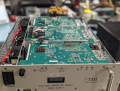
After he returned he called me, sent some pictures, explained what happened. I went through the existing work and the new work like crazy. I could not find any faults on the HV side or the LV side, no shorts or possibility for shorts. There is not enough equipment on the truck to were a combined in rush would overload the inverter. Transfer switch was working properly and everything isolated from HV to LV except chassis grounds. I disconnected the inverter, removed it, and took the cover off. I could not find any evidence of over heating, shorts, blown fuses, broken traces, nothing.. I connect a lead acid 12V battery to both inputs, there was 0 HV output, the LV voltage display was displaying the correct voltage but the HV voltage display was off. No alarms and fault light was off. These inverters have like 4 or 5 transformers, about 15 fuses, a few very large inductor, caps and alot of other support components.
They were still under warranty, I decided to just return it and let them deal with it. Unfortunately they were not being reasonable as they wanted to send me a new board which would require a massive solder iron. They do not know about my background in electronics nor did I want to be responsible for damaging the new board, so we filed a claim with the protection plan that we also purchased and shipped it off to them, I installed one of the other identical inverters just the way the other one was, double check for faults and function. Everything was working fine with no issues.
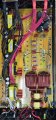
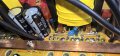
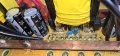
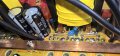
Fast forward a while, the inverter is still waiting to be repaired by the claim. The 2nd inverter in that truck lasted quite some time, I want to say months with about the same amount of use. The exact same thing happened again. This time he disconnected shore power first, started the truck, turned on the inverter and immediately started smoking with a large red glow coming from inside. This time he sent me a video and I could see what was going on. Pulled it out, took the cover off, the glow appeared to have come from one of the transformers, again nothing looks off except this time I can see the coating on one of the transformers has melted a little. It was so little thats it's almost not noticeable. Hooked another battery to it, almost same condition, correct LV display, no HV display, no faults. This time after connecting the battery with no load for diag, I can see the transformer that got hot start to smoke. All the transformers are identical and as i went back through the pictures from the first failure, I could see the winding's coating just barely melted as well from the transformer in the exact same position.
Edit: the windings were only somewhat melted just above the through hole solder joint, not in the actual winding.
At this point I have yet to find any faults with that truck, I have not excluding assembly defect yet for the first one was assembled much earlier than the other 3 where as the other 3 where assembled at the same time and has the exact same fault conditions.
Does anyone have any suggestion or has experience this before? I am not going to rule out that there is absolutly no issue with the install or componenats, there could always be a mistake somewhere that has been overlooked. I do not want to put another expensive inverter in this truck until I know 100% that it is not the equipment or wiring in the truck.
Even though we have these protection plans, I feel like if we have the same condition on a third inverter, questions from the protection plan will start to arise. My next step is to install the last inverter on the third truck which has zero existing HV. So it will be a fresh wire, conduit, equipment and componant install. If it does it again on this truck, I would suggest the same person assembled the three later inverters and its defects.
Any advice is appreciated, I apologize for this super long story but I am trying to be thorough to eliminate some questions and to paint the picture.
I was a Commercial electrician for 7 years and currently an electronics hobbiest. I know how to diagnose most types of faults but this one has us stumped and this might be a long story.
We have 3 service trucks for the current company I work for. Before last year, we always used generators for our 120V power that we need to do our jobs. We came up with the idea of switching to solar with the assistance of alternator charging when driving. This would allow us not to use fuel on generators or idling trucks. Two of these trucks were already wired by me as far as outlets, panels and lights go. Never had any issues with generators except for typical generator break downs and fault but, nothing on the 120V side. Not even a trip breaker.
At first we had a hard time finding a large enough pure sine inverter to run the equipment that was not multiple of thousands of dollars. I found a company on ebay that builds large inverters by spec and by order. We ended up going with a 10KW pure sine wave inverter, duel 12VDC in, 120VAC out, North American standard plug. We do not use the outlets on the inverter, we only use the terminals. We first already had a ligit 350AH with BMS and a 150AH smart BMS LiFePO4 battery, wired in parallel for 12VDC 500AH. The inverter has duel 12VDC parallel inputs that both has to be hooked up for 10KW, which we all know it's a little over rated but more than what we need so I am sure we are not over running it on our equipment inrush or continouse running. We then have a smart BT charge controller to switch or combine between solar, alternator, and/or shore power charging, a solenoid for ignition isolation, breaker panel and automatic transfer switch on the HV side for shore and inverter power switching and a few solar panels. No need to list all the bus fuses and bus bars on LV and HV side.
We only bought one set of everything for testing. For three months there was zero issues, everything worked flawless. So we bought 3 more sets of the exact same components except the batteries we went with two 200AH LiFePO4 BMS batteries and these did not have a BT BMS since the charger has a smart BT display. The other trucks were not being used for a while so everything sat 6 months as I slowly peiced everything together for one of the other trucks.
That truck started getting used but no where near as much as the first, being my truck. I was told that everything worked great for 6 months without any issues. All of these trucks use the same rated equipment. All of the sudden one day, the tech starts the second truck, unplugs from shore power, goes inside the truck, turns on the inverter and immediately, the inverter starts smoking and he could see a bright red glow from inside it. He shut everything off and had to run the generator that we kept on the trucks as a backup. Note, the generators at this point now connect to the shore power and is transfered by the auto transfer switch, there is no way to backfeed or double feed, I made sure of that.
After he returned he called me, sent some pictures, explained what happened. I went through the existing work and the new work like crazy. I could not find any faults on the HV side or the LV side, no shorts or possibility for shorts. There is not enough equipment on the truck to were a combined in rush would overload the inverter. Transfer switch was working properly and everything isolated from HV to LV except chassis grounds. I disconnected the inverter, removed it, and took the cover off. I could not find any evidence of over heating, shorts, blown fuses, broken traces, nothing.. I connect a lead acid 12V battery to both inputs, there was 0 HV output, the LV voltage display was displaying the correct voltage but the HV voltage display was off. No alarms and fault light was off. These inverters have like 4 or 5 transformers, about 15 fuses, a few very large inductor, caps and alot of other support components.
They were still under warranty, I decided to just return it and let them deal with it. Unfortunately they were not being reasonable as they wanted to send me a new board which would require a massive solder iron. They do not know about my background in electronics nor did I want to be responsible for damaging the new board, so we filed a claim with the protection plan that we also purchased and shipped it off to them, I installed one of the other identical inverters just the way the other one was, double check for faults and function. Everything was working fine with no issues.
Fast forward a while, the inverter is still waiting to be repaired by the claim. The 2nd inverter in that truck lasted quite some time, I want to say months with about the same amount of use. The exact same thing happened again. This time he disconnected shore power first, started the truck, turned on the inverter and immediately started smoking with a large red glow coming from inside. This time he sent me a video and I could see what was going on. Pulled it out, took the cover off, the glow appeared to have come from one of the transformers, again nothing looks off except this time I can see the coating on one of the transformers has melted a little. It was so little thats it's almost not noticeable. Hooked another battery to it, almost same condition, correct LV display, no HV display, no faults. This time after connecting the battery with no load for diag, I can see the transformer that got hot start to smoke. All the transformers are identical and as i went back through the pictures from the first failure, I could see the winding's coating just barely melted as well from the transformer in the exact same position.
Edit: the windings were only somewhat melted just above the through hole solder joint, not in the actual winding.
At this point I have yet to find any faults with that truck, I have not excluding assembly defect yet for the first one was assembled much earlier than the other 3 where as the other 3 where assembled at the same time and has the exact same fault conditions.
Does anyone have any suggestion or has experience this before? I am not going to rule out that there is absolutly no issue with the install or componenats, there could always be a mistake somewhere that has been overlooked. I do not want to put another expensive inverter in this truck until I know 100% that it is not the equipment or wiring in the truck.
Even though we have these protection plans, I feel like if we have the same condition on a third inverter, questions from the protection plan will start to arise. My next step is to install the last inverter on the third truck which has zero existing HV. So it will be a fresh wire, conduit, equipment and componant install. If it does it again on this truck, I would suggest the same person assembled the three later inverters and its defects.
Any advice is appreciated, I apologize for this super long story but I am trying to be thorough to eliminate some questions and to paint the picture.