İnduction Melting furnace

Thread Starter

erdem55

Joined Jan 30, 2021
7
Hi Guys,
I am new in here.I want to make a induction melting furnace for iron and sfero casting melting.I have been
researching that topics ,and I learned some thing that circuit,frequency,max power and current.Nevertheless, I have some questions about frequency?
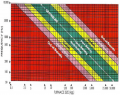
Generally producters said to change frequency from 1 hz to 10khz for iron melting.The lower frequency , the more current flows a coil.
How many herz is frequency for melting iron?
At now I have a transformer that 24/48 ac volt 4000 va power , a circuit that Ir2102
and Irf1405 , another inverter circuit that tlp250 and with Irf1405

Good days
 

Thread Starter

erdem55

Joined Jan 30, 2021
7
Actually, everybody said me a lot of thing such as from 50hz to 10khz.
I do not understand that normal herz
(50 or 60 hz) is really heating iron ,is not it?
I think that Normal herz only heats
coil,so that it is so little herz to melting or heating.I have used many transformer , but I do not look melting or so high heating
 

MisterBill2

Joined Jan 23, 2018
27,159
The shape and volume of the portion to be heated has a large effect on the coil shape, size, and frequency. At least that is the case for heating for induction hardening. Also, see the chart in post #4,which says the same . Induction heating takes a lot of power.
I suggest going thru all of the numbers about cost before spending money on such a system.
 

Al126

Joined Apr 23, 2021
1
@erdem55
Can you post the schematic?
Hi, as far as I know, a higher frequency has a lower skin depth which has two consequenses. 1) higher resistance in the workpiece as only the outer shell is used to conduct current. This higher resistance can lead to a higher power delivered to the workpiece than one where the workpiece resistance is really low due to a lower frequency. 2) at small timescales, as only the outer shell is heated, cutting tips can be treated so that the surface is hardened, but the core is still relatively soft. Off course, after a longer time the heat will go inside as well.

Also, I read about the size of the workpiece, the larger your workpiece, the lower you frequency can be. I only learned this week about induction heaters at frequencies below 10 kHz. My choice, for pieces up to a few cm3, would be 100kHz to 500kHz.

Cheers
 

Danko

Joined Nov 22, 2017
2,136
@erdem55 ,
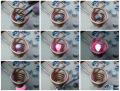
I replicate this device some years ago.
It worked just perfectly.
You can translate manual from Russian and DIY.
On pictures:
Piece of aluminum levitates and melts.
1752232524426.png
 

Attachments

Last edited:

MisterBill2

Joined Jan 23, 2018
27,159
Induction HEATING versus INDUCTION MELTING are different things. Going from heating to harden, and then to melting, all at once there is nothing to hold on to. There are other schemes for melting iron and steel that are less likelyto get exciting in a hurry if something goes wrong.
 

Regected424

Joined Nov 27, 2022
8
The frequency is a function of the coil design. Start there and work backwards. I use a self-resonating ZVS(Zero Voltage Switching) design for my induction melting and hardening. I don't do anything big. Using a non-conductive crucible is a must. I personally started with small clay flower pots with no drain hole. Cheap and easy. That was just for melting aluminum to do those fun little ant mount sculptures.
 

Thread Starter

erdem55

Joined Jan 30, 2021
7
Thank you so much
I will melt iron or pig cast for casting
These days I am planing circuit,frequency and duty cycle about induction melter.
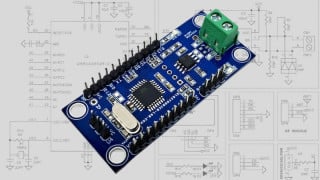
At now I have an h bridge inverter circuit with Ir2101 and Irf3205 .I will use a pulse source that is stm32f103 (blue pill) with 10k pot.A frequency will start 8khz to 12khz or 15khz.At the moment, it is my plan.
 

MisterBill2

Joined Jan 23, 2018
27,159
That induction heater described in that manual is shown only melting a drop of aluminum, and only heating some steel tube. So the biggest casting will be maybe a gram of steel.
I very seriously suggest investigating the power required to melt the mass of steel that you hope to cast. It will be a whole lot more than what is shown in that book. The transformer in the photos did not look like it was able to deliver more than about 500 watts, at most, based on the core size.
 
Top