I remade this pi metal detector circuit, only this time it doesn't work, what's the culprit?

Thread Starter

beginner99

Joined Oct 17, 2024
10
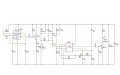
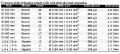
This is the schematic and the pcb version which is a bit different but overall the same thing
I built the exact same pcb years ago
I literally printed this pcb
And the circuit worked perfectly
It was there in my basement and I forgot to cover the pcb with a layer of epoxy or something to prevent the pcb from rusting or corrosion
Last week I tried to run it and it didn't work
So I desoldered all components, tested them with my multimeter, all were ok
I bought new ICs
Made the exact same circuit but now it doesn't work
There's not even a click at the speaker
I realized the circuit now draws 2.5amps at 11.5v
The coil is fed with DC voltage rather than AC
Tested all transistors and the mosfet off the circuit, they were ok but I replaced them
It just doesn't work
Draws 2.5 DCamps constantly
And no the coil is not shorted
My multimeter shows 2 Ohms across the coil off the circuit which is what it should be
 

Attachments

panic mode

Joined Oct 10, 2011
4,864
Probably mosfet is shot or wired backwards.

Disconnect coil and test again. You should see current draw drop, oscillator working and audio amp working.
 

Rf300

Joined Apr 18, 2025
72
You must not drive your coil with pure DC! Ask Mr. Ohm: A resistance of a few ohms (R_DC of the coil + RDS_on of Q2 + R_i of the battery) leads to a current of a few amps @ 11.5 V!

I assume IC1 NE555 generates a frequency of about 1 kHz (I didn't calculate the frequency). If your coil has an inductivity of some 10 mH, which should be a reasonable value for audio frequency, it will have an impedance of somewhere in the range of 100 + ohms. This will lead to a more reasonable supply current in the range of 100 mA.
 

Thread Starter

beginner99

Joined Oct 17, 2024
10
I tested everything
The mosfet is ok
There's still no click heard from the speaker after I removed the coil
I'll try another pcb and update this topic
It could be a bad pcb thing
 

lichurbagan

Joined Jul 4, 2025
120
This is the schematic and the pcb version which is a bit different but overall the same thing
I built the exact same pcb years ago
I literally printed this pcb
And the circuit worked perfectly
It was there in my basement and I forgot to cover the pcb with a layer of epoxy or something to prevent the pcb from rusting or corrosion
Last week I tried to run it and it didn't work
So I desoldered all components, tested them with my multimeter, all were ok
I bought new ICs
Made the exact same circuit but now it doesn't work
There's not even a click at the speaker
I realized the circuit now draws 2.5amps at 11.5v
The coil is fed with DC voltage rather than AC
Tested all transistors and the mosfet off the circuit, they were ok but I replaced them
It just doesn't work
Draws 2.5 DCamps constantly
And no the coil is not shorted
My multimeter shows 2 Ohms across the coil off the circuit which is what it should be
Check the continuity of the traces with a multimeter. Maybe there is a broken trace somewhere. Maybe there are some other PCB errors too. Details: https://www.theengineeringprojects.com/2024/07/common-issues-faced-in-pcb-designing.html
You mentioned it was printed years ago and possibly corroded. Even if the traces look okay, microscopic corrosion, surface oxidation, or internal layer damage could create leakage paths or even partial shorts between tracks. Check for solder bridges or conductive residues. Even a tiny speck of dust or leftover flux, combined with moisture, can create a leakage path.
This could explain the constant 2.5 A draw. The fact that it draws 2.5 A constantly at 11.5 V, with no clicking on the speaker, is a classic symptom of a shorted path or misconnected power rails. Even if the coil measures 2 Ω, something else in the circuit could be conducting continuously.
 

panic mode

Joined Oct 10, 2011
4,864
the only paths for high current are though mosfet (if coil is connected) and the ICs. if any of those are bad or wired wrong (ie. IC inserted backwards). you would have the problem you describe.

suggestion was to measure current and test circuit without coil. that would eliminate high current path for mosfet. if the circuit still draws high current check the ICs as well as battery polarity.

it would also be helpful if you would post pictures of your construction, there may be something you may have missed. does not hurt to have more eyes on the problem.
 

Thread Starter

beginner99

Joined Oct 17, 2024
10
Thank you for all the replies
The problem ended up being the new ICs
I made another pcb
A different one
With a few differences in resistors
Took a current reading, still 2.5A, only this time I heard a click in the speaker
I changed both ICs, problem solved, it's a continues beep sound that changes when I approach the coil with some metal
I only need to change some resistors for fine tuning
I don't know if I had killed the ICs in the first circuit or what, going back to the old ICs fixed the issue
If anyone wants to make this one, let me know so I'll post the PCB file that worked for me
It's a decent detector, with a 25cm diameter coil it can sense big metal up to 1m
A coin up to 25cm
Although with a bigger coil you can sense bigger metal at much farther distance, which is something I'm going to test
 

panic mode

Joined Oct 10, 2011
4,864
what kind of coil you use? how big wire? how many turns? is it sealed or not? did you try it under water?

also what is the normal current draw?

btw. while that is a very simple circuit, it could be simpler. since R1 is much larger than R2, duty cycle of square wave is nearly perfect 50%. so not sure what is the purpose for Q1 and resistors around it. one could connect gate of Q2 directly to output of 555 and remove 5 parts. that mosfet tolerates gate voltage up to 20V and 555 output is about 2V lower than supply (9V-2V=7V). using Q1, R3,R4,R5,R6 just lowers that to 5V. R5 and R6 just increase current draw and make battery life shorter.

9V/(R5+R6)=36mA. since duty cycle is 50%, that really is 18mA. not the end of the world but it is considerable for 9V battery.
 

Thread Starter

beginner99

Joined Oct 17, 2024
10
what kind of coil you use? how big wire? how many turns? is it sealed or not? did you try it under water?

also what is the normal current draw?

btw. while that is a very simple circuit, it could be simpler. since R1 is much larger than R2, duty cycle of square wave is nearly perfect 50%. so not sure what is the purpose for Q1 and resistors around it. one could connect gate of Q2 directly to output of 555 and remove 5 parts. that mosfet tolerates gate voltage up to 20V and 555 output is about 2V lower than supply (9V-2V=7V). using Q1, R3,R4,R5,R6 just lowers that to 5V. R5 and R6 just increase current draw and make battery life shorter.

9V/(R5+R6)=36mA. since duty cycle is 50%, that really is 18mA. not the end of the world but it is considerable for 9V battery.
Maybe you can try removing those and see if you get better results and share with us, I've been dealing with this thing for days and I'm not changing anything now that it magically works
Although I have new issues with this circuit now
It's not as sensitive as it was in my old build
I will measure the current draw for you tomorrow, I'm using a 3s lion battery, now I realized a few things this time
As for the coil, I just randomly wound 22turns of 0.45mm wire(that is the diameter) around a 23cm circuit air core, not the perfect core, but it could sense huge things like a fridge up to 1m
Other things like a coin, 20-25mm
I have a video of the previous one I made
Now for this one, I went to the local electronics shop which usually sells low quality components, I remember for the old one I ordered everything online and all I bought high quality ICs and mosfet, nearly three times the price of the ones I'm using now
Now my question is, in such a simple circuit, is the rule of the ICs and the mosfet so significant that you might get so much advantage using high quality stuff?
Everything is the same except for the ICs and the mosfet which aren't high quality
And now, even big object aren't sensed for more than 30cm
Much weaker than the old one, is it a low quality components thing or have a destroyed the coil in my previous trials? My meter shows 2ohms for coil resistance
 

Attachments

panic mode

Joined Oct 10, 2011
4,864
i just did calculation and my previous statement about R1/R2 ratio was backwards.
Duty cycle is not 50%, it is 98%. Q1 inverts this so current though coil is a stream of narrow pulses.
Oscillator frequency is 140Hz.
 

Thread Starter

beginner99

Joined Oct 17, 2024
10
i just did calculation and my previous statement about R1/R2 ratio was backwards.
Duty cycle is not 50%, it is 98%. Q1 inverts this so current though coil is a stream of narrow pulses.
Oscillator frequency is 140Hz.
Really? So what should I do here? Because the range is nearly half of what it was in the one I made years ago
 

Thread Starter

beginner99

Joined Oct 17, 2024
10
i would say post pictures of construction (front and back).
But it's a real mess, I'll send it when I get home
See my 1mm drill got broken and I was too lazy to go all the way to town to get a new one so I just soldered everything on the back of the pcb
Except for the ICs
 

Thread Starter

beginner99

Joined Oct 17, 2024
10
My question is whether I will get the same sensitivity range as the old circuit if I change the ICs with high quality ones
 

Alec_t

Joined Sep 17, 2013
15,101
Unlikely the change would make any difference. The main things determining range are the battery state, the MOSFET 'on' resistance and the coil characteristics.
 

Thread Starter

beginner99

Joined Oct 17, 2024
10
Unlikely the change would make any difference. The main things determining range are the battery state, the MOSFET 'on' resistance and the coil characteristics.
You are right
Because I just changed and my coil is beeping when I approach it with my old pair of scissors
My coil has a leakage, right?
 

Ya’akov

Joined Jan 27, 2019
10,226
Welcome to AAC.

Glad to hear you worked out your problem.
Related to the reason you rebuilt this, you should get some UV cured solder mask and protect the traces with that.
 

Thread Starter

beginner99

Joined Oct 17, 2024
10
what kind of coil you use? how big wire? how many turns? is it sealed or not? did you try it under water?

also what is the normal current draw?

btw. while that is a very simple circuit, it could be simpler. since R1 is much larger than R2, duty cycle of square wave is nearly perfect 50%. so not sure what is the purpose for Q1 and resistors around it. one could connect gate of Q2 directly to output of 555 and remove 5 parts. that mosfet tolerates gate voltage up to 20V and 555 output is about 2V lower than supply (9V-2V=7V). using Q1, R3,R4,R5,R6 just lowers that to 5V. R5 and R6 just increase current draw and make battery life shorter.

9V/(R5+R6)=36mA. since duty cycle is 50%, that really is 18mA. not the end of the world but it is considerable for 9V battery.
Here you mentioned I could connect the 555 directly to the mosfet and remove the transistor, would that improve anything? Also
You said those resistor numbers are in reverse, but I changed all available pirate Russian metal detector circuit diagrams and they all had those two resistors connected that way
Should I replace them with one another?
 
Top