Improving boost converter LTSpice simulation

Thread Starter

artmaster547

Joined Jan 6, 2016
409
Hi there I have tried to use a different IC to allow for a synchronous boost converter to be designed It takes in 12V and outputs 40V @ 7.5A. However when simulating it does not produce the output waveform expected I feel like I am missing something trivial any help would be appreciated. Simulation is attached with this post. Any suggestions for improvements or reduction of any noise would also be appreciated like previously.

Kind Regards

Art
 

Attachments

eetech00

Joined Jun 8, 2013
4,705
Hi there I have tried to use a different IC to allow for a synchronous boost converter to be designed It takes in 12V and outputs 40V @ 7.5A. However when simulating it does not produce the output waveform expected I feel like I am missing something trivial any help would be appreciated. Simulation is attached with this post. Any suggestions for improvements or reduction of any noise would also be appreciated like previously.

Kind Regards

Art
Hi

You might be setting the output over the limit of the chip

"VBIAS (Pin 12/Pin 14): Main Supply Pin. It is normally tied to the input supply VIN or to the output of the boost converter. A bypass capacitor should be tied between this pin and the GND pin. The operating voltage range on this pin is 4.5V to 38V (40V abs max)."

et
 

ebp

Joined Feb 8, 2018
2,332
What is the part number of the inductor?
How an inductor actually behaves is often very very different from an ideal inductor and therefore from what a simple simulation will show. It is necessary to know what the inductor core material is and how it is built.
 

Thread Starter

artmaster547

Joined Jan 6, 2016
409
What is the part number of the inductor?
How an inductor actually behaves is often very very different from an ideal inductor and therefore from what a simple simulation will show. It is necessary to know what the inductor core material is and how it is built.
part number of the inductor: XAL1580-132 I thought I added this to the model so it included the ESR and EPR values.
 

Thread Starter

artmaster547

Joined Jan 6, 2016
409
Hi

You might be setting the output over the limit of the chip

"VBIAS (Pin 12/Pin 14): Main Supply Pin. It is normally tied to the input supply VIN or to the output of the boost converter. A bypass capacitor should be tied between this pin and the GND pin. The operating voltage range on this pin is 4.5V to 38V (40V abs max)."

et
Ok I see didn't realise this I will look more into this thanks for pointing it out, I think I might have made a mistake with my SS pin as well might need to change the capacitor there.

Kind Regards

Art
 

ebp

Joined Feb 8, 2018
2,332
The initial current in the inductor will not cause any problem as far as the inductor is concerned. It could have implications for the diode, but charging 100 µF from 12 V is "nothing".

The inductor uses a core material that saturates very softly (unlike gapped ferrite, which has lower loss but saturates very abruptly).

The controller has a soft-start feature and cycle by cycle current limiting, so it will not drive the inductor into saturation. Adding any sort of active circuitry to try to reduce the initial spike of inductor current when the output capacitor is first charged will just make your cirucit unnecessarily complex and reduce reliability.

Be warned: It is easy to make a switcher work on paper or in a simulation, and often very much more difficult to get it to work properly in an actual circuit. Layout of the printed circuit board is extremely important. There are inductances and capacitances everywhere. Boost converters work the output capacitors very hard (high RMS ripple current), so ESR is very important. With 60 volt output the choice of capacitors is limited. Unless things have changed recently, none of the "exotic" electrolytic types are available at that voltage. Ceramic cap ratings typically jump from 50 V to 100 V. Any of the high dielectric constant ceramics have huge negative voltage coefficient of capacitance which is likely to make them unsuitable. It can be quite difficult to manage heat with a surface mount board - heat management is in conflict with very compact layout which is important for loop area management. Almost all SM switcher designs assume a 4-layer PCB because it so hard to manage heat without it. 95% efficiency at 300 W output is 15 W of loss. When you start to run the numbers on temperature rise on a small SM board, you'll be alarmed.
 

Thread Starter

artmaster547

Joined Jan 6, 2016
409
The initial current in the inductor will not cause any problem as far as the inductor is concerned. It could have implications for the diode, but charging 100 µF from 12 V is "nothing".

The inductor uses a core material that saturates very softly (unlike gapped ferrite, which has lower loss but saturates very abruptly).

The controller has a soft-start feature and cycle by cycle current limiting, so it will not drive the inductor into saturation. Adding any sort of active circuitry to try to reduce the initial spike of inductor current when the output capacitor is first charged will just make your cirucit unnecessarily complex and reduce reliability.

Be warned: It is easy to make a switcher work on paper or in a simulation, and often very much more difficult to get it to work properly in an actual circuit. Layout of the printed circuit board is extremely important. There are inductances and capacitances everywhere. Boost converters work the output capacitors very hard (high RMS ripple current), so ESR is very important. With 60 volt output the choice of capacitors is limited. Unless things have changed recently, none of the "exotic" electrolytic types are available at that voltage. Ceramic cap ratings typically jump from 50 V to 100 V. Any of the high dielectric constant ceramics have huge negative voltage coefficient of capacitance which is likely to make them unsuitable. It can be quite difficult to manage heat with a surface mount board - heat management is in conflict with very compact layout which is important for loop area management. Almost all SM switcher designs assume a 4-layer PCB because it so hard to manage heat without it. 95% efficiency at 300 W output is 15 W of loss. When you start to run the numbers on temperature rise on a small SM board, you'll be alarmed.
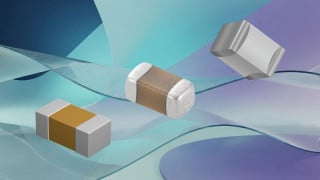
Wow thank you this is something I will definitely bare in mind, the values have changed slightly now it is now input of 12V and output of 40V @ 7.5A, still 300W output though any recommendations for the capacitors, do you know the typical value of capacitors I should be using? I was thinking of using the following ceramic capacitor from AVX: MPN: ST201C476MAJ10
 

ebp

Joined Feb 8, 2018
2,332
You aren't likely to find anything better than those AVX capacitors. They certainly are expensive!

With only 40 V at the output, you might save a good deal of money going to a 50 volt capacitor, but review the data sheet carefully. You would also be wise to run a simulation of your circuit where the load goes from maximum current to zero very quickly. Boost switchers have relatively poor dynamic response, and some voltage overshoot has to be expected under those circumstance. I would be very surprised if the overshoot was more than 2 or 3 volts, but it should be verified. An electrolytic capacitor of a few hundred microfarads in parallel with the ceramic might help tame any overshoot. Almost all of the ripple current would still go through the ceramic capacitor since it will have much much lower ESR at the switching frequency.

It might be worth talking to an AVX applications engineer if you are planning to build a lot of these circuits.
 
Top