Facebook
 Google
 GitHub
 Linkedin
Dear All,
I am looking for advice on improving the reliability of my circuit.
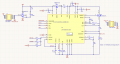
I am using a 12.6 V, 10 A Li-Poly battery pack (3S) with an integrated protection circuit, together with the LTC4162 Li-ion battery charger configured according to the datasheet.
Occasionally, the battery suddenly stops operating and outputs a very low voltage. After some investigation, this appears to be related to the protection circuit. When measuring the individual cells directly, each cell reads above 4 V (totalling approximately 12 V across the pack). However, the output from the protection circuit can show an abnormal value (for example, around 5.6 V).
I suspect that voltage transients may be damaging or gradually degrading the protection circuit, leading to reduced reliability over time and eventual failure.
On my PCB, I generally have:
These are two possible sources of transients. My concern is whether long solar leads could allow voltage spikes to propagate into the system, potentially exceeding 12.6 V for a short duration (milliseconds or less), even if charging is not actively occurring. Could such short transients bypass the charger’s regulation and stress the battery protection circuit?
I considered adding a TVS diode on the 12 V rail. However, I realised that the clamping voltage of a suitable TVS would likely be above ~12.8 V, which may already exceed the maximum protection threshold of the battery pack.
Could anyone suggest:
These units are deployed in the field, so we cannot easily monitor transient behaviour directly. At present, we are assuming transients may be the root cause of the battery failures.
Any guidance or recommended best practice would be greatly appreciated to improve my 12V power rail or keep it clean.
I am looking for advice on improving the reliability of my circuit.
I am using a 12.6 V, 10 A Li-Poly battery pack (3S) with an integrated protection circuit, together with the LTC4162 Li-ion battery charger configured according to the datasheet.
Occasionally, the battery suddenly stops operating and outputs a very low voltage. After some investigation, this appears to be related to the protection circuit. When measuring the individual cells directly, each cell reads above 4 V (totalling approximately 12 V across the pack). However, the output from the protection circuit can show an abnormal value (for example, around 5.6 V).
I suspect that voltage transients may be damaging or gradually degrading the protection circuit, leading to reduced reliability over time and eventual failure.
On my PCB, I generally have:
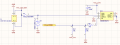
- A 12 V pump driven by a MOSFET load switch, with a flyback diode for transient suppression
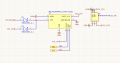
- Long cable runs between the LTC4162 charger and the solar panels
These are two possible sources of transients. My concern is whether long solar leads could allow voltage spikes to propagate into the system, potentially exceeding 12.6 V for a short duration (milliseconds or less), even if charging is not actively occurring. Could such short transients bypass the charger’s regulation and stress the battery protection circuit?
I considered adding a TVS diode on the 12 V rail. However, I realised that the clamping voltage of a suitable TVS would likely be above ~12.8 V, which may already exceed the maximum protection threshold of the battery pack.
Could anyone suggest:
- A more robust protection approach for this type of system?
- Recommended methods to damp or clamp voltage spikes without overstressing the battery?
- Whether additional filtering (e.g., LC filtering, RC snubbers, dedicated surge protection, ideal diode stage, etc.) would be advisable?
These units are deployed in the field, so we cannot easily monitor transient behaviour directly. At present, we are assuming transients may be the root cause of the battery failures.
Any guidance or recommended best practice would be greatly appreciated to improve my 12V power rail or keep it clean.