IC's SN74LS123 and CD4093 from China donot function

dl324

Joined Mar 30, 2015
18,350
Which sellers on Aliexpress are supplying IC's which are NOT counterfeit?
That list can never be definitive. Most of the sellers don't know anything about the products they sell and they don't care to.

I bought some 1.6Ah 18500 Li-ion batteries from a seller on AliExpress and they delivered close to the rated capacity. When I wanted more, I bought from the same seller. The battery they carried was the same brand and I bought 20.

After having bought so many counterfeit Li-ion batteries from AliExpress, I bought a tester. The second batch of 18500's were counterfeits. Of the 10 that I tested, none had a capacity higher than 1Ah.

I report my bad experiences with AliExpress in this thread. The post for the batteries above is here.

There's a similar thread for good experiences with AliExpress. I won't post any good experiences because that isn't a guarantee that future experiences will still be good.
 

eetech00

Joined Jun 8, 2013
4,709
Don't forget that CD4000 series parts are CMOS type devices and are subject to ESD damage.
Make sure you aren't inadvertently damaging the device yourself. Be sure to discharge any static on your hands/body to ground before handling them.
 

sparky 1

Joined Nov 3, 2018
1,218
More parts are mislabeled and possibly the seller had no way of sampling and testing.
The hobby and educational market has become an easy target of organized false labeling.
I will post a basic schematic for 4093 Schmitt trigger oscillator, the clean outstanding symmetry of channel A in blue.
Sorry to hear your parts were bad, just keep trying. Some sellers still go the extra mile.
Maybe somebody will post an LTSpice like this.

4093 1KHz sqr.png
 
Last edited:

Thread Starter

Holz1

Joined Jan 21, 2020
87
Not all product sourced from China is counterfeit or low quality.

I had experience with a solderless breadboard that was sold by a US company. They contracted a company in China to manufacture it for them. Initially the product quality was what the company wanted. Over time, the Chinese company started reducing quality to increase their profits. When the US company found out, likely from complaints, they recalled inventory that hadn't been sold and discontinued the product. The board I got was from a surplus store. I contacted the US company and the CEO told me the story. But, he didn't offer to buy back the poor quality board.
We can all live without counterfeit and reject products.
We should but, even I am guilty of buying products of unknown origins when the price is right. The gamble with assembled products is less than buying individual components. They're good enough for hobby work, but using them in anything that could risk safety is a no-no.

Every Arduino Uno clone I've bought from AliExpress has had the same incorrect part substitution (LM358 for LMV358). Apparently Chinese can't even manufacture an open-source product. Their engineers/technicians aren't smart enough to know that those two parts aren't interchangeable.
If the market for counterfeit product went away, they'd find something else to do or die trying. We're not responsible for their livelihood.
Yes, I am aware of all this. But I still have hope and maybe wishfull thinking that everything will be oké in the end!!
 

Thread Starter

Holz1

Joined Jan 21, 2020
87
More parts are mislabeled and possibly the seller had no way of sampling and testing.
The hobby and educational market has become an easy target of organized false labeling.
I will post a basic schematic for 4093 Schmitt trigger oscillator, the clean outstanding symmetry of channel A in blue.
Sorry to hear your parts were bad, just keep trying. Some sellers still go the extra mile.
Maybe somebody will post an LTSpice like this.

View attachment 325823
THANKS!! I have tested 20 MVV SN74LS123 and tested the randomized the other 20. Guess what! Nothing functioned.
I have 1 original and I put the IC in the socket of the selfmade modules, and the IC barely touched the socket and it worked like STAR TREK!
I follow
( publicsized by Emrys Maier) and one of the video he xplaines the pulse delay with the CD4093. From this webside I downloaded Qspice. As already explained, I am a hobbyist and not a technician so TRIAL and LOTS of ERRORS I have put my 1st steps into Qspice and follow the instructions of Emrys in the video. So this will take a couple of months to sift everything out. Of course I will try yr example in due course.
 

Thread Starter

Holz1

Joined Jan 21, 2020
87
That list can never be definitive. Most of the sellers don't know anything about the products they sell and they don't care to.

I bought some 1.6Ah 18500 Li-ion batteries from a seller on AliExpress and they delivered close to the rated capacity. When I wanted more, I bought from the same seller. The battery they carried was the same brand and I bought 20.

After having bought so many counterfeit Li-ion batteries from AliExpress, I bought a tester. The second batch of 18500's were counterfeits. Of the 10 that I tested, none had a capacity higher than 1Ah.

I report my bad experiences with AliExpress in this thread. The post for the batteries above is here.

There's a similar thread for good experiences with AliExpress. I won't post any good experiences because that isn't a guarantee that future experiences will still be good.
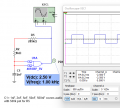
I received a lot of IC's and during orderprocess I asked to pack IC's in hard cover packing. More then 75% of IC's are put in plastic bag. Legs are bent, damaged. Everytime I open dispute and everytime the costs are reimbursed by Alie. However I am not waiting for this. I want good products. So I am reconsidering my purchase behaviour and order my goods elsewere!
Today I placed an order for CD74HC123 Texas Instruments (CONRAD the Netherlands) and I may hope (wishfull thinking) the IC's arrive complete without broken or bended legs.
 

dl324

Joined Mar 30, 2015
18,350
I am a hobbyist and not a technician so TRIAL and LOTS of ERRORS
Assuming that by hobbyist you mean that you don't have a formal electronics background, you should always purchase your components from reputable sources. That will save you troubleshooting time even though developing good troubleshooting skills is important. When I took tests for my FCC licenses, all of the troubleshooting problems were circuits schematics with certain measurements taken and that's all we had to troubleshoot with.
I have put my 1st steps into Qspice
As a hobbyist, you should take the time to learn the fundamentals before you start depending on simulators. Think about when you were in elementary school. If teachers had allowed you to use calculators before you learned how to do the math in your head, you'd likely be helpless at math without a calculator.

Using tools after you have the basics also risks your skills atrophying.
Today I placed an order for CD74HC123 Texas Instruments (CONRAD the Netherlands) and I may hope (wishfull thinking) the IC's arrive complete without broken or bended legs.
Reputable sources will package components appropriately. That said, reputable places sometimes have workers who don't care. I ordered some parts from Newark (Mouser?) and received some IC's that hadn't been packaged properly and half a dozen parts had mangled pins. Since they were a reputable source, they gave me a refund for those parts (they were on clearance and they didn't have replacement parts).
Has anyone by chance an Arduino solution in order to check on the functionality of the TTL and CMOS IC's ?
It would be far simpler for you to just buy from reputable sources or build a circuit so you can do dead or alive (DORA) testing on specific parts. I built test circuits for some power MOSFETs I bought from AliExpress.
 
Last edited:

sparky 1

Joined Nov 3, 2018
1,218
In this simulation I am bending a pierce oscillator from 1MHz to 1.3MHz using 4093 when increasing R5 precisely decreases the frequency. When you use the 74HCT series things get very exciting. The more conventional pulse stretchers are very very simple and very precise.

4093 crystal bender.png
 
Last edited:

Thread Starter

Holz1

Joined Jan 21, 2020
87
Assuming that by hobbyist you mean that you don't have a formal electronics background, you should always purchase your components from reputable sources. That will save you troubleshooting time even though developing good troubleshooting skills is important. When I took tests for my FCC licenses, all of the troubleshooting problems were circuits schematics with certain measurements taken and that's all we had to troubleshoot with.
As a hobbyist, you should take the time to learn the fundamentals before you start depending on simulators. Think about when you were in elementary school. If teachers had allowed you to use calculators before you learned how to do the math in your head, you'd likely be helpless at math without a calculator.

Using tools after you have the basics also risks your skills atrophying.
Reputable sources will package components appropriately. That said, reputable places sometimes have workers who don't care. I ordered some parts from Newark (Mouser?) and received some IC's that hadn't been packaged properly and half a dozen parts had mangled pins. Since they were a reputable source, they gave me a refund for those parts (they were on clearance and they didn't have replacement parts).
It would be far simpler for you to just buy from reputable sources or build a circuit so you can do dead or alive (DORA) testing on specific parts. I built test circuits for some power MOSFETs I bought from AliExpress.
Thanks.
Once I had girlfriend Dora (Doratheja) Oh boy! What a time we had. She wasn't dead but alive.

Can you specify what dora is?
 

Thread Starter

Holz1

Joined Jan 21, 2020
87
Thank you all of the refreshing insides. As somebody else stated: ask questions and learn. Post circuits and learn, try video support of specialists and learn, use alternative components ( Cd4093 instead of CD4011) see my post: Controlling an AC load with a MOSFET
#61 and the post #62 of mr Bill. and learn. Learn from the mistakes, learn from the positive outcome and be happy;)!!!
So I have a lot to do and I will not be discouraged by mistakes!:)

And by the way I found some interesting info on: https://www.instructables.com/Smart-IC-Tester/, https://github.com/akshaybaweja/Smart-IC-Tester,
https://github.com/4516N41/IC-Tester/blob/main/IC Tester Manual.pdf
A lot of information and things to undertake.
 

dl324

Joined Mar 30, 2015
18,350
Can you specify what dora is?
DORA is an acronym for Dead OR Alive. When you do that type of testing, you're doing a quantitative test - only checking for basic functionality.

For your 74LS123, you'd make a test circuit to verify that both one shots would work for the component values you selected. You wouldn't even have to measure the time periods. You're only interest is that they can be triggered on one of the inputs. This would ensure that they are the correct part, but not that they don't have defects. This is important when buying parts from disreputable sources in China.

Similarly for CD4093, you would check basic functionality, perhaps just using each NAND gate as an inverter. This wouldn't tell you if you had gotten a CD4011 instead of CD4093.

I doubt that any of the testers mentioned are actually doing thorough tests. That would involve measuring timing, HIGH/LOW voltage thresholds, and exercise all combinations of inputs/outputs. At my first job, I had a ROM board in a refrigerator sized HP computer that had a quad D flip flop that only failed with a certain data pattern on its inputs. Have no idea how that was possible, but I verified it with a logic analyzer while running diagnostics and replacing the bad IC fixed the problem. Others had tried to fix that board dozens of times and all gave up. My mentor wouldn't let me give up.
 

MrChips

Joined Oct 2, 2009
34,850
Many moons ago, I would buy bags of marked and unmarked DIP ICs from surplus stores and flea markets.
I built a tester on a minicomputer that would test all the common 14-pin and 16-pin 7400 series ICs.
It contained relays in order to apply Vcc and GND for the most common pinouts. Then you would type in the 74xx series part number and it did a functional logic test. Or you could run a random test and it would try to find the IC number that matched its behaviour. There is no reason you couldn't do the same with an Arduino.
 

Thread Starter

Holz1

Joined Jan 21, 2020
87
DORA is an acronym for Dead OR Alive. When you do that type of testing, you're doing a quantitative test - only checking for basic functionality.

For your 74LS123, you'd make a test circuit to verify that both one shots would work for the component values you selected. You wouldn't even have to measure the time periods. You're only interest is that they can be triggered on one of the inputs. This would ensure that they are the correct part, but not that they don't have defects. This is important when buying parts from disreputable sources in China.

Similarly for CD4093, you would check basic functionality, perhaps just using each NAND gate as an inverter. This wouldn't tell you if you had gotten a CD4011 instead of CD4093.

I doubt that any of the testers mentioned are actually doing thorough tests. That would involve measuring timing, HIGH/LOW voltage thresholds, and exercise all combinations of inputs/outputs. At my first job, I had a ROM board in a refrigerator sized HP computer that had a quad D flip flop that only failed with a certain data pattern on its inputs. Have no idea how that was possible, but I verified it with a logic analyzer while running diagnostics and replacing the bad IC fixed the problem. Others had tried to fix that board dozens of times and all gave up. My mentor wouldn't let me give up.
Thanks, and yes I did this test once and and it functioned. I have not tried it with the last circuit at which I am referring to in my previous topic. I will use the test again.
 
Top