Facebook
 Google
 GitHub
 Linkedin

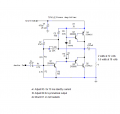
Some of that I did understand and some I did not. However I was using 12 volts and my phones output is comparably high for most output capable devices. I did change resistors to lower values, that's what made it work to begin with. I can assure you I didn't use the diagram as shown. I changed around all of the cap and resistor values. Increased the voltage from 6,9,12, and even to 40 volts. Changing components each time. High and low values. I did get a very clear approximate 1-2 watt output. Again I'm using older components and their tolerances are greater than newer ones. Most don't even have tolerance bands so I'm assuming around +-20%? My goal is to make something using "old school" components and it sound as good as it did back then. I did find several different schematics that seem much more applicable to my components so I plan on trying them out. I believe the diagram I posted was meant entirely for proof of concept and not a truly useful version.Not talking about you using the wrong transistors in the "altered ab amp":
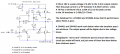
1) Do you understand that its first transistor was biased wrong causing the top of the waveform to be severely clipped.
2) Do you understand that the resistor that turns on the NPN output transistor had such a high value that the output could not go above 5V even though the supply was 9V?
3) Do you understand that the output with bootstrapping goes higher than any resistor can do it by itself?
4) Do you understand that the emitter resistor on the first transistor reduces amplifier voltage gain so if the input signal level is not very high then the output level is very low and faint?
5) Do you understand that the signal source (phone or MP3 player) output impedance is part of the calculation of this very simple amplifier's voltage gain?
Then of course, do you understand that a power transistor has a low current gain so it needs a very high AC and DC base current compared to a little low current transistor that has a very high current gain when it is not overloaded?