Generators are DC sources, Alternators are AC sources. I never got the hang of transformer phasors, nor AC motor phasors.
A 3 phase Alternator or motor can be connected either Star or Delta. Star configuration produces/requires Vphase x root 3 between connections, and Delta is just Vphase. single phase is limited to abt 5KW for gensets/motors/welders. beyond that, I can't help.
What is S Star? Is that a brand/manufacturer name? There are many more differences in generators than the circuit configuration. As crutschow says....it would take a textbook. ( I believe you can still use the word generator to describe either DC and AC power generation )
I suggest going to a long established junk yard. They call them auto salvage yards now. Retrieve a 1950-60 auto generator and voltage regulator set. The big heavy cars are the best. Now go to a 1970 section...and retrieve a alternator and regular set.
Now for the most important part.......find a 1970s Chilton auto repair manual. They are large and heavy.....and don't get any grease on them. Chilton books are some of the finest textbooks ever written. Not only will it explain the operation......it will instruct rebuilding with a pair of pliers and a piece of emery cloth. The whole car in fact.
If you bypass the diodes on the alternator......you should have a star configured 3 phase AC generator. Now you can study one on your desktop. In a car the frequency is nullified and ignored.....but with AC....not only does voltage need to be maintained....but the frequency also. The rotation rate needs to be constant.
I know the question is very vague and I did a lotta reading on it.
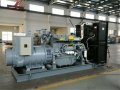
I am working on 250KVA Series Star connected Stamford Generator.
The issue is sparking across the exciter rotor diode set. I replaced them with new one, and soon as the voltage built up, it started to cause sparking again rotating across the diodes.
I believe the AVR exciter trip point triggered an exciter overload protection. It occurred twice and I think the diodes failed.
I am trying to figure out the reason. I megger tested ( @ 500V ) everything and there is still no problem.
I dunno how to check for inter-winding shorts. The Main rotor resistance is with in spec and so is the exciter.
It could be a winding insulation corrosion too but I cannot tell.
Wondering if there are ways to find these kinda issues.
PS....The genset was not loaded during the sparking condition
This fault came back as it seems. Cause initially I did all the connections, the Stator and AVR termination and it was working for 2 hours and was loaded to 80% of the generator. I simply shut it down to check a battery charging issue the genset had. After that this thing happened.
The charging issue was with the battery charging alternator. This has nothing to do with the generator
While it won't be of much help the AVR is the automatic voltage regulator which should maintain the output voltage constant as the load changes. The ATS is as you mentioned, the automatic transfer switch. When a generator is used in an emergency backup capacity it has a routine similar to this. Mains power fails, including in 3 phase systems the loss of a phase. The generator will automatically start and come up to speed (frequency and voltage). At this point, normally around ten seconds the system will automatically transfer from mains source to generator source, generally using a set of large contactors mechanically interlocked.
Years ago I had a problem with a smaller 100 KW 480 Volt 3 phase unit. We had a power failure and the generator came online. Then suddenly something was wrong. Using a flashlight I went up on a balcony and opened the control panel. Fortunately in poor lighting I saw arcing and shut the genset down immediately. The excitation was provided by using a 4 stud diode full wave bridge run off a small PM alternator within the genset. The stud of one diode had worked loose over the years. That was the arcing. Tightened that stud and went back online. I got lucky! That was about 14 years ago and as I was retiring about 4 years ago we were replacing that old unit with a new 200 KW unit.
You are going to need a good schematic and then try to isolate the fault as to why you are seeing arcing. I would start by looking for any possible loose connections. Generators by nature tend to vibrate and vibration tends to allow studs (nuts and bolts) to become loose.
Just curious, Some Stanford generators have Varistors with the diodes for HV spike protection. Sparking suggests over voltage. What is the generators out put voltage when diodes are sparking?
Just curious, Some Stanford generators have Varistors with the diodes for HV spike protection. Sparking suggests over voltage. What is the generators out put voltage when diodes are sparking?
I do not recommend running an alternator nor generator of any type without a minimum load. The tendency is to abnormal over voltages, which can be quite high. This is probably the source of your arcing. eg. A car alternator without load can easily produce >110V at idle. If the regulation cannot keep the output down under oc conditions [and few can] then the unit often fails with internal arcing.
It was an example. open circuit outputs/no loads are usually forbidden on alternators and generators because they tend to overvoltage, despite their regulators. will need to contact maker or installation engineer to find minimum load. There may be a default standard %age of output, but it's more likely machine dependent. NB It could be a large portion of the total output.
The generator does not require minimum load. The AVR regulates the output with load or without load.
There is no schematic and nothing much to see. Picture will not help cause the as the rotor rotated and sparks, all one an see is rotating sparks with the diodes
There is no loose connection or dirt.
I replaced the diode set my self and I double checked the nuts on the diodes.
The diode set is new and it comes with a varistor. Varistor is installed.
@debe
I am assuming inter winding shorts.
When the voltage ramps up and at around 180VAC at the AVR sense terminals, it starts to spark.
I am planning to get it rewound. All of 'em. @debe
Can you explain the Exciter trip point trimmer function by any chance ?
AVR is the AS440

 Facebook
 Google
 GitHub
 Linkedin