Facebook
 Google
 GitHub
 Linkedin

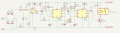
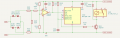
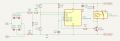
The two 'out' signals are feeds to signal loss of power, building (remote) or apartment (local), to whatever MCU you plan to use, could be a simple single chip MCU, ATtiny or a PIC or something bigger such as a Nano or a Seeed. Probably not a Pi or similar as need to keep battery use to a minimum. My preference would be an ATtiny84 single chip MCU or similar, but that assumes you have the necessary programming environment (easy to set up though).hello @Irving
sorry was trying to complete another 2 project that i have opened in different threads - almost done and time to that one.
May i ask what exactly are :
Local_out
Remote_out
What battery cell is used ie how many volts/capacity mah?
also what exactly is meant by battery manager? and usb-c?
Other components i am going to order in meanwhile.
Thanks!
Battery is a single 3.7v LiPo, biggest capacity you can accommodate. Could be a single 18650 cell, say 1800mAh, or a pouch or prismatic cell. Depends how long you want it to hold up during an outage, which will depend to some extent on the MCU you choose and how sophisticated your programming is (ie do you use 'deep sleep' to conserve power or not). The GSM card consumes 10 - 20mA idling and up to 2A during a transmit, though only for a few mS. Again you can put it into a deep sleep mode but that means re-establishing the 'phone connection each time you want to send a message; not a big issue but again more complex programming.
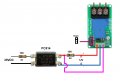
The battery manager is an off the shelf module that controls charging and discharging of the battery. In this environment we're only using the charge control as the point where it cuts off the battery to prevent deep discharge (2.7v or so) is well below when the GSM card will stop working (3.5v), so we'll handle that in software (or not!). It's available on Amazon/Aliexpress typically listed as "USB Type C TP4056 Lithium Battery Charger Module". Some come with a JST connector for the battery too, which makes it even easier to plug and play. Note, the type you want, unless your battery contains overcharge/discharge protection, has three chips on it, like this:
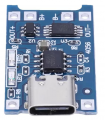
Typically cylindrical cells have no protection, whereas pouch batteries usually do have, in which case the one chip chargers are ok (but beware as not always true).
The reference to USB C is just the connector style for the source of power to charge the battery, you can find the same charger modules with microUSB too. You'll need a suitable USB phone charger/wall-wart, doesn't need to be anything sophisticated and could be just an old 1Amp Type A charger as long as it has the right connector for the board connector on the end of the cable.
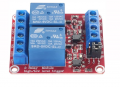
 , new diagram coming shortly...